American Airlines 777-300ER Returns to London After Strike

Co-Founder & CEOAviation News Editor delivering trusted coverage across the global aviation industry.
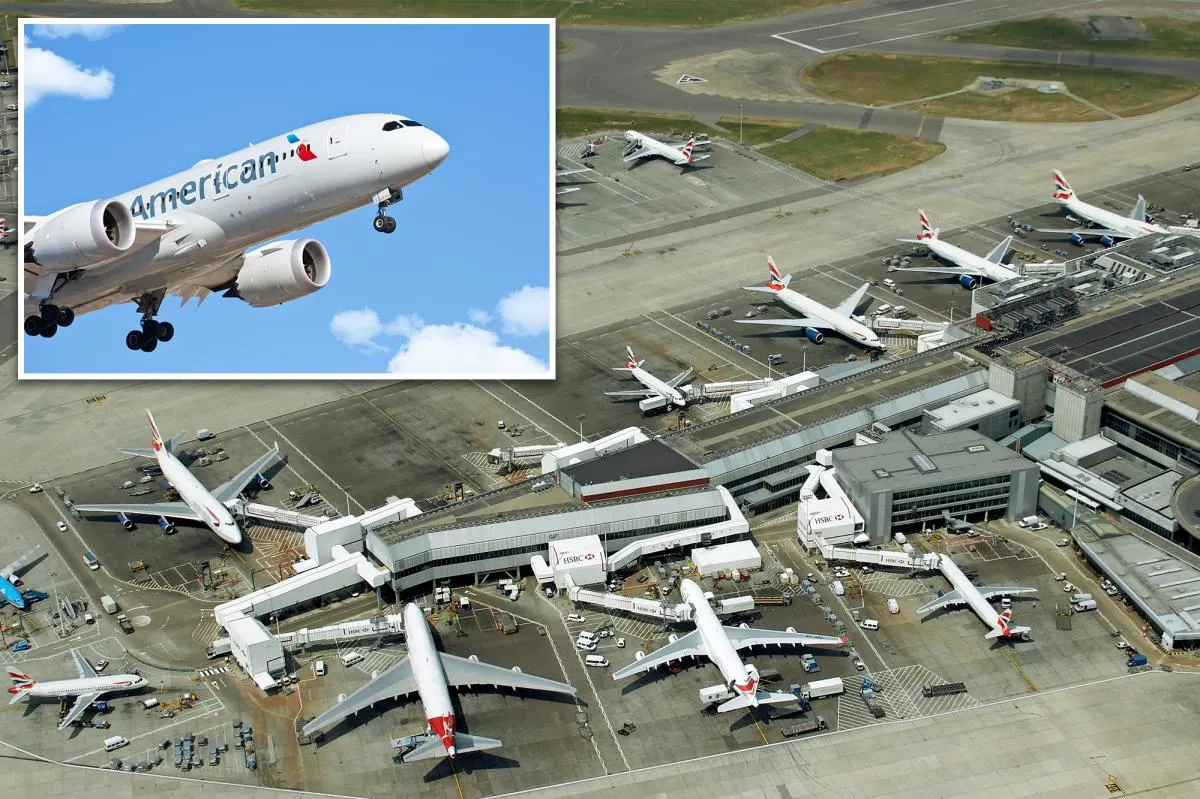
American Airlines Flight AA735 returned to London Heathrow safely following a lightning strike that triggered an emergency declaration over Manchester.
Key Takeaways
- •American Airlines Flight AA735 returned to LHR after a lightning strike.
- •The Boeing 777-300ER declared a 7700 emergency code over Manchester.
- •Mandatory FAA and CAA inspections are required before the aircraft returns.
- •Passengers experienced significant travel delays due to the emergency diversion.
Emergency Return to London Heathrow
An American Airlines flight bound for the United States was forced to return to London Heathrow Airport (LHR) on June 10, 2026, following a mid-air lightning strike. The aircraft, a Boeing 777-300ER registered as N734AR, was operating as Flight AA735 from London to Charlotte Douglas International Airport (CLT). Approximately 30 minutes into the transatlantic journey, the flight crew encountered severe weather over Manchester and reported multiple lightning strikes. The crew declared a general emergency by squawking code 7700, a standard procedure for alerting air traffic control to priority status.
Operational Impact and Passenger Experience
Following the strike, the flight crew initiated a fuel-dumping maneuver to reach a safe landing weight before returning to LHR. According to Airlive Flight Tracking Data, the aircraft departed London at 15:05 BST and touched down safely at 16:35 BST. For the passengers on board, the diversion resulted in significant travel disruption, including missed connections and necessary rebooking for those intended to arrive in North Carolina. Heathrow Airport ground operations were required to reallocate runway access and emergency rescue resources to accommodate the priority landing of the widebody aircraft.
Regulatory Requirements and Safety Protocols
Commercial passenger aircraft are designed to withstand lightning strikes, which the National Weather Service (NWS) notes typically occur one to two times per year per aircraft. Despite this inherent protection, the Federal Aviation Administration (FAA) and the United Kingdom Civil Aviation Authority (CAA) mandate strict post-strike inspection protocols. These regulations require comprehensive structural and electrical engineering checks to identify potential damage to the airframe, avionics, or fuel systems. Further guidance is provided by FAA Airworthiness Directives, which include specific requirements for the Boeing 777 series to ensure the integrity of lightning protection features, such as fuel feed tube bonding jumpers and transorb modules.
Technical Context and Fleet Maintenance
For American Airlines maintenance and engineering teams, the incident necessitates an unplanned utilization of resources to clear the aircraft for return to service. This process is consistent with industry trends showing heightened regulatory scrutiny regarding widebody lightning protection systems. As detailed by the National Weather Service, modern aircraft utilize conductive materials to dissipate the electrical charge of a strike, but physical inspections remain essential to confirm that no latent failures exist within critical electrical paths. The current situation mirrors past events, such as the 2016 diversion of an American Airlines Embraer E170, which underscores the standard nature of these safety-first diversion tactics in commercial aviation.
What Comes Next: Inspection and Return to Service
The Boeing 777-300ER remains grounded at LHR pending the completion of a full engineering assessment. American Airlines maintenance teams are expected to finalize these mandatory structural and avionics inspections by late June 2026. Once the aircraft is cleared by internal engineering and verified against the relevant FAA and CAA safety mandates, it will be returned to the active flight schedule. No timeline for the specific resumption of service for N734AR has been confirmed, as the duration depends on the findings of the detailed inspection.
Why This Matters for Transatlantic Operations
The incident serves as a reminder of the rigorous safety thresholds maintained for long-haul widebody operations. While lightning strikes are a routine hazard, the decision to return to the origin airport highlights the conservative risk management strategy employed by flight crews when operating over the North Atlantic. For the airline, the event triggers a complex logistical chain involving passenger reaccommodation and the immediate grounding of a high-capacity asset. This event underscores the resilience of modern aircraft design while emphasizing the critical role of post-incident regulatory compliance in maintaining passenger safety.
Frequently Asked Questions
- Why did the American Airlines flight return to London after the lightning strike?
- The aircraft returned to London Heathrow Airport to undergo mandatory post-strike engineering inspections required by the FAA and UK CAA to ensure the safety of the airframe and electrical systems.
- How often do commercial aircraft experience lightning strikes?
- According to the National Weather Service, commercial passenger aircraft typically experience one to two lightning strikes per year on average.
Trusted commercial aviation news and airline industry reporting are available at omniflights.com. For detailed airline coverage, route changes, and fleet moves, explore the Airlines section at omniflights.com/airlines.
Written by Hardik Vishwakarma
Co-Founder & Aviation News Editor leading initiatives that improve trust and visibility across the global aviation industry. Covers airlines, airports, safety, and emerging technology.
Visit ProfileYou Might Also Like
Discover more aviation news based on similar topics
Ryanair Flight RK514 Diverts to Birmingham After Emergency
Ryanair flight RK514 diverted to Birmingham Airport on September 13, 2026, following a medical emergency involving a passenger.
Amazon Suspends 21 Air After Fatal Miami 767 Runway Overrun
Amazon has suspended operations with 21 Air following a fatal Boeing 767 runway overrun at Miami International Airport that resulted in five deaths.
FAA Proposes A220 Fuel Line Inspections for US Operators
The FAA issued a proposed directive requiring inspection of motive-flow fuel lines on 13 US-registered Airbus A220s to prevent potential leaks.
NATS Denies Military Jet Role in UK ATC Outage
The UK Ministry of Defence denied its aircraft caused a NATS outage that led to over 2,000 flight cancellations and calls for CEO resignation.
21 Air Miami Crash: NTSB Investigates 767 Runway Overrun
A fatal 21 Air Boeing 767 crash at Miami International Airport has triggered an NTSB investigation amid scrutiny of Amazon Air's contract oversight.

Amazon Cargo Plane Crash: 5 Remembered After MIA Excursion
Five cleaning crew members died after an Amazon-contracted Boeing 767 overran the runway at Miami International Airport at 158 knots.