Amazon Cargo Plane Crash: 5 Remembered After MIA Excursion

Co-Founder & CTOCo-Founder & CTO driving the technology and data systems behind Omni Flights.

Five cleaning crew members died after an Amazon-contracted Boeing 767 overran the runway at Miami International Airport at 158 knots.
Key Takeaways
- •Amazon cargo plane crash killed 5 ground workers at Miami Airport.
- •Aircraft touched down at 158 knots, exceeding standard safety parameters.
- •21 Air faces multiple lawsuits regarding safety and operational culture.
- •NTSB investigation into Flight 7598 is ongoing through late 2026.
The Fatal Collision at Miami International Airport
The aviation community is mourning the five cleaning crew members killed on September 6, 2026, when an Amazon Prime Air Boeing 767-300 operated by 21 Air suffered a catastrophic runway excursion at Miami International Airport (MIA). The victims, employees of Professional Ocean Service Corp, were traveling in a ground vehicle when the aircraft overran Runway 30, traveling approximately 1,300 feet past the boundary. Among those lost was Julio Pineda, a dedicated worker remembered by colleagues for his commitment to his role.
NTSB Investigation Findings
The National Transportation Safety Board (NTSB) has released preliminary data indicating that the aircraft touched down at a groundspeed of 158 knots, significantly higher than the typical 135 to 140 knots for a Boeing 767-300F. According to the Flight Data Recorder (FDR), the crew attempted a late go-around just 15 seconds before the crash, increasing throttles at a groundspeed of 120 knots. The Cockpit Voice Recorder (CVR) reportedly captured the pilots discussing the excessive speed during the approach, suggesting a failure to stabilize the aircraft before touchdown.
Stakeholder Impact and Legal Scrutiny
The tragedy has triggered significant legal and regulatory fallout. 21 Air is currently facing multiple wrongful death and negligence lawsuits as investigators scrutinize the carrier’s safety culture. Amazon Air has also been named as a co-defendant, forcing the e-commerce giant to defend its reliance on third-party contract carriers. NTSB Chairwoman Jennifer Homendy noted the hidden dangers of ground support operations, stating that the incident highlights the extreme risks faced by workers who are often overlooked in aviation safety protocols.
Industry Trends and Historical Context
This crash has renewed intense scrutiny of e-commerce contract carriers. The industry has previously faced similar challenges, notably the February 2019 crash of an Atlas Air Flight 3591 Boeing 767, which resulted in three fatalities due to pilot error and spatial disorientation. Another recent event in 2024 involved a Cargojet-operated Boeing 767 overrunning a runway at Vancouver International Airport due to flap issues. These incidents collectively raise questions regarding pilot training and the operational oversight of the Boeing 767 fleet within the Amazon network.
Technical Comparison: Approach Speed
| Metric | Flight 7598 | Typical Boeing 767-300F |
|---|---|---|
| Touchdown Speed | 158 knots | 135-140 knots |
| Runway Remaining | ~5,000 feet | Standard touchdown zone |
Predictive Milestones
The NTSB is expected to release a comprehensive preliminary report on the mechanics of 21 Air Flight 7598 by late 2026. Following this, initial hearings for the wrongful death lawsuits are anticipated in the Miami-Dade Circuit Court between late 2026 and 2027. These proceedings will likely determine the extent of corporate liability and whether systemic safety failures contributed to the runway excursion.
Why This Matters for Ground Safety
This incident serves as a grim inflection point for aviation ground crew safety. The loss of life among personnel who were not flight crew members underscores the need for stricter safety buffers between active runways and support vehicle operations. For the broader logistics industry, the crash signals a potential shift in how e-commerce firms manage their third-party aviation partners, as regulators and the public demand greater accountability for the entire operational chain.
Frequently Asked Questions
- What caused the Amazon cargo plane to crash at Miami International Airport?
- The NTSB preliminary investigation indicates the aircraft touched down at an excessive groundspeed of 158 knots. The crew attempted a late go-around 15 seconds before the crash, but the aircraft eventually overran the runway by approximately 1,300 feet.
- Who was operating the Amazon Prime Air Boeing 767 during the crash?
- The aircraft was operated by 21 Air, a contract cargo carrier. The company is currently facing multiple lawsuits and NTSB scrutiny regarding its safety culture following the accident.
omniflights.com is your source for accurate commercial aviation news and global aviation updates. Get the latest updates on major hubs, regional terminals, and airport operations via the Airports section at omniflights.com/airports.
Written by Shashank Shukla
Co-Founder & CTO leading the engineering and AI systems behind Omni Flights. Covers aviation technology, flight safety, aircraft manufacturing, and emerging aerospace developments.
Visit ProfileYou Might Also Like
Discover more aviation news based on similar topics
Ryanair Flight RK514 Diverts to Birmingham After Emergency
Ryanair flight RK514 diverted to Birmingham Airport on September 13, 2026, following a medical emergency involving a passenger.
Amazon Suspends 21 Air After Fatal Miami 767 Runway Overrun
Amazon has suspended operations with 21 Air following a fatal Boeing 767 runway overrun at Miami International Airport that resulted in five deaths.
FAA Proposes A220 Fuel Line Inspections for US Operators
The FAA issued a proposed directive requiring inspection of motive-flow fuel lines on 13 US-registered Airbus A220s to prevent potential leaks.
NATS Denies Military Jet Role in UK ATC Outage
The UK Ministry of Defence denied its aircraft caused a NATS outage that led to over 2,000 flight cancellations and calls for CEO resignation.
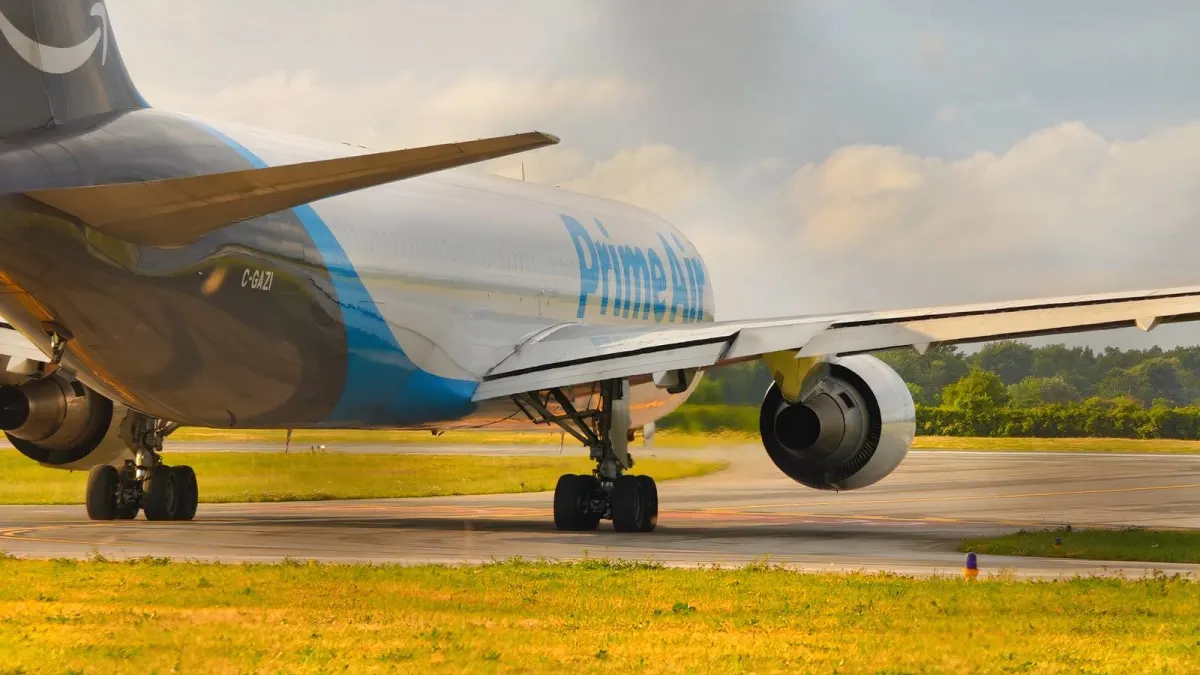
21 Air Miami Crash: NTSB Investigates 767 Runway Overrun
A fatal 21 Air Boeing 767 crash at Miami International Airport has triggered an NTSB investigation amid scrutiny of Amazon Air's contract oversight.
EasyJet Flight U23905 Evacuated After Powerbank Fire
An easyJet A320 was evacuated at Milan Malpensa on September 10 after a passenger's powerbank caught fire in an overhead locker, causing two injuries.