Alaska Airlines Launches Longest 737 MAX 8 Route to Iceland

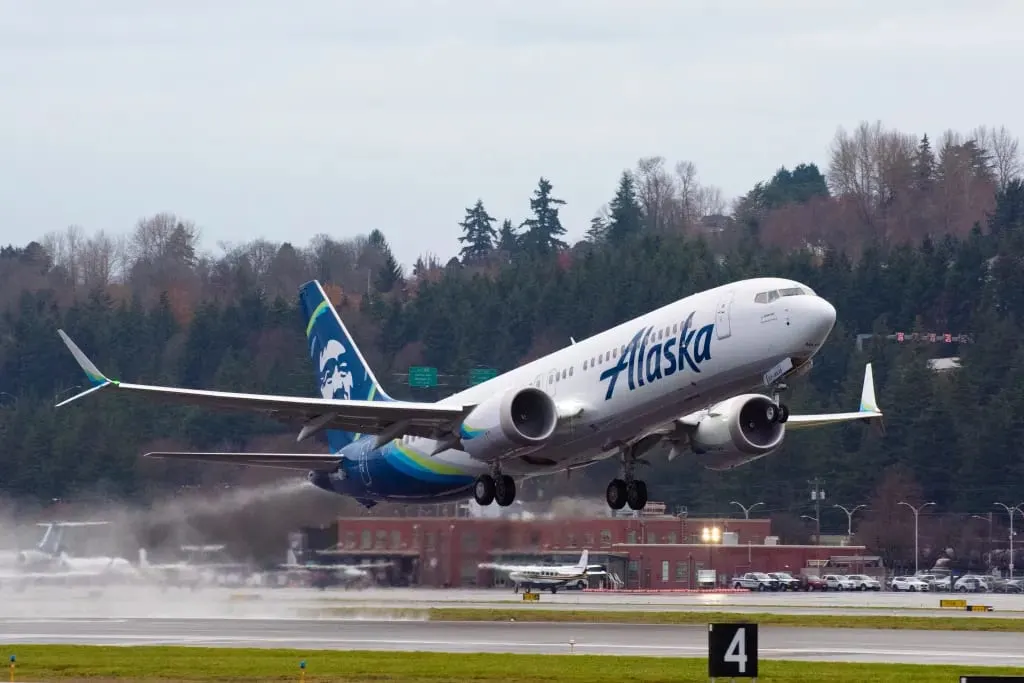
Alaska Airlines launched its longest Boeing 737 MAX 8 route from Seattle to Reykjavik on May 28, 2026, covering 3,622 miles.
Key Takeaways
- •Alaska Airlines launched its longest 737 MAX 8 route to Iceland in May 2026.
- •The new Seattle to Reykjavik service covers a distance of 3,622 miles.
- •Operations require strict FAA ETOPS certification for North Atlantic crossing.
- •Seasonal service between SEA and KEF is confirmed through September 8, 2026.
Alaska Airlines Expands Transatlantic Reach
Alaska Airlines officially inaugurated its longest nonstop route operated by a Boeing 737 MAX 8 on May 28, 2026, connecting Seattle-Tacoma International Airport (SEA) to Keflavík International Airport (KEF). This new service represents a strategic milestone for the carrier, covering a distance of 3,622 miles across the North Atlantic. The route expansion is part of a broader push by the airline to increase its international presence from its Seattle hub, which now offers over 60 nonstop international destinations, according to the Port of Seattle Newsroom.
Operational Scope and Technical Requirements
Operating a narrowbody aircraft on an intercontinental route requires significant operational precision. The outbound flight from Seattle to Reykjavik is scheduled for approximately 7 hours and 25 minutes, while the return leg is slated for roughly 7 hours and 55 minutes. To facilitate these flights, the Boeing 737 MAX 8 must maintain rigorous Extended-range Twin-engine Operational Performance Standards (ETOPS) certification, as mandated by the Federal Aviation Administration (FAA). This regulatory framework ensures that the aircraft can safely reach a diversion airport in the event of an engine failure while operating over remote oceanic regions.
According to Boeing's official specifications, the aircraft has a maximum published range of 3,550 nautical miles. While this new route pushes the operational envelope, it demonstrates the growing trend of airlines utilizing fuel-efficient single-aisle jets on secondary transatlantic routes. This strategy allows carriers to serve markets that lack the passenger demand to profitably support larger widebody aircraft.
Passenger Experience and Market Impact
For passengers, the shift to narrowbody transatlantic service presents a distinct change from traditional widebody travel. According to Aviation Consumer Advocates, the use of single-aisle aircraft on flights exceeding seven hours may result in reduced cabin comfort, as these planes typically lack the lie-flat business class seating found on larger jets. Despite these concerns, the route provides a critical link for Icelandair, which gains increased passenger feed into its Keflavík hub from Alaska's West Coast network. This partnership is expected to drive higher load factors on connecting flights to mainland Europe.
Boeing 737 MAX 8 vs. Airbus A321neo: Key Specifications
| Metric | Boeing 737 MAX 8 | Airbus A321neo |
|---|---|---|
| Maximum Range | 3,550 nm | 4,000 nm |
| Typical Seating (Two-Class) | 162–178 | 180–220 |
| Maximum Capacity | 210 | 244 |
Historical Context and Industry Trends
The move follows a history of narrowbody transatlantic experimentation. In 2017, Norwegian Air Shuttle pioneered low-cost operations using the 737 MAX, though those services were eventually curtailed. Conversely, the successful implementation of the Airbus A321LR by Aer Lingus in 2019 proved that passengers are willing to accept long-range narrowbody flights if the pricing and connectivity are favorable. Alaska Airlines’ current strategy appears to align with this latter model, aiming to capture demand for thinner, point-to-point international markets.
What Comes Next for the SEA-KEF Route
Alaska Airlines has confirmed that the inaugural seasonal service between Seattle and Reykjavik is scheduled to conclude on September 8, 2026. Future operations will depend on the performance of this seasonal window and the continued demand for international connectivity from the Pacific Northwest. Interested travelers can track the latest schedule updates via the Alaska Airlines Newsroom.
Why This Matters for Transatlantic Connectivity
This expansion signals a shift in how legacy and hybrid carriers approach international route planning. By leveraging the efficiency of the 737 MAX 8, Alaska Airlines is positioning itself to compete more effectively on routes that were previously the exclusive domain of widebody operators. For the industry, this underscores a broader trend of market fragmentation, where airlines prioritize frequency and point-to-point access over the high-capacity hub-and-spoke models of the past.
Frequently Asked Questions
- What is the distance of the new Alaska Airlines Seattle to Reykjavik route?
- The new Alaska Airlines route between Seattle-Tacoma International Airport and Keflavík International Airport covers a distance of 3,622 miles.
- Why does the Boeing 737 MAX 8 require ETOPS certification for this route?
- The Boeing 737 MAX 8 requires Extended-range Twin-engine Operational Performance Standards (ETOPS) certification because it is a twin-engine aircraft operating over the North Atlantic, where it must be able to safely reach a diversion airport in the event of a single-engine failure.
Get breaking commercial aviation news and expert airline analysis at omniflights.com. For reporting on UAP sightings, investigations, and aviation-related encounters, see the UAPs section at omniflights.com/uaps.

Written by Hardik Vishwakarma
Co-Founder & Aviation News Editor leading initiatives that improve trust and visibility across the global aviation industry. Covers airlines, airports, safety, and emerging technology.
Visit ProfileYou Might Also Like
Volaris-Viva Merger Expected to Gain CNA Approval

Starlux Airlines Confirms Sydney to Taipei Flights for 2027
British Airways Retrofits A380 with 106 Club Suite Seats

EasyJet Cuts 700k Winter Seats as Fuel Costs Climb

PIA to Lease Two Norse Atlantic 787-9s for UK Routes