Airline CEOs Urge Congress to Fund DHS Amidst Shutdown Chaos

Co-Founder & CEOAviation News Editor delivering trusted coverage across the global aviation industry.
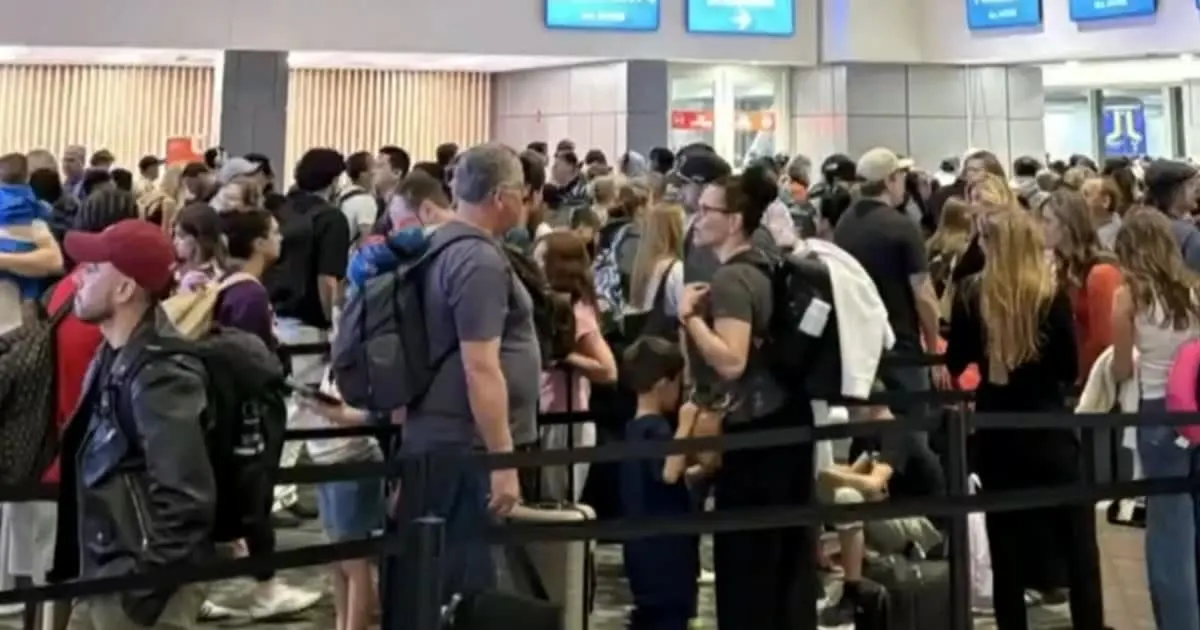
Airline CEOs sent a letter to Congress demanding an end to the DHS shutdown, which is causing severe airport delays due to TSA staffing shortages.
Key Takeaways
- •Urge Congress to fund DHS as TSA staffing shortages cause severe airport delays.
- •Face operational disruptions during a record spring break with 171 million flyers expected.
- •Cite historical precedent from the 2018-2019 shutdown where aviation chaos forced a resolution.
- •Highlight financial strain on federal workers, with TSA sick calls more than tripling.
A coalition of U.S. airline chief executives has sent a formal letter to Congress, urging an immediate resolution to the partial government shutdown that has halted funding for the Department of Homeland Security (DHS). The funding lapse is causing significant operational disruptions across the national air transportation system, primarily through staffing shortages at the Transportation Security Administration (TSA) and Customs and Border Protection (CBP).
The political impasse comes at a critical time for the industry, which is preparing for a record spring break travel period. According to forecasts from Airlines for America (A4A), the primary trade association representing U.S. carriers, 171 million passengers are expected to fly during March and April. The current staffing crisis threatens the sector's ability to manage this surge, leading to widespread flight cancellations and extended passenger processing times.
Operational Impact
The most acute effects of the shutdown are being felt at TSA security checkpoints. As excepted federal employees, TSA officers are mandated to work without pay under the Anti-Deficiency Act, a federal law prohibiting agencies from obligating funds during an appropriations lapse. This has led to a sharp increase in unscheduled absences. According to TSA internal data, sick calls have more than tripled since the shutdown began, placing immense pressure on the remaining workforce. The American Federation of Government Employees (AFGE) reported that absenteeism reached 20% to 25% at certain hubs, such as Luis Muñoz Marín International Airport.
This has translated directly into longer queues for travelers. Official TSA data shows that passenger wait times at the most severely affected airports have extended to between 45 minutes and over two hours. The stakeholder impact extends beyond passengers and federal workers. Airlines are facing deteriorating operational reliability, while airport retailers and concessionaires are experiencing decreased revenue as travelers are confined to security lines instead of spending time in terminal commercial areas.
Historical Precedent & Broader Context
The current situation is highly analogous to the 2018-2019 federal government shutdown, which lasted 35 days. That impasse ended largely after severe, cascading flight delays at major airports, caused by staffing shortages among both TSA screeners and air traffic controllers, created untenable pressure on the national aviation system. The precedent suggests that sustained operational breakdowns in aviation can serve as a catalyst for political resolution. The 2013 shutdown, though shorter at 16 days, also demonstrated the industry's vulnerability by furloughing non-essential FAA staff, which in turn delayed aircraft certifications and pilot training programs.
The shutdown's impact is compounded by other industry pressures. Airlines are concurrently managing a rise in jet fuel costs stemming from geopolitical conflicts in the Middle East, squeezing financial margins at a time when operational integrity is compromised by federal-level dysfunction. The reliance on an unpaid federal workforce to secure the nation's airports is viewed by industry leaders and labor unions as an unsustainable operational model.
Technical Analysis
The March 2026 shutdown underscores a structural vulnerability in the U.S. aviation ecosystem: its direct dependence on the functional continuity of the federal government. Since the Aviation and Transportation Security Act (ATSA) federalized airport screening post-9/11, the system's core security functions have become subject to political budget disputes. The current crisis follows the trajectory of the 2018-2019 shutdown, where financial strain on unpaid essential workers led to a critical degradation of service. This pattern indicates that the national air system has a functional breaking point when political impasses are prolonged. The data on passenger volumes and TSA absenteeism suggests the system is approaching this point just as the spring break travel surge is set to begin, creating conditions for a potential repeat of the operational meltdown that forced a resolution in 2019. This recurring cycle highlights the need for a more resilient funding mechanism for critical aviation infrastructure that is insulated from short-term political disputes.
What Comes Next
The immediate focus for the industry is navigating the peak spring break travel period from March through April 2026. All stakeholders are monitoring negotiations in the U.S. Congress, where a funding resolution is expected by late March to avert a more catastrophic system failure. The letter from airline CEOs is intended to increase pressure on legislators by highlighting the direct economic and logistical consequences of inaction. Official guidance from the U.S. Office of Personnel Management continues to detail the rules for excepted employees working without pay. Meanwhile, the TSA will continue to publish its daily checkpoint travel numbers, which will serve as a key public metric for the shutdown's ongoing impact on travelers.
Why This Matters
This development is more than a political dispute; it is a critical test of the U.S. aviation infrastructure's resilience. It demonstrates how political gridlock can directly translate into operational and economic harm for airlines, airports, and the traveling public. For the industry, it highlights the significant external risks posed by government dysfunction, while for passengers, it serves as a stark reminder of the complex federal apparatus that underpins modern air travel.
From airline operations to fleet updates, commercial aviation news lives at omniflights.com. Get the latest updates on major hubs, regional terminals, and airport operations via the Airports section at omniflights.com/airports.
Written by Hardik Vishwakarma
Co-Founder & Aviation News Editor leading initiatives that improve trust and visibility across the global aviation industry. Covers airlines, airports, safety, and emerging technology.
Visit ProfileYou Might Also Like
Discover more aviation news based on similar topics

FAA Proposes Ending Overland Supersonic Flight Ban
The FAA has proposed a new performance-based noise standard to replace the 1973 ban on overland supersonic flight, enabling future commercial travel.

DOT Rule Exempts Airlines From Cyberattack Delay Costs
Starting October 19, 2026, the DOT will allow airlines to withhold meal and hotel vouchers for delays caused by cyberattacks and nine other events.

Wizz Air, Ryanair Demand NATS Reform After ATC Failure
Wizz Air and Ryanair are calling for urgent NATS reform after a September 8 system failure caused over 1,000 flight cancellations across the UK.
US Treasury Iran Sanctions Target 27 Airlines, Mahan Air
The U.S. Treasury sanctioned 36 entities, including 27 Iranian airlines, to disrupt illicit procurement networks used by the Iranian government.
FAA Awards $481M in Airport Infrastructure Grants
The FAA announced $481 million in infrastructure grants across 191 U.S. airports to improve runways, terminals, and overall capacity.
FAA Air Traffic Controllers Protest Pay and Staffing Cuts
The FAA is withholding a 2.8% pay raise for air traffic controllers, exacerbating morale and safety concerns amid a critical nationwide staffing shortage.