Airbus A350-1000ULR Completes 24-Hour Test Flight

Aviation News Editor & Industry AnalystAviation News Editor & Industry Analyst delivering clear coverage for a worldwide audience.
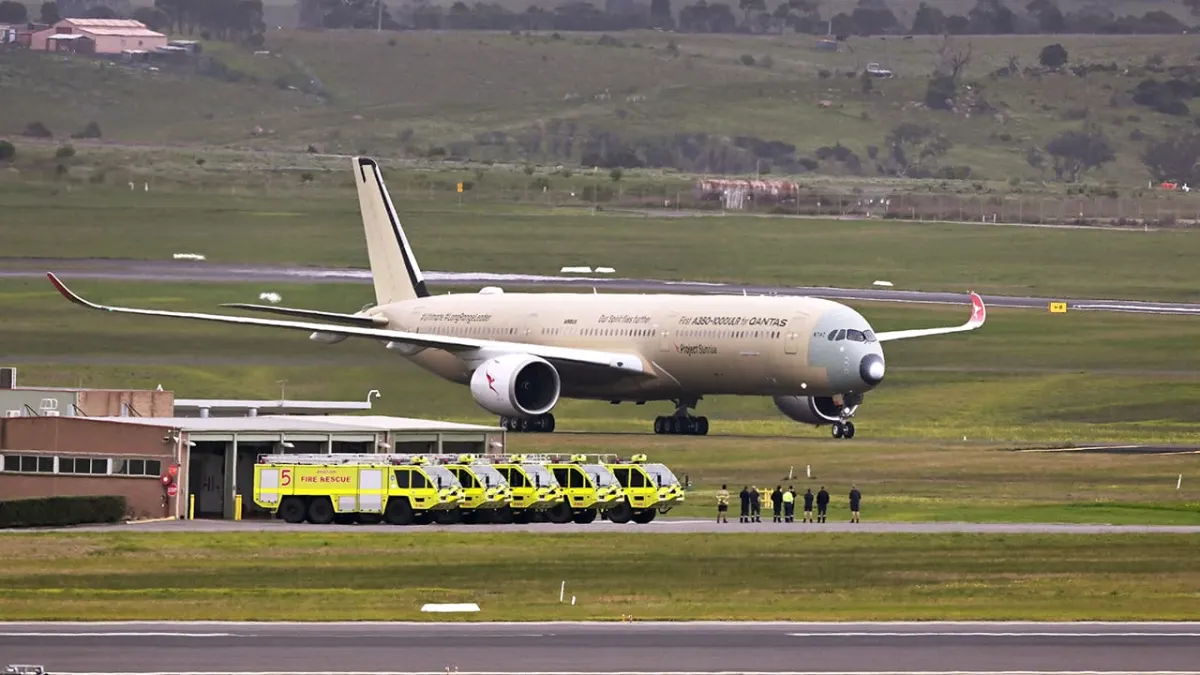
An Airbus A350-1000ULR completed a 24-hour test flight from Melbourne to Toulouse, marking a major milestone for Qantas' Project Sunrise.
Key Takeaways
- •Airbus A350-1000ULR completes 24-hour test flight from Melbourne to Toulouse.
- •Test flight covers 12,460 nautical miles to validate ultra-long-haul systems.
- •Qantas plans to launch direct Sydney-to-London flights by October 2027.
- •Aircraft features a 20,900-litre rear center tank for extended range.
An Airbus A350-1000ULR (Ultra Long Range) has successfully completed a continuous 24-hour test flight from Melbourne to Toulouse, marking a milestone for Qantas' Project Sunrise. This landmark Airbus test flight validates the viability of Qantas ultra-long-haul operations, bringing the carrier closer to launching the world's longest commercial route. The test aircraft covered 12,460 nautical miles (23,075 km) during the journey, proving the endurance of the airframe and its specialized systems under extreme operational conditions.
The operational implications of this flight are profound, signaling a shift away from traditional hub-and-spoke models toward direct, point-to-point travel. By bypassing intermediate stops, Qantas plans to connect Sydney and Melbourne directly to London and New York, saving passengers up to four hours of travel time. For the global aviation industry, the successful marathon flight demonstrates that modern twin-engine aircraft can safely and efficiently sustain day-long operations, reshaping the economics of global city-pair connections.
According to Flightradar24 tracking data, the test aircraft, bearing Manufacturer Serial Number (MSN) 707, departed Melbourne on July 27, 2026, and arrived in Toulouse on July 28, 2026, after remaining airborne for exactly 24 hours and 24 minutes. This development flight testing was conducted to validate critical systems under the oversight of the EASA (European Union Aviation Safety Agency), specifically focusing on cabin comfort, air conditioning (ATA Chapter 21), and fuel management systems (ATA Chapter 28) required for ultra-long-range certification.
To achieve the range necessary for these flights, the A350-1000ULR features an additional RCT (Rear Center Tank) with a 20,900-litre fuel capacity. Xavier Pepin, the Airbus test pilot who captained the record-breaking flight, stated: "Whilst we have already demonstrated much of the RCT's functionality earlier in the flight test campaign, we finalised some remaining test points in these long range flights. So we filled this tank to validate all necessary parameters during the mission... to ensure coverage for the customer's intended 21 hours 40 minutes flight time."
The successful flight carries significant implications for various industry stakeholders. For Airbus, the successful flight demonstrates its capability to deliver aircraft for the world's longest routes, securing a competitive edge over Boeing's delayed 777X in the ULR market. For Qantas Airways, the milestone moves the airline closer to launching Project Sunrise, allowing it to capture premium yields on exclusive nonstop routes to London and New York. For engine manufacturer Rolls-Royce, the flight validates the endurance and fuel efficiency of the Trent XWB-97 engines operating continuously for over 24 hours.
However, environmental sustainability advocates have raised concerns regarding the ecological impact of extreme long-haul travel. They argue that ultra-long-haul flights carry a higher carbon footprint per passenger because the aircraft must burn a significant amount of fuel simply to carry the massive fuel load required for the extreme distance.
The current certification program builds upon previous industry milestones. In late 2019, Qantas operated three Project Sunrise research flights from New York and London to Sydney using Boeing 787-9s to gather scientific physiological data on passenger and crew wellbeing, laying the groundwork for the current A350-1000ULR program. This follows Singapore Airlines' October 2018 launch of the A350-900ULR, which proved the commercial viability of Airbus's modified fuel system architecture on the world's longest commercial flight between Singapore and New York.
To optimize the passenger experience during these extreme flights, Qantas is completely redesigning its cabin interiors to prioritize circadian rhythm management and passenger wellness. The airline's A350-1000ULR will be configured with only 238 seats to maximize passenger space and comfort, and will feature a purpose-built onboard Wellbeing Zone alongside scientifically optimized lighting and meal times.
Airbus A350-1000ULR vs Standard A350-1000: Key Specifications
| Metric | Airbus A350-1000ULR | Standard A350-1000 |
|---|---|---|
| Additional Fuel Capacity | 20,900-litre rear center tank | None |
| Target Max Range | ~9,700 nm | 8,700 nm |
| Passenger Capacity (Qantas configuration) | 238 seats | Typical 350-410 seats |
Inside the Rear Center Tank and Cabin Validation
This development represents a major shift in aircraft design, where structural fuel capacity and cabin environmental controls are heavily modified to support 23-hour block times. This flight follows the trajectory established by Singapore Airlines' 2018 launch of the A350-900ULR, but pushes the envelope further by utilizing the larger -1000 platform. By validating the 20,900-litre Rear Center Tank and cabin management systems under EASA oversight, Airbus has proven that twin-engine efficiency can replace the heavy four-engine aircraft historically required for such distances. This acceleration of the point-to-point trend reflects a structural force in aviation where airlines bypass hubs to capture high-yield direct business traffic, despite the environmental trade-offs of carrying heavy fuel loads.
Certification and Delivery Timeline
Before commercial passenger service can begin, the CASA (Civil Aviation Safety Authority) of Australia must approve Qantas's FRMS (Fatigue Risk Management Systems), requiring extensive data on crew rotations and pilot fatigue during 24-hour operations. The program is currently tracking toward several key predictive milestones:
- April 2027: Delivery of the first A350-1000ULR to Qantas is expected.
- October 2027: Launch of Project Sunrise commercial flights (Sydney to London) is expected.
The Yield Premium and Premium Passenger Read
This development signals a critical shift in how premium international routes are contested, positioning Qantas to capture high-margin business travelers who prioritize time savings over all else. For aircraft manufacturers, the validation of the A350-1000ULR establishes a highly specialized market niche that secures long-term fleet commitments from tier-one carriers. Ultimately, the success of this mission proves that the technical barriers to true global connectivity have been largely dismantled.
Frequently Asked Questions
- What is the range of the Airbus A350-1000ULR?
- The Airbus A350-1000ULR has a target maximum range of approximately 9,700 nautical miles, which is enabled by an additional 20,900-litre rear center fuel tank.
- What is Qantas' Project Sunrise?
- Project Sunrise is Qantas' initiative to operate nonstop commercial flights connecting Sydney and Melbourne directly to London and New York, bypassing traditional stopovers.
- How many passengers will the Qantas A350-1000ULR carry?
- To maximize passenger space and comfort on flights lasting over 21 hours, Qantas will configure its A350-1000ULR aircraft with only 238 seats, compared to the typical 350 to 410 seats on a standard A350-1000.
From airline operations to fleet updates, commercial aviation news lives at omniflights.com. For reporting on UAP sightings, investigations, and aviation-related encounters, see the UAPs section at omniflights.com/uaps.
Written by Ujjwal Sukhwani
Aviation News Editor & Industry Analyst delivering clear coverage for a worldwide audience. Covers flight operations, safety regulations, and market trends with expert analysis.
Visit ProfileYou Might Also Like
Discover more aviation news based on similar topics
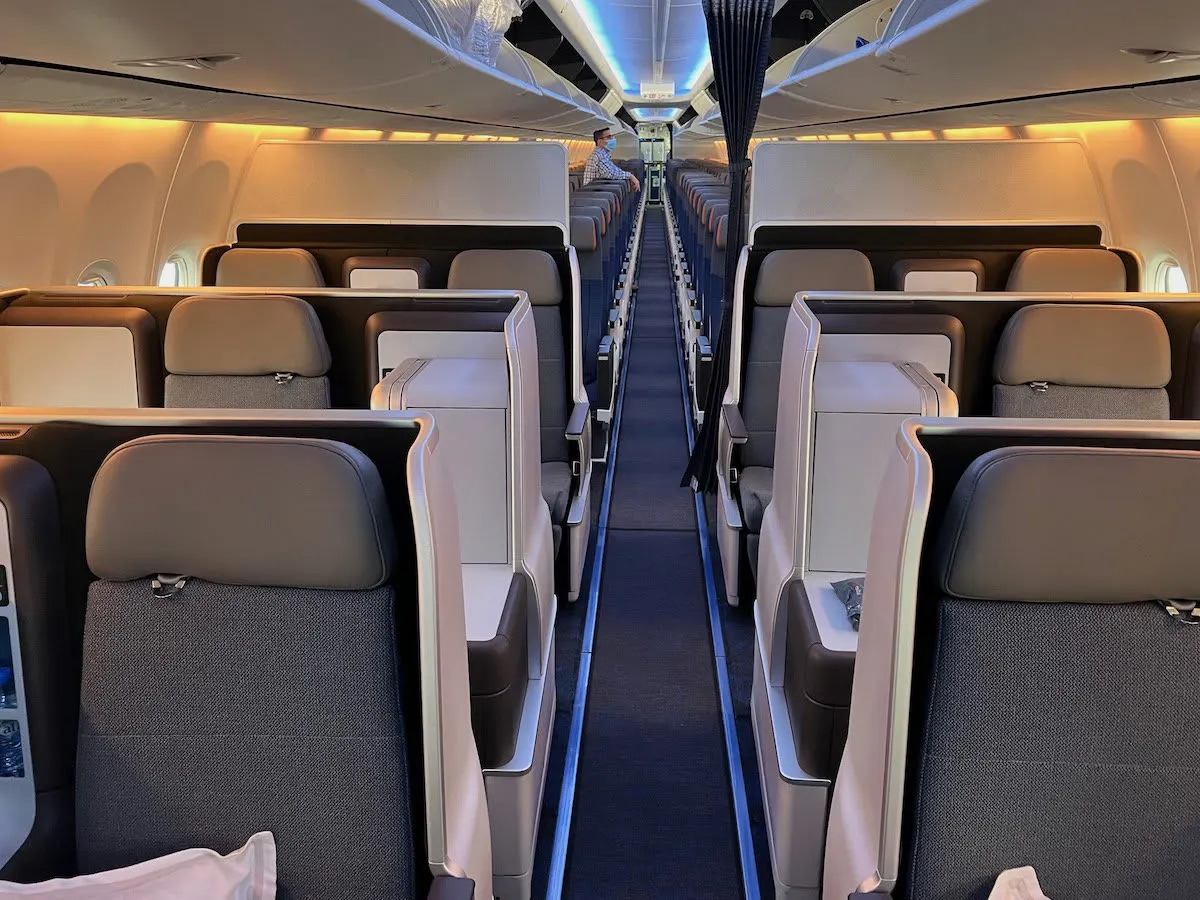
Flydubai Upgrading 21 Boeing 737 MAX 8s to Flat Bed Seats
Flydubai is retrofitting 21 Boeing 737 MAX 8 aircraft with lie-flat business class seats to standardize its premium product by late 2027.
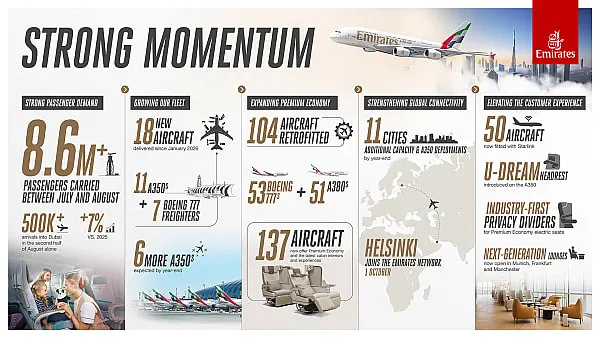
Emirates Winter Booking Momentum Grows Amid Fleet Expansion
Emirates carried 8.6 million passengers this summer and enters winter with strong demand as it accelerates fleet retrofits and network growth.
Air Arabia Consortium Gains AOC for New Dammam Budget Airline
A Saudi GACA-led consortium including Air Arabia has secured an AOC to launch a new budget airline based at Dammam's King Fahd International Airport.
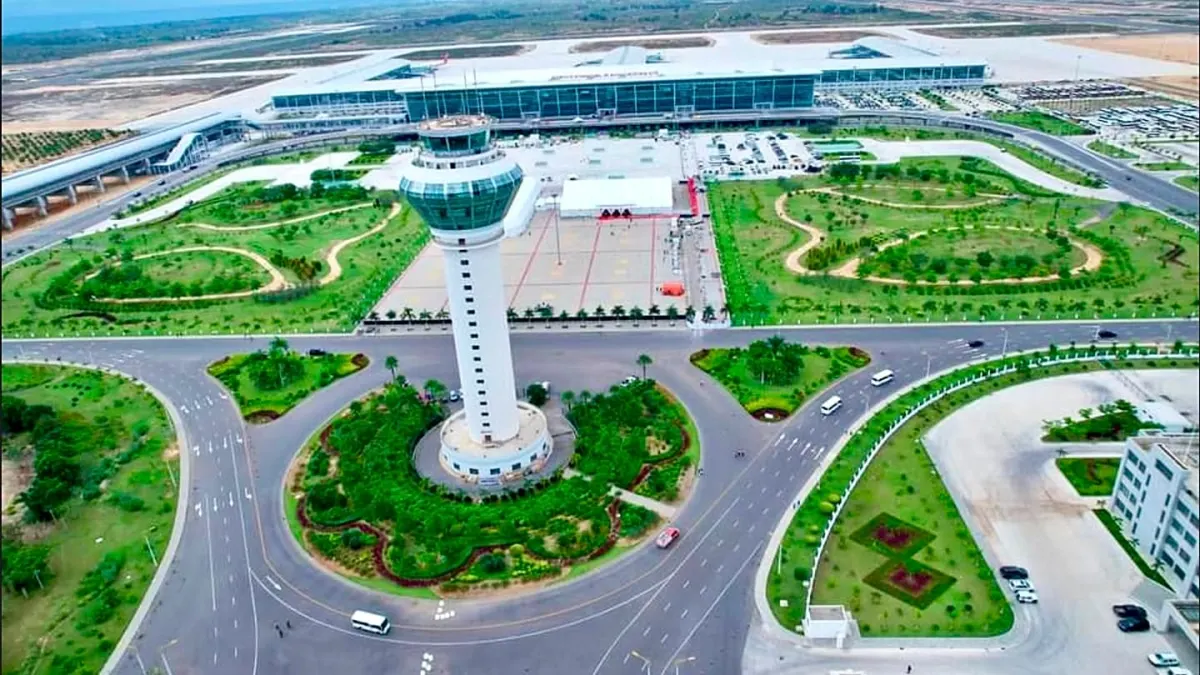
Turkish Airlines Exits Luanda as Angola Hub Struggles
Turkish Airlines dropped its Luanda route as Angola's new airport struggles to attract traffic, handling only 756,028 passengers in 2025.

Red Sea Airlines Leases Two 737 MAX 8s for 2027 Expansion
Red Sea Airlines signed a lease for two Boeing 737 MAX 8 aircraft from SMBC Aviation Capital, arriving in 2027 to support its 14-aircraft fleet goal.
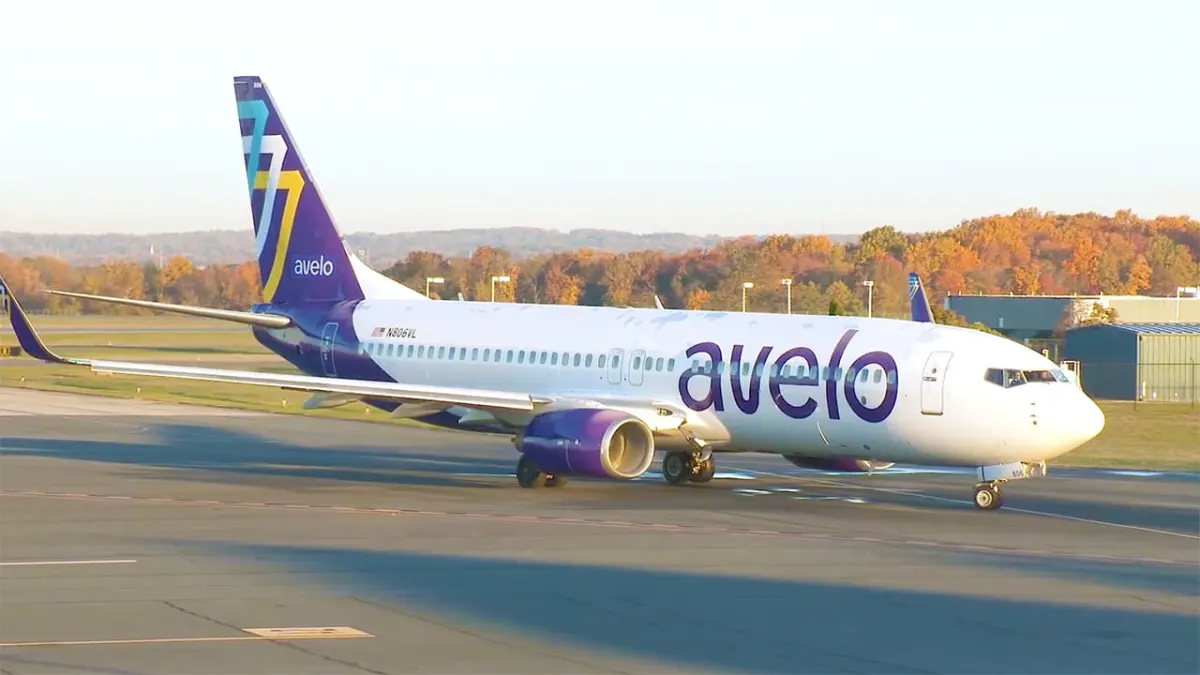
Avelo CEO Warns Airfares May Rise on Jet Fuel Price Spikes
Avelo Airlines CEO Andrew Levy warns that rising fuel costs may force fare increases as global jet fuel prices reach $171.01 per barrel.