Air India Group Mounts 58 Ad-Hoc Flights to West Asia Amid Conflict

Aviation News Editor & Industry AnalystAviation News Editor & Industry Analyst delivering clear coverage for a worldwide audience.
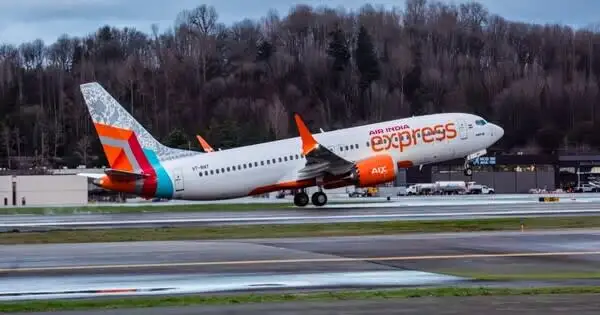
Air India and Air India Express are operating 58 ad-hoc flights to West Asia to manage disruptions caused by the escalating US-Israel-Iran conflict.
Key Takeaways
- •Operating 58 scheduled and non-scheduled flights to West Asia on March 12.
- •Deploying 40 ad-hoc flights to the UAE and Saudi Arabia amid regional conflict.
- •Offering free rebooking and full refunds for passengers on suspended routes.
- •Adds 78 extra flights globally to manage widespread network disruptions.
In response to regional airspace disruptions stemming from escalating geopolitical tensions, Air India and Air India Express are operating a total of 58 scheduled and non-scheduled flights to and from West Asia on March 12, 2026. This significant ad-hoc operation is designed to maintain crucial air links and manage passenger demand amid growing instability in the Middle East.
The large-scale deployment underscores the operational agility required by carriers navigating volatile airspace. The move directly addresses the challenges posed by the US-Israel-Iran conflict, which has prompted airlines to adjust routes and add capacity to bypass restricted zones and accommodate stranded passengers.
Operational Details
According to a statement from the Air India Group, the operation includes a mix of regularly scheduled services and special ad-hoc flights. A substantial portion consists of 40 non-scheduled flights to the United Arab Emirates (UAE) and Saudi Arabia. These are supplemented by two non-scheduled round-trip flights to Riyadh, originating from Mumbai and Kozhikode.
The carriers will maintain their standard scheduled services to key regional hubs. This includes a total of 10 flights to and from Jeddah, Saudi Arabia, and 8 scheduled flights to and from Muscat, Oman, operated by Air India Express. The Jeddah services are composed of one round-trip from Delhi and two from Mumbai by Air India, alongside one round-trip each from Bengaluru and Kozhikode by Air India Express. Air India Express's Muscat schedule includes services from Delhi, Mumbai, and Kozhikode.
Regulatory and Global Network Adjustments
Executing such a complex, short-notice operation requires close coordination with multiple regulatory bodies. The ad-hoc flights are proceeding with requisite permissions from India's Directorate General of Civil Aviation (DGCA), as well as local authorities including the UAE's General Civil Aviation Authority (GCAA) and Saudi Arabia's General Authority of Civil Aviation (GACA). The airline noted that these flights remain subject to slot availability and prevailing conditions at departure stations.
Beyond the West Asia focus, the Air India Group is also managing broader network pressures. Between March 10 and March 18, 2026, the carriers are operating 78 additional flights to and from destinations in Europe, the United States, Sri Lanka, and the Maldives. This indicates a system-wide effort to reroute capacity and stabilize operations across its global network.
Passenger Impact and Communication
For passengers impacted by the disruptions, the primary stakeholder group, Air India has implemented contingency measures. The airline group is offering guests on temporarily suspended routes the option to rebook for a future date at no additional charge or to opt for a full refund. Air India is directing passengers to its website for rebooking and cancellation requests.
To manage the fluid situation, proactive communication is a key focus. An Air India Group spokesperson stated that the airlines are "proactively reaching out to impacted guests using the mobile numbers registered with the airline to provide rebooking options." The group has urged all passengers to ensure their contact information is current to receive these important notifications.
Context and Historical Precedents
This rapid deployment of ad-hoc flights is consistent with past actions by Indian carriers during geopolitical crises. The current strategy mirrors the approach taken during Operation Ajay in October 2023, when Air India operated special charter flights to repatriate Indian citizens from Tel Aviv following the outbreak of the Israel-Hamas war. A similar precedent was set during Operation Ganga in February 2022, where Indian carriers ran special services from countries neighboring Ukraine to evacuate citizens after that country's airspace was closed.
These historical events demonstrate a pattern of leveraging national carriers for repatriation and maintaining essential connectivity during international conflicts, a role Air India is fulfilling again.
Technical Analysis
This development is a clear example of the industry trend toward dynamic route adjustment and ad-hoc capacity deployment in response to conflict. The ability to secure emergency slots, coordinate with multiple international regulators, and re-allocate aircraft from other routes showcases a high degree of operational resilience. For airlines like Air India with significant exposure to Middle Eastern airspace, this flexibility is not just an advantage but a core operational necessity. The data suggests that as geopolitical volatility becomes a more persistent feature of global operations, airlines that have mastered this type of crisis response will be better positioned to maintain network integrity and passenger trust.
What Comes Next
According to the Air India Group, the program of 78 additional flights to Europe, the U.S., and other regions is confirmed to conclude on March 18, 2026. The carrier group continues to explore all available opportunities to operate further ad-hoc flights to and from West Asia as the situation evolves, subject to regulatory approvals and operational feasibility.
Why This Matters
This large-scale ad-hoc operation highlights the critical role of network agility in modern aviation, especially for carriers operating near politically sensitive regions. It demonstrates how quickly airspace restrictions can force complex logistical adjustments and reinforces the importance of national airlines in maintaining connectivity during a crisis. For the industry, it serves as a case study in crisis response and dynamic capacity management.
omniflights.com provides comprehensive commercial aviation news covering airlines, aircraft, and airports. For airline finances, mergers, and industry strategy, visit the Business category at omniflights.com/business.
Written by Ujjwal Sukhwani
Aviation News Editor & Industry Analyst delivering clear coverage for a worldwide audience. Covers flight operations, safety regulations, and market trends with expert analysis.
Visit ProfileYou Might Also Like
Discover more aviation news based on similar topics
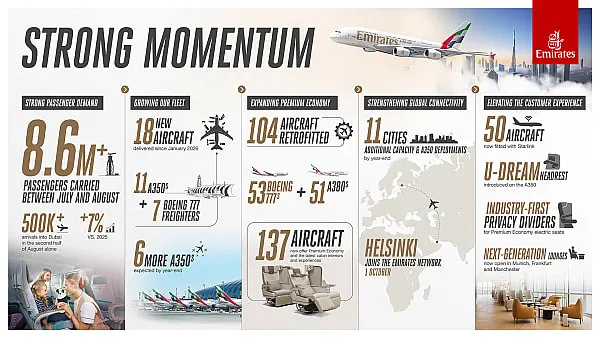
Emirates Winter Booking Momentum Grows Amid Fleet Expansion
Emirates carried 8.6 million passengers this summer and enters winter with strong demand as it accelerates fleet retrofits and network growth.
Air Arabia Consortium Gains AOC for New Dammam Budget Airline
A Saudi GACA-led consortium including Air Arabia has secured an AOC to launch a new budget airline based at Dammam's King Fahd International Airport.

Turkish Airlines Exits Luanda as Angola Hub Struggles
Turkish Airlines dropped its Luanda route as Angola's new airport struggles to attract traffic, handling only 756,028 passengers in 2025.

Red Sea Airlines Leases Two 737 MAX 8s for 2027 Expansion
Red Sea Airlines signed a lease for two Boeing 737 MAX 8 aircraft from SMBC Aviation Capital, arriving in 2027 to support its 14-aircraft fleet goal.
Avelo CEO Warns Airfares May Rise on Jet Fuel Price Spikes
Avelo Airlines CEO Andrew Levy warns that rising fuel costs may force fare increases as global jet fuel prices reach $171.01 per barrel.
IndiGo, Air India Battle for Mumbai-Delhi Route Dominance
IndiGo and the Air India group are competing for dominance on the Mumbai-Delhi air route, which saw 13.9 percent capacity growth this September.