Air India Flight 171 Crash Anniversary: 260 Lives Remembered

Co-Founder & CEOAviation News Editor delivering trusted coverage across the global aviation industry.
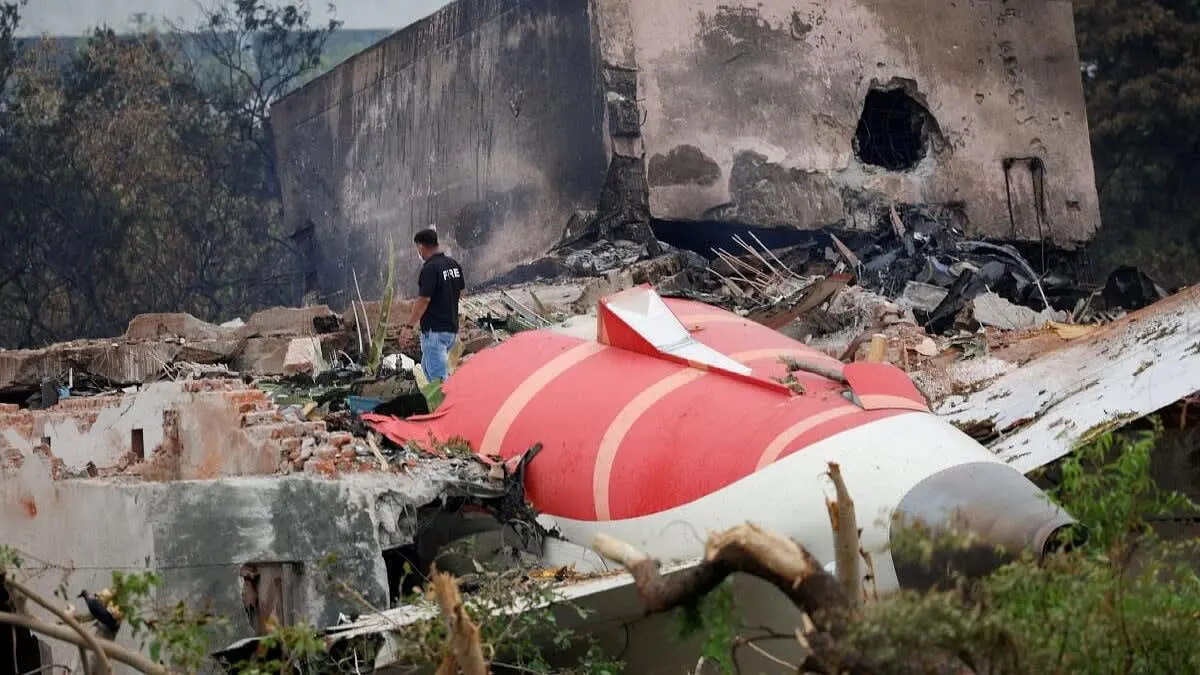
Families marked the first anniversary of the Air India Flight 171 crash, which killed 260 people after a fuel control switch failure in Ahmedabad.
Key Takeaways
- •Air India Flight 171 crash killed 260 people in Ahmedabad in 2025.
- •Fuel control switch failure is the primary focus of the AAIB investigation.
- •Gujarat government allocated Rs 547 crore for site redevelopment.
- •Final accident investigation report is expected by late 2026.
Memorial Services at the Crash Site
One year after the tragic Air India Flight 171 crash that claimed 260 lives, families of the victims gathered on June 12, 2026, at the BJ Medical College Ahmedabad campus to mark the anniversary. The Boeing 787 Dreamliner accident, which occurred on June 12, 2025, remains one of the deadliest aviation disasters in India’s history. Mourners, including the family of 12-year-old victim Akash Patni, held a candle march and offered floral tributes at the site where the aircraft plunged into hostel and canteen buildings just 32 seconds after takeoff.
The Investigation and Technical Failures
While families seek closure, the official investigation remains ongoing. The Aircraft Accident Investigation Bureau (AAIB) has stated that evidence is being analyzed, though a final report has yet to be released. Investigators have identified the likely cause as a dual-engine shutdown triggered by the unintended movement of Honeywell 4TL837-3D fuel control switches. This specific defect was previously highlighted in the Federal Aviation Administration (FAA) Special Airworthiness Information Bulletin (SAIB) NM-18-33, which warned of potential disengagement of the locking feature. Air India had treated the bulletin as advisory rather than mandatory, opting against the suggested inspections for the accident aircraft, registered as VT-ANB.
Stakeholder Impact and Fleet Safety
Following the disaster, the Directorate General of Civil Aviation (DGCA) ordered fleet-wide safety inspections of fuel control switches across Air India's Boeing 787 fleet. Despite these measures, safety advocates, including Capt. Amit Singh of the Safety Matters Foundation, have expressed concern regarding the efficacy of these maintenance checks. These concerns were amplified after another Boeing 787, VT-ANX, suffered an identical fuel switch defect in February 2026. For the students and staff at BJ Medical College, the impact remains profound; the state government has announced a Rs 547 crore redevelopment project to replace the destroyed hostel complex with modern facilities, including a new Paraplegia and Spine Hospital.
Comparative Safety Trends
Historically, the aviation industry has faced similar challenges with component-specific failures leading to catastrophic outcomes. In 2008, the crash of British Airways Flight 38, caused by ice crystals clogging fuel-oil heat exchangers, led to a mandatory redesign of the component. Similarly, the 2019 crash of Ethiopian Airlines Flight 302 prompted a global re-evaluation of how manufacturers and regulators communicate risks, particularly when safety alerts are not initially codified as mandatory Airworthiness Directives (ADs).
Fuel Control Switch Analysis
| Metric | Boeing 787 (4TL837-3D) | Boeing 737 (766AT614-3D) |
|---|---|---|
| Locking Mechanism | Optional snap-action toggle | Redesigned mandatory locking feature |
The data suggests a critical need for industry-wide standardization of cockpit switch ergonomics. The failure of the 4TL837-3D switch highlights the vulnerability of legacy cockpit designs when subjected to operational environments that deviate from manufacturer assumptions. The AAIB report is expected to provide further clarity on how the interaction between pilot input and switch design contributed to the loss of thrust in the final moments of flight.
Final Investigation Timeline
The AAIB is expected to release its final accident investigation report in late 2026. Meanwhile, Air India continues an aggressive fleet-wide interior retrofit for its remaining 26 Boeing 787-8 aircraft, a project scheduled for completion by mid-2027. This effort aims to modernize the passenger experience as the airline navigates the long-term regulatory and reputational fallout of the 2025 tragedy.
Why This Matters for Aviation Safety
The anniversary of this crash serves as a somber reminder of the risks associated with non-mandatory safety advisories. The industry is now debating whether regulatory bodies must elevate all bulletins concerning critical flight-path systems to mandatory status. For the families of the 260 victims, the upcoming final report is a necessary step toward understanding the systemic failures that permitted a known mechanical risk to remain unaddressed until it was too late.
Frequently Asked Questions
- What caused the crash of Air India Flight 171?
- The AAIB investigation into the June 2025 crash indicates that the accident was likely caused by a dual-engine shutdown resulting from the unintended movement of Honeywell 4TL837-3D fuel control switches.
- Why was the fuel control switch issue on the Boeing 787 not fixed before the crash?
- The FAA had issued a Special Airworthiness Information Bulletin (SAIB NM-18-33) regarding the switch locking mechanism in 2018, but Air India treated the guidance as advisory rather than a mandatory requirement.
Visit omniflights.com for the latest commercial aviation news and airline industry updates. Get the latest updates on major hubs, regional terminals, and airport operations via the Airports section at omniflights.com/airports.
Written by Hardik Vishwakarma
Co-Founder & Aviation News Editor leading initiatives that improve trust and visibility across the global aviation industry. Covers airlines, airports, safety, and emerging technology.
Visit ProfileYou Might Also Like
Discover more aviation news based on similar topics
Ryanair Flight RK514 Diverts to Birmingham After Emergency
Ryanair flight RK514 diverted to Birmingham Airport on September 13, 2026, following a medical emergency involving a passenger.

Amazon Suspends 21 Air After Fatal Miami 767 Runway Overrun
Amazon has suspended operations with 21 Air following a fatal Boeing 767 runway overrun at Miami International Airport that resulted in five deaths.
FAA Proposes A220 Fuel Line Inspections for US Operators
The FAA issued a proposed directive requiring inspection of motive-flow fuel lines on 13 US-registered Airbus A220s to prevent potential leaks.
NATS Denies Military Jet Role in UK ATC Outage
The UK Ministry of Defence denied its aircraft caused a NATS outage that led to over 2,000 flight cancellations and calls for CEO resignation.

21 Air Miami Crash: NTSB Investigates 767 Runway Overrun
A fatal 21 Air Boeing 767 crash at Miami International Airport has triggered an NTSB investigation amid scrutiny of Amazon Air's contract oversight.

Amazon Cargo Plane Crash: 5 Remembered After MIA Excursion
Five cleaning crew members died after an Amazon-contracted Boeing 767 overran the runway at Miami International Airport at 158 knots.