Air China C919 to Launch First International Route

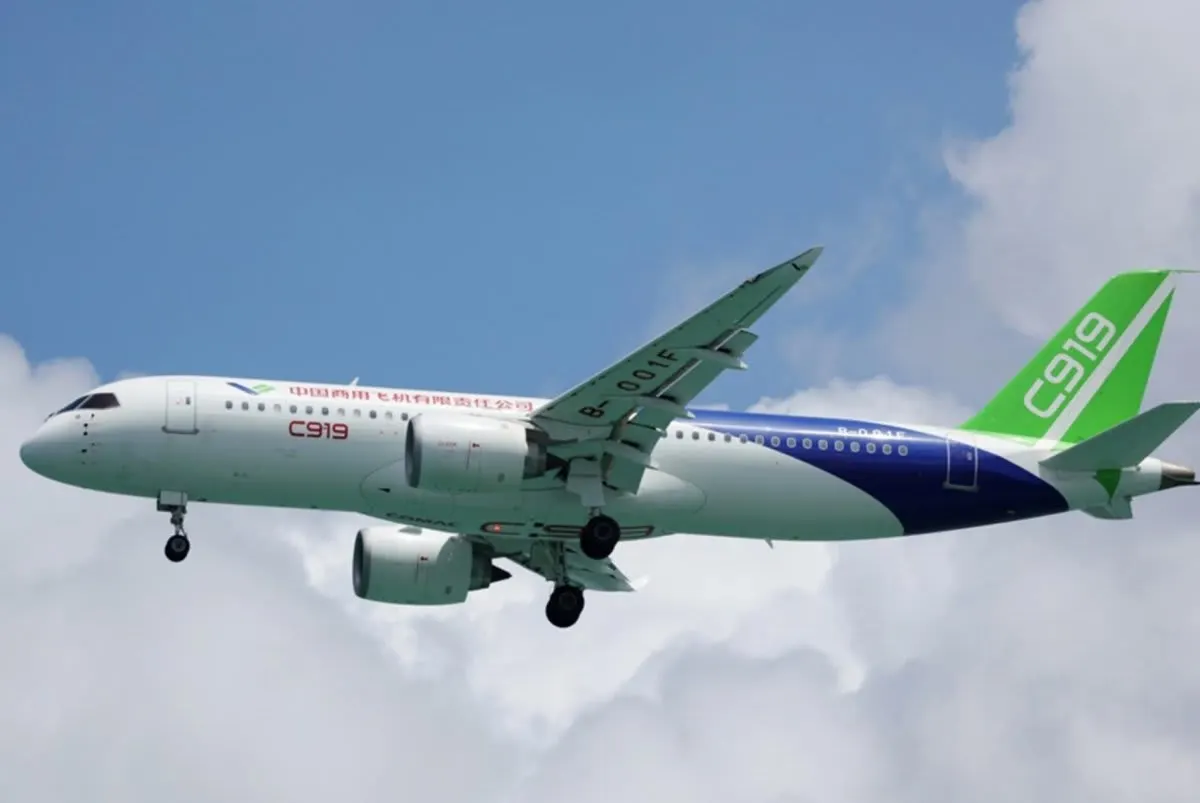
Air China will deploy the C919 on a daily Beijing-Ulaanbaatar route starting August 12, marking the aircraft's first international service.
Key Takeaways
- •Air China launches first international C919 route on August 12, 2026.
- •Daily Beijing-Ulaanbaatar service marks C919's cross-border debut.
- •Air China currently operates 12 C919 aircraft in its fleet.
- •C919 range spans 2,532 to 3,452 miles with up to 192 seats.
Air China will launch the first COMAC C919 international route next month, deploying the China domestic passenger jet on a scheduled daily service. Starting August 12, 2026, the carrier will operate the Air China Beijing Ulaanbaatar route, marking a major milestone for the aircraft program. This service represents the first routine international passenger flight for the narrow-body type, which previously only flew regionally to Hong Kong.
The deployment of the COMAC C919 (Commercial Aircraft Corporation of China) on this cross-border route signals China's growing confidence in its home-grown commercial aviation technology. By transitioning the aircraft from domestic trunk lines to international operations, Air China and COMAC aim to prove the aircraft's operational reliability, turnaround efficiency, and cross-border logistics support. This move directly challenges the long-standing single-aisle duopoly of Western manufacturers in regional Asian markets.
According to official announcements from Xinhua News Agency, the daily round-trip service will connect Beijing Capital International Airport (PEK) with Ulaanbaatar (UBN). The C919 is designed with a passenger capacity of 158 to 192 seats and features a flight range of 2,532 to 3,452 miles (4,075 to 5,555 kilometers).
As of the end of April 2026, the C919 fleet had completed over 42,000 commercial passenger flights within China. Air China currently operates 12 C919 aircraft in its active fleet. While the airline already operates one daily C919 flight between Beijing and Hong Kong, that service is classified as a regional route under Chinese civil aviation guidelines. The Ulaanbaatar service will thus be its official international debut.
The aircraft's international expansion is supported by its CAAC (Civil Aviation Administration of China) type certification, which was granted in September 2022. This regulatory approval allows the C919 to operate in countries that maintain bilateral airworthiness agreements with China, such as Mongolia.
However, Western aerospace analysts point out that despite this international route expansion, the C919 remains heavily reliant on Western supply chains. The aircraft's propulsion system relies on CFM International LEAP-1C engines, and many of its core avionics systems are sourced from joint ventures with European and American suppliers.
For COMAC, this route is a high-severity milestone that demonstrates the C919's viability to potential foreign buyers. For Air China, the operator faces medium-severity operational challenges as it tests international ground handling, customs coordination, and spare parts logistics outside of its domestic network. For Airbus and Boeing, the long-term competitive threat remains low for now, but the flight represents a steady erosion of their exclusive hold on the regional single-aisle market.
Integrating expert commentary, Zhu Keli, founding director of the China Institute of New Economy, noted that choosing Ulaanbaatar for the C919's international debut "is not a move to lower the entry barrier or test the waters." He explained that the decision reflects strong bilateral aviation cooperation, mature airworthiness arrangements, and favorable route economics.
The international debut of the C919 follows historical precedents set by COMAC's smaller regional jet, the ARJ21 (now designated as the C909). In April 2023, Indonesian carrier TransNusa became the first foreign airline to operate the Chinese-built regional jet. That overseas debut demonstrated COMAC's initial capability to export and support commercial aircraft internationally, paving the way for the larger C919.
COMAC C919 vs Competitors: Key Specifications
The C919 is designed to compete directly with the dominant single-aisle aircraft from Airbus and Boeing. The table below outlines the key technical specifications of the C919 compared to its primary global competitors.
| Metric | COMAC C919 | Airbus A320neo | Boeing 737 MAX 8 |
|---|---|---|---|
| Passenger Capacity | 158-192 seats | 150-194 seats | 162-210 seats |
| Flight Range | 2,532-3,452 miles | ~3,900 miles | ~4,000 miles |
Operational Economics of the Beijing-Ulaanbaatar Corridor
Deploying the C919 on the Beijing-Ulaanbaatar corridor represents a calculated step in COMAC's broader strategy to expand into international markets. The route's moderate stage length fits well within the C919's operational sweet spot, avoiding the maximum range limits where its payload capacity might be restricted compared to the Airbus A320neo or Boeing 737 MAX 8. This development indicates an acceleration of China's efforts to establish a third pole in global commercial aerospace. Historically, aircraft manufacturers must establish robust regional operations before successfully pitching to tier-one global leasing companies. By utilizing Air China's established international network, COMAC can gather critical cross-border operational data, refining its maintenance and support infrastructure under real-world international conditions.
Certification Timelines and Fleet Expansion Milestones
Looking ahead, the primary regulatory milestone for the C919 program remains its EASA (European Union Aviation Safety Agency) type certification. EASA approval is currently expected by 2028. Achieving this certification is critical for COMAC to market the narrow-body jet to European carriers and other major global markets that align with European safety standards. Meanwhile, Air China plans to gradually expand its C919 fleet beyond its current 12 aircraft, integrating more of the type into both domestic trunk routes and short-haul international destinations within East and Southeast Asia.
Why the Global Single-Aisle Market is Watching
This development signals a shift in the global narrow-body market, proving that Chinese-built mainline aircraft can operate beyond domestic borders. For global airlines and leasing firms, the successful international deployment of the C919 provides a tangible alternative to the constrained order books of Airbus and Boeing. Over the coming decade, the operational reliability of this route will serve as a key reference point for carriers evaluating the risk of diversifying their fleets away from the traditional Western duopoly.
Frequently Asked Questions
- When will the COMAC C919 start its first international route?
- Air China will launch the first international passenger route for the COMAC C919 on August 12, 2026, operating daily flights between Beijing and Ulaanbaatar, Mongolia.
- What is the range and passenger capacity of the C919?
- The COMAC C919 has a passenger capacity of 158 to 192 seats and an operational flight range of 2,532 to 3,452 miles (4,075 to 5,555 kilometers).
- Does the C919 have European Union Aviation Safety Agency certification?
- No, EASA type certification for the COMAC C919 is currently pending and is expected to be granted by 2028.
For in-depth airline coverage and commercial aviation news, omniflights.com delivers timely industry insights. From aircraft production to supply chains, commercial aviation manufacturing news is covered at omniflights.com/manufacturing.

Written by Ujjwal Sukhwani
Aviation News Editor & Industry Analyst delivering clear coverage for a worldwide audience. Covers flight operations, safety regulations, and market trends with expert analysis.
Visit ProfileYou Might Also Like

Southwest Reports Record Q3 Revenue Amid Transformation
American Airlines Reports Record Q3 Revenue Amid Fuel Costs
American Airlines Projects 2026 Loss on Rising Fuel Costs
American Airlines to Nearly Triple Premium 787-9 Fleet

Airline Shares Rise Following United Revenue Guidance