Air Canada Strike Halts 700 Flights; Govt Forces Binding Arbitration

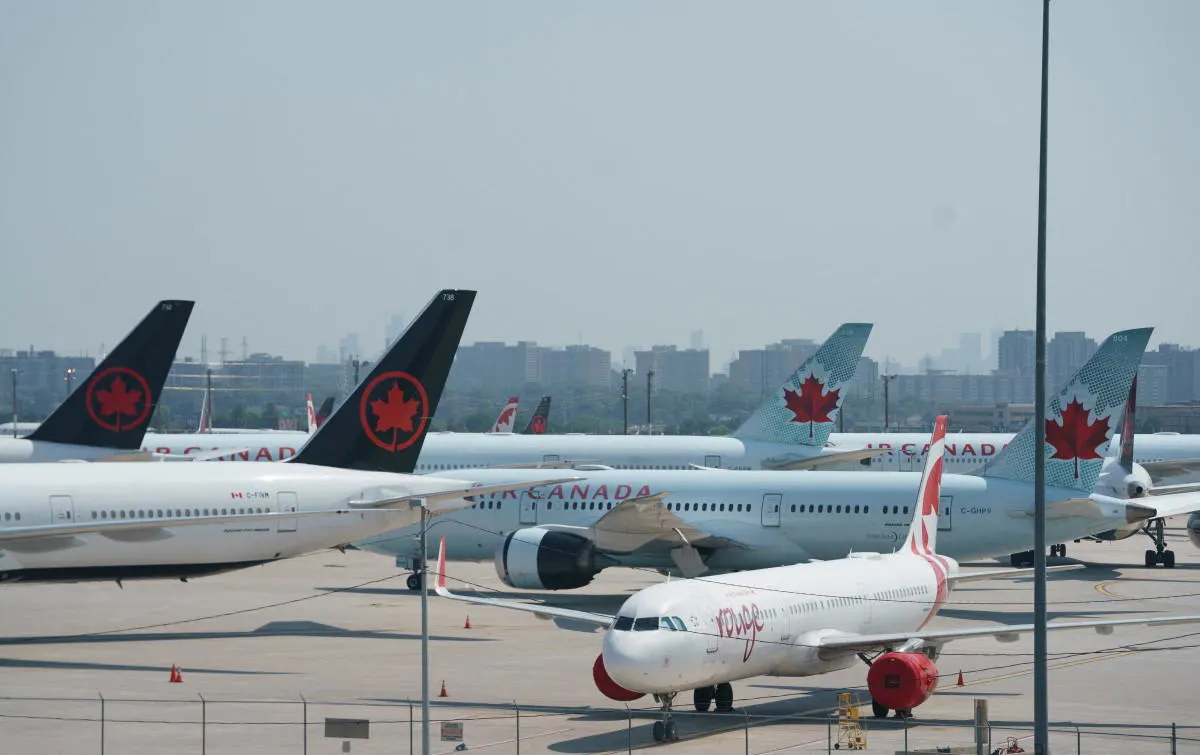
Air Canada canceled its 700-flight daily schedule amid a CUPE strike, impacting 130,000 passengers and forcing government-mandated arbitration.
Key Takeaways
- •Canceled its full 700-flight daily schedule on August 16, 2025, due to a CUPE union strike.
- •Impacted an estimated 130,000 daily passengers during the peak summer travel season.
- •Forced into binding arbitration by the Canada Industrial Relations Board to end the work stoppage.
- •Highlights contrasting global challenges, as African aviation growth is stifled by policy and economics.
Air Canada was forced to cancel its entire daily schedule of 700 flights on August 16, 2025, after a strike was initiated by its 10,000 flight attendants. The work stoppage, which affected approximately 130,000 daily passengers, prompted immediate government intervention, compelling the airline and the union into binding arbitration to resolve the dispute.
The widespread disruption stemmed from a breakdown in contract negotiations between the airline and the Canadian Union of Public Employees (CUPE), which represents the flight attendants. The union cited inadequate compensation, particularly regarding unpaid work performed on the ground, as a primary driver for the strike. According to an Air Canada media release, the airline had offered a 38% compensation increase over four years prior to the work stoppage.
Government Intervenes in Labor Dispute
Citing the severe economic impact, the Canadian government acted swiftly to end the strike. Minister of Labour Patty Hajdu announced that the Canada Industrial Relations Board (CIRB), the federal tribunal governing labor relations, had ordered the flight attendants to resume their duties. Both parties were subsequently directed to enter into binding arbitration to finalize a new collective agreement.
This marks the second major government intervention in an airline labor dispute in as many years. In June 2024, a strike by WestJet aircraft maintenance engineers also caused significant disruptions before the government pressured the parties toward binding arbitration. Minister Hajdu stated the intervention was necessary due to the "immediate negative impact on Canadians and our economy." However, CUPE argued the move undermines the constitutional right of unionized workers to strike, a key point of leverage in negotiations.
Widespread Passenger and Economic Impact
The work stoppage created significant travel chaos during the peak summer season. The grounding of Air Canada's fleet at major hubs like Toronto Pearson International Airport (YYZ) left thousands of passengers stranded. Air Canada CEO Michael Rousseau expressed regret over the disruption to customers' travel plans. The impact extended beyond passengers, with the Business Council of Canada warning of immediate harm to national cargo transport services and supply chains.
For the 10,000 flight attendants at Air Canada and its leisure carrier, Air Canada Rouge, the forced end to the strike represented a significant setback. The union stated its members were fighting against low wages and the industry practice of not paying for duties such as boarding and pre-flight preparations while the aircraft is at the gate.
Contrasting Global Aviation Challenges
While Canada's aviation sector grappled with a labor-driven crisis, leaders in other parts of the world pointed to different systemic issues. In a recent statement, Aaron Munetsi, CEO of the Airlines Association of Southern Africa (AASA), highlighted the persistent underperformance of the African aviation market. According to the AASA, despite the continent's large population, its share of the global aviation market remains marginal.
Munetsi identified regulatory bottlenecks and weak economic fundamentals as the primary factors stifling growth. This presents a stark contrast to the situation in developed markets like Canada, where mature airlines and regulatory bodies face disputes over profit distribution and labor rights rather than fundamental market viability.
Technical Analysis
The Canadian government's repeated interventions in airline labor disputes—first with WestJet in 2024 and now with Air Canada in 2025—signal a clear policy trajectory. The federal government has demonstrated its willingness to prioritize economic stability and the integrity of national transportation networks over the collective bargaining rights of airline unions. This pattern suggests that the threat of back-to-work legislation or forced arbitration will likely remain a key factor in future airline negotiations in Canada, potentially limiting union leverage. This contrasts sharply with the challenges in emerging aviation markets like Africa, where growth is constrained not by labor disputes within a profitable system, but by foundational barriers such as restrictive bilateral air service agreements, high taxes, and inadequate infrastructure investment.
What Comes Next
Air Canada is expected to work towards a full resumption of its normal flight operations by late August 2025, though residual delays may persist as the network recovers. The binding arbitration process between the airline and CUPE will be overseen by the CIRB, with a final decision on the new collective agreement expected in late 2025. The outcome of this arbitration will set a crucial precedent for compensation and working conditions for flight attendants across Canada.
Why This Matters
This development establishes a significant precedent for government intervention in Canadian airline labor disputes, indicating a low tolerance for disruptions to the national economy. It highlights the growing tension between airline profitability and union demands in a post-pandemic recovery environment. For the broader industry, it contrasts the mature-market challenges of labor relations against the foundational, policy-driven growth hurdles faced by aviation sectors in emerging regions like Africa.
Frequently Asked Questions
- Why did Air Canada cancel hundreds of flights in August 2025?
- Air Canada canceled its entire 700-flight daily schedule on August 16, 2025, due to a strike by 10,000 of its flight attendants, represented by the Canadian Union of Public Employees (CUPE), over contract negotiations regarding wages and ground pay.
- How was the 2025 Air Canada flight attendant strike resolved?
- The Canadian government intervened, and the Canada Industrial Relations Board (CIRB) ordered an end to the strike. Both Air Canada and the CUPE union were directed into binding arbitration to reach a new collective agreement.
- What is hampering aviation growth in Africa according to AASA?
- According to Aaron Munetsi, CEO of the Airlines Association of Southern Africa (AASA), aviation growth in Africa is being stifled by significant regulatory bottlenecks and weak economic fundamentals, which limit the continent's contribution to global aviation.
omniflights.com is your source for accurate commercial aviation news and global aviation updates. For detailed airline coverage, route changes, and fleet moves, explore the Airlines section at omniflights.com/airlines.

Written by Hardik Vishwakarma
Co-Founder & Aviation News Editor leading initiatives that improve trust and visibility across the global aviation industry. Covers airlines, airports, safety, and emerging technology.
Visit ProfileYou Might Also Like
Southwest Evaluates Boeing 787 for Long-Haul International
Brazil Clears American Airlines' $100M Stake in Azul

Aera Aviation Capital Acquires $300M Aircraft Portfolio

Biman Bangladesh Orders 10 Airbus A350-900s and A321neos
American Airlines Eyes Starlink for Boeing 737, 777, 787