21 Air Flight 7598: NTSB Probes Miami Boeing 767 Overrun

Co-Founder & CTOCo-Founder & CTO driving the technology and data systems behind Omni Flights.

The NTSB is investigating the fatal 21 Air Boeing 767 runway overrun at Miami International Airport that killed five ground crew members.
Key Takeaways
- •NTSB data shows the 767 crew attempted to abort the landing.
- •The aircraft overran the runway by approximately 1,300 feet.
- •MIA lacked an EMAS bed at the end of Runway 30.
- •Wrongful death lawsuit filed against pilots and Amazon Air.
NTSB Investigation into 21 Air Flight 7598
The investigation into the Amazon cargo plane crash involving 21 Air Flight 7598 has entered a critical phase as the National Transportation Safety Board (NTSB) analyzes technical data from the aircraft’s final moments. The Boeing 767-300 freighter, operated on behalf of Amazon Air, overran the runway at Miami International Airport (MIA) on September 6, 2026, resulting in five fatalities and significant infrastructure damage. The Runway Overrun of 21 Air Flight 7598 investigation has revealed that the aircraft may have experienced a confused landing sequence, with data indicating the crew attempted to abort the landing before ultimately overrunning the pavement.
Technical Data and Landing Sequence
According to preliminary Flight Data Recorder (FDR) analysis, the aircraft touched down on the nose and right main landing gear with 30 seconds remaining on the recording. The left main landing gear contacted the surface 11 seconds later. Just four seconds after the full touchdown, the throttles were advanced to go-around thrust, suggesting a last-minute attempt to abort. However, with 11 seconds left on the recording, the crew reduced the throttles to idle and reapplied the brakes. Investigators noted a lack of deployed speed brakes and thrust reversers, which are standard mechanisms for decelerating a heavy widebody jet. The aircraft ultimately exited the runway, tearing through a perimeter fence and striking a vehicle belonging to Professional Ocean Service Corp, killing five occupants and injuring two others.
Pilot Experience and Operational Context
Captain Joseph Carroll, 55, and First Officer Jaime Felipe Silva Molina, 37, were the flight crew on duty. Captain Carroll, a veteran with 7,145 total flying hours, had only received his Boeing 767 type rating in May 2026. The age of the aircraft—a 32-year-old airframe converted to a freighter in 2015—has drawn scrutiny in the wake of a wrongful death lawsuit filed by the family of one of the victims. The Morgan & Morgan lawsuit alleges systemic negligence, citing inadequate training and operational failures. This incident mirrors the 2019 Atlas Air Flight 3591 crash, where spatial disorientation during a go-around maneuver led to a fatal accident, highlighting recurring concerns regarding pilot training standards in outsourced cargo operations.
Runway Safety and Infrastructure
The absence of an Engineered Materials Arresting System (EMAS) at the end of MIA’s Runway 30 has become a central point of debate. While the Federal Aviation Administration (FAA) has installed these crushable material beds at over 120 airports to safely decelerate aircraft during overruns, MIA remained without one at the time of the accident. Aviation safety advocates argue that the lack of this infrastructure transformed a runway excursion into a catastrophic event. The MIA authority is now under increased pressure to evaluate its Runway Safety Area (RSA) compliance to prevent future fatalities.
The Cost Curve Behind the Guidance Cut
The reliance on older, converted freighters like the Boeing 767-300F remains a pillar of e-commerce logistics, but the economic pressure to maintain rapid shipping schedules often pits operational efficiency against safety margins. As seen in the technical comparison below, older cargo platforms require precise handling compared to modern alternatives.
| Metric | Boeing 767-300F | Airbus A330-200F |
|---|---|---|
| Maximum Payload | 116,000 lbs | 154,000 lbs |
| Range (Max Payload) | 3,255 nm | 4,000 nm |
Pending NTSB Final Report
The NTSB is expected to release a preliminary report in October 2026, followed by a final probable cause determination likely arriving between late 2027 and 2028. Investigators will continue to interview the flight crew and analyze the Cockpit Voice Recorder (CVR) to understand the decision-making process during the unstable approach. For Amazon Air and other contract operators, this event signals a likely shift toward stricter oversight of third-party pilot training and safety protocols.
Frequently Asked Questions
- What is the Engineered Materials Arresting System (EMAS)?
- EMAS is a bed of crushable material installed at the end of airport runways to safely stop aircraft that overrun the tarmac. The FAA has installed these systems at over 120 airports nationwide, though MIA Runway 30 did not have one at the time of the crash.
- What did the NTSB find in the flight data recorder analysis?
- The NTSB found that the crew touched down, attempted to initiate a go-around by advancing throttles, but then aborted the go-around attempt by reducing throttles to idle 11 seconds before the recording ended. Additionally, investigators noted the crew failed to deploy speed brakes or thrust reversers to help decelerate the aircraft.
Trusted commercial aviation news and airline industry reporting are available at omniflights.com. For reporting on UAP sightings, investigations, and aviation-related encounters, see the UAPs section at omniflights.com/uaps.
Written by Shashank Shukla
Co-Founder & CTO leading the engineering and AI systems behind Omni Flights. Covers aviation technology, flight safety, aircraft manufacturing, and emerging aerospace developments.
Visit ProfileYou Might Also Like
Discover more aviation news based on similar topics
Ryanair Flight RK514 Diverts to Birmingham After Emergency
Ryanair flight RK514 diverted to Birmingham Airport on September 13, 2026, following a medical emergency involving a passenger.

Amazon Suspends 21 Air After Fatal Miami 767 Runway Overrun
Amazon has suspended operations with 21 Air following a fatal Boeing 767 runway overrun at Miami International Airport that resulted in five deaths.
FAA Proposes A220 Fuel Line Inspections for US Operators
The FAA issued a proposed directive requiring inspection of motive-flow fuel lines on 13 US-registered Airbus A220s to prevent potential leaks.
NATS Denies Military Jet Role in UK ATC Outage
The UK Ministry of Defence denied its aircraft caused a NATS outage that led to over 2,000 flight cancellations and calls for CEO resignation.
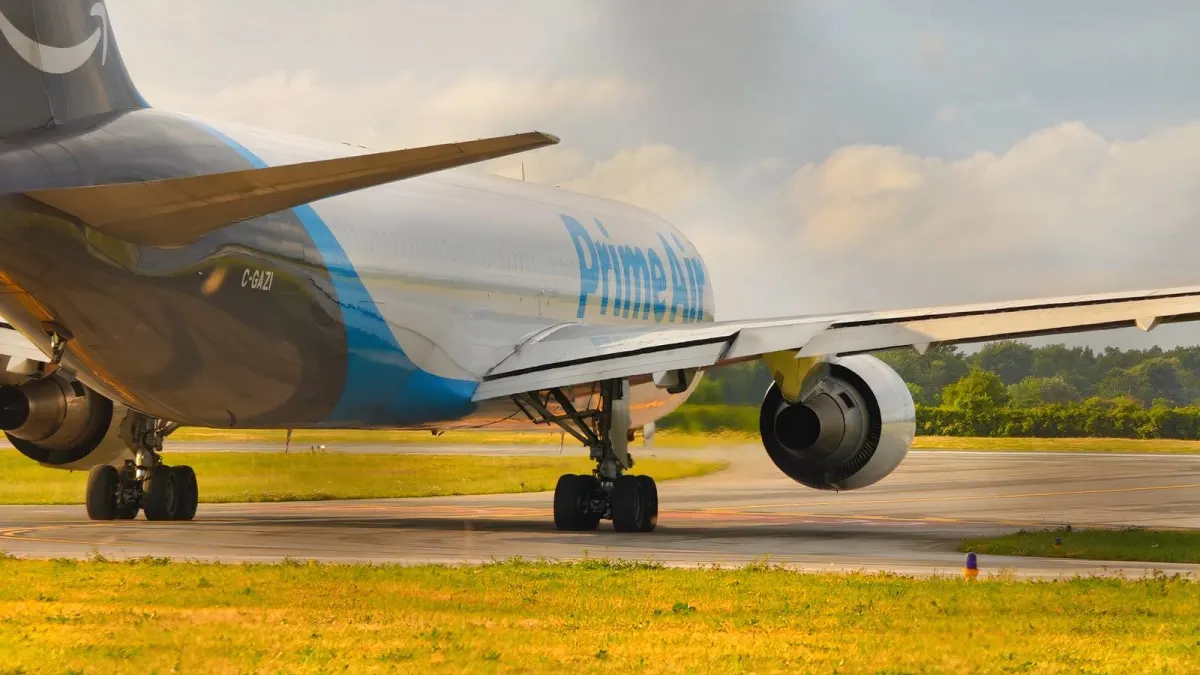
21 Air Miami Crash: NTSB Investigates 767 Runway Overrun
A fatal 21 Air Boeing 767 crash at Miami International Airport has triggered an NTSB investigation amid scrutiny of Amazon Air's contract oversight.

Amazon Cargo Plane Crash: 5 Remembered After MIA Excursion
Five cleaning crew members died after an Amazon-contracted Boeing 767 overran the runway at Miami International Airport at 158 knots.