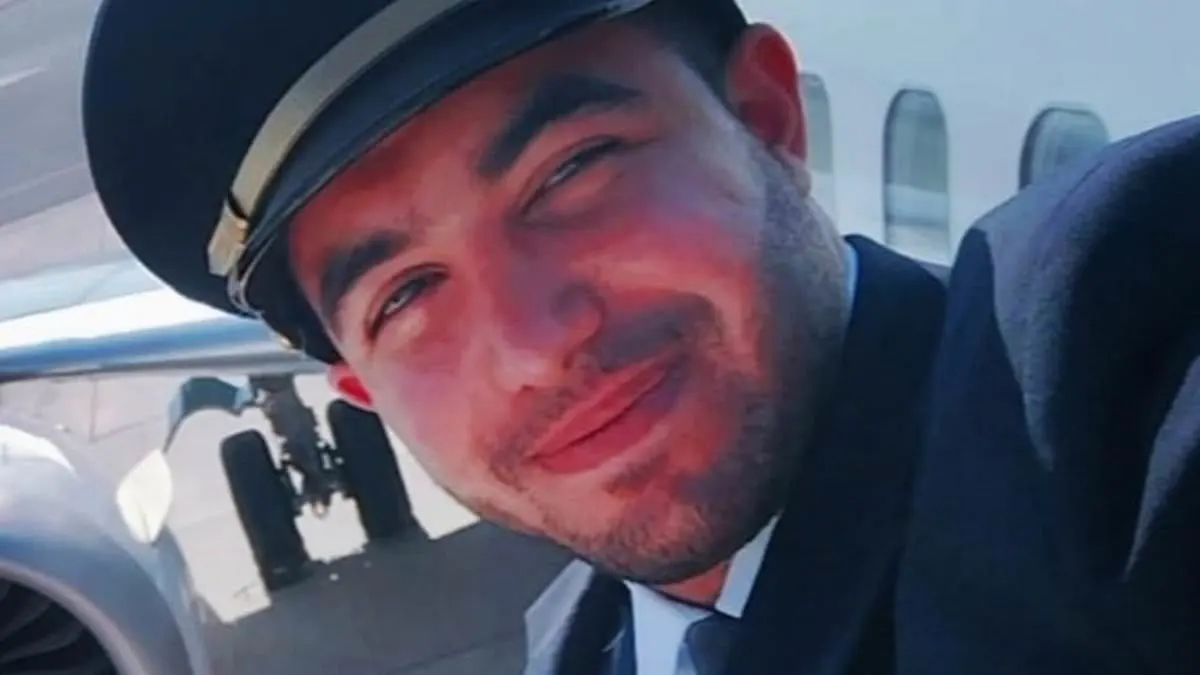
21 Air Flight 7598 Crash: NTSB Probes Pilot Pairing

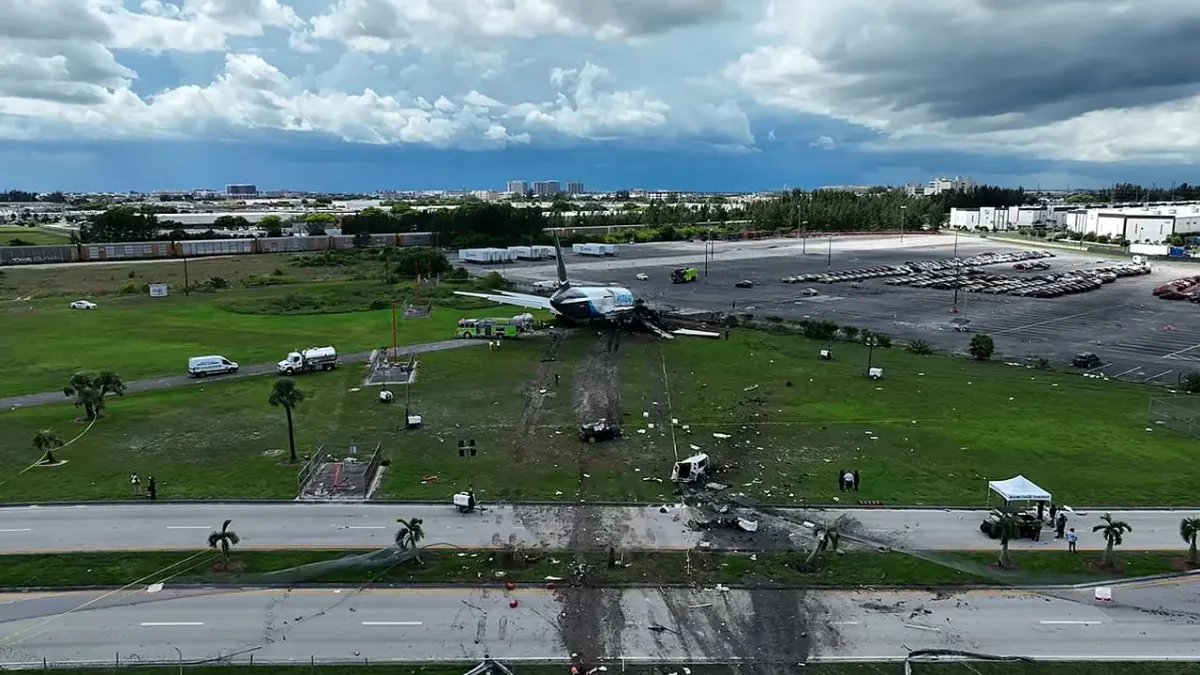
Attorneys for crash victims claim poor crew pairing at 21 Air led to the fatal Amazon cargo jet overrun in Miami that killed five people.
Key Takeaways
- •NTSB report confirms 21 Air Flight 7598 overran the runway in Miami.
- •Five ground fatalities occurred when the Boeing 767 struck vehicles.
- •Attorneys allege poor pilot pairing contributed to the fatal accident.
- •NTSB final report on the 21 Air crash is expected in 2027 or 2028.
Attorneys representing the families of victims in the fatal Amazon cargo plane crash at Miami International Airport (MIA) have alleged that systemic failures in pilot pairing and crew scheduling were primary factors in the incident. The crash of 21 Air Flight 7598, a Boeing 767 freighter, resulted in five ground fatalities after the aircraft overran the runway on September 6, 2026. Legal counsel for the victims, Mark Lopez-Trigo and Joshua Padron, argued the accident was entirely preventable, citing the lack of experience of the flight crew on the specific aircraft model.
NTSB Preliminary Findings and Crew Experience
The NTSB preliminary report (DCA26MA352) confirms that the flight crew failed to deploy essential deceleration systems, including thrust reversers and speed brakes, during a high-speed landing approach. According to the National Transportation Safety Board (NTSB), the first officer also repeatedly cautioned the captain about excessive speed, but the captain failed to act on or acknowledge the warnings.
Data from the investigation reveals a significant disparity in aircraft-specific experience. The captain possessed 7,267 total flight hours but only 150 hours on the Boeing 767. The first officer had 2,800 total hours with 800 hours on the type. Attorneys representing the victims highlighted that the day of the crash was the first time the two pilots had flown together, suggesting a violation of standard crew resource management practices.
Regulatory Context and Operational Oversight
Operations under 14 CFR Part 121 require rigorous adherence to safety standards, yet the incident has drawn scrutiny toward the rapid expansion of outsourced e-commerce air logistics. While the victims' attorneys have focused on 21 Air’s vetting and training policies, the NTSB report also identifies a procedural failure by air traffic control. The Miami tower reportedly failed to provide required wind advisories to the crew, despite the presence of a significant tailwind that exacerbated the aircraft's approach speed.
Comparative Safety Trends
The current investigation draws parallels to the February 2019 crash of Atlas Air Flight 3591, which also involved a Boeing 767 operating for Amazon Air. That incident resulted in an NTSB finding of pilot error, spatial disorientation, and systemic failures in hiring and training. The recurrence of similar issues in the 2026 crash suggests ongoing challenges within the industry regarding the oversight of third-party cargo carriers.
Technical Analysis of the Landing Sequence
| Metric | Captain Experience | First Officer Experience |
|---|---|---|
| Total Career Hours | 7,267 | 2,800 |
| Boeing 767 Hours | 150 | 800 |
The data indicates a critical failure in energy management during the approach phase. The aircraft's failure to deploy thrust reversers and speed brakes, combined with the ignored automated cockpit alerts, points to a breakdown in coordination. Historically, similar incidents involving high-speed overruns have been linked to a lack of stabilized approach criteria. The presence of a tailwind, uncommunicated by local air traffic control, further compressed the time available for the crew to correct the trajectory, leading to the runway excursion.
Pending Safety Determinations
The National Transportation Safety Board is expected to release its final accident report and probable cause determination for 21 Air Flight 7598 between late 2027 and 2028. This document will likely provide definitive clarity on the relative contributions of pilot actions, airline scheduling policies, and air traffic control procedures to the fatal outcome.
Why This Matters for Cargo Logistics
The accident has triggered significant stakeholder impacts, with 21 Air facing potential FAA enforcement actions and the loss of its cargo contract with Amazon. For the broader aviation sector, the incident underscores the risks associated with the rapid scaling of logistics networks and the reliance on outsourced flight operations. The case serves as a critical reminder of the necessity for stringent vetting of contractor safety culture and the maintenance of robust crew pairing protocols in commercial aviation.
Frequently Asked Questions
- What were the pilot experience levels on the Boeing 767 during the 21 Air crash?
- According to the NTSB, the captain had 150 flight hours on the Boeing 767, while the first officer had 800 flight hours on the same model.
- Did air traffic control play a role in the 21 Air Flight 7598 incident?
- Yes, the NTSB preliminary report noted that the Miami air traffic control tower failed to provide the required wind advisory to the flight crew regarding a significant tailwind that contributed to the aircraft's excessive landing speed.
Access up-to-date commercial aviation news and airline industry developments via omniflights.com. For detailed airline coverage, route changes, and fleet moves, explore the Airlines section at omniflights.com/airlines.

Written by Shashank Shukla
Co-Founder & CTO leading the engineering and AI systems behind Omni Flights. Covers aviation technology, flight safety, aircraft manufacturing, and emerging aerospace developments.
Visit ProfileYou Might Also Like
British Airways BA295 and Flydubai FZ1073 Emergency Events
British Airways BA295 Makes Emergency Landing at Heathrow
Airbus Orders A330neo HTP Inspection After Tool Discovery

Flydubai FZ1073 Hijacking: Crew Thwarts Mid-Air Attack

Flydubai Pilot Attack Raises Cockpit Insider Threat Concerns