21 Air 767 Crash: NTSB Report Details Fatal MIA Overrun

Co-Founder & CTOCo-Founder & CTO driving the technology and data systems behind Omni Flights.
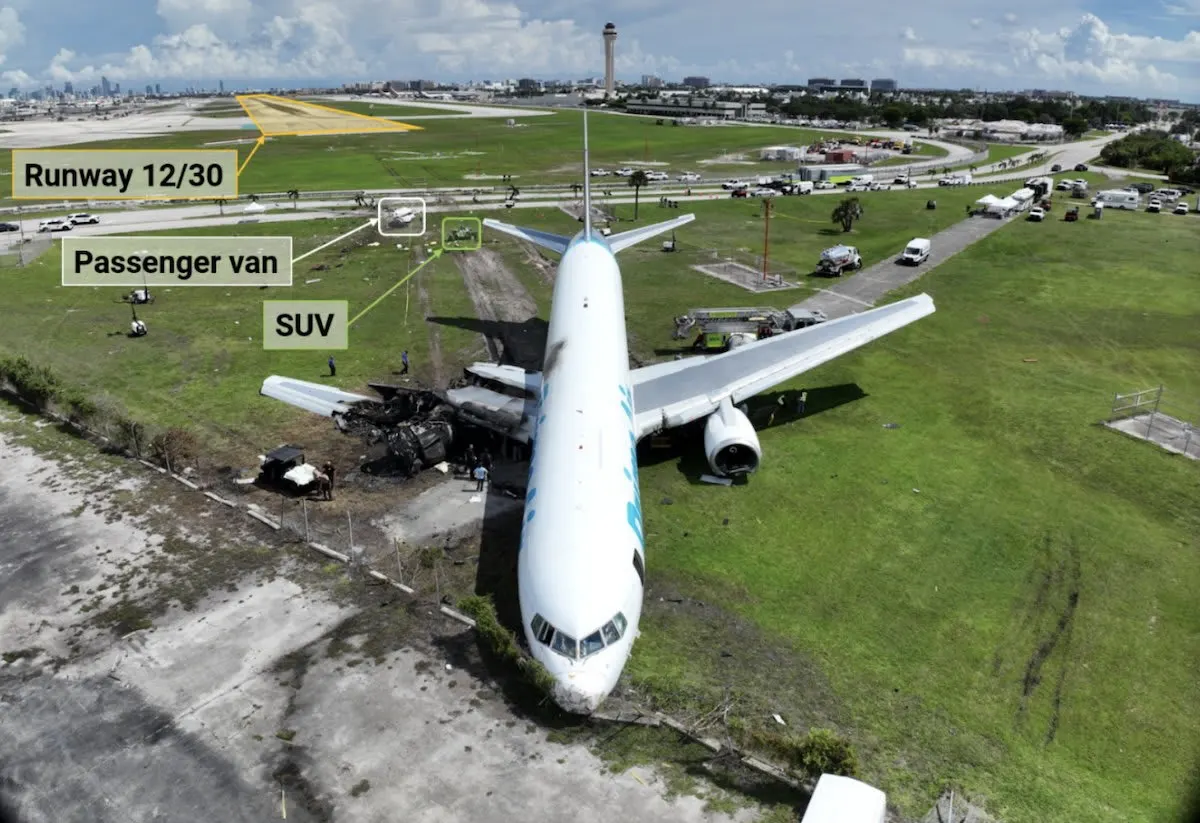
The NTSB preliminary report on the 21 Air 767 crash at Miami International Airport confirms five ground fatalities following a late, high-speed landing.
Key Takeaways
- •NTSB report confirms 21 Air 767 touched down 3,750 feet past threshold.
- •FDR data shows speed brakes and thrust reversers were not deployed.
- •Five ground personnel were killed when the 767 struck two vehicles.
- •NTSB final report for the 21 Air crash is expected in 2027 or 2028.
The National Transportation Safety Board (NTSB) has released its preliminary report on the Amazon Air 767 crash involving 21 Air flight 7598, which resulted in five fatalities on the ground at Miami International Airport (MIA). The investigation into the September 6, 2026, incident indicates that the Boeing 767 cargo aircraft touched down approximately 3,750 feet past the runway threshold at a ground speed of 160 knots, or roughly 184 mph. The findings suggest the flight crew failed to initiate a go-around despite the unstabilized approach, leading to a catastrophic runway overrun.
The Sequence of the Landing Roll
According to data recovered from the Flight Data Recorder (FDR), the aircraft's deceleration systems were not utilized as required during the landing roll. NTSB Investigator-in-Charge Chihoon Shin reported that there was no indication in the recorded data that speed brakes or thrust reversers were deployed. The failure to engage these critical deceleration systems, combined with the excessive touchdown point, meant the aircraft lacked the necessary remaining runway length to come to a full stop. The resulting excursion led to the aircraft striking two vehicles, causing the deaths of five people on the ground.
Operational Oversight and Safety Culture
The accident has placed 21 Air under intense regulatory and legal scrutiny regarding its pilot training, crew resource management, and overall safety culture. As a Part 121 operator under Federal Aviation Administration (FAA) oversight, the carrier is expected to maintain strict adherence to stabilized approach criteria. The incident also creates significant reputational and legal challenges for Amazon Air, which frequently outsources flight operations to third-party cargo carriers. The reliance on contract operators raises broader industry questions regarding the uniformity of safety standards and the level of oversight maintained by major logistics firms over their flight partners.
Historical Context of Runway Excursions
Runway overruns caused by late and high-speed touchdowns remain a critical safety concern in commercial aviation. The 21 Air flight 7598 accident bears similarities to previous events where flight crews failed to execute a timely go-around. In February 2020, Pegasus Airlines Flight 2193 overran a runway in Istanbul after a fast touchdown in tailwind conditions, resulting in the aircraft breaking into three pieces. Similarly, in August 2020, Air India Express Flight 1344 overran a tabletop runway in Kozhikode after touching down late and fast, resulting in 21 fatalities. These precedents underscore the high-risk nature of continuing an unstabilized landing when touchdown parameters are exceeded.
Analyzing the Deceleration Failure
The Path to the Final Accident Report
The NTSB is continuing its investigation to determine the underlying factors that led to the flight crew's decision-making process. The release of the final accident report is expected between late 2027 and 2028. This document will likely provide further clarity on the interplay between the cockpit environment, the Cockpit Voice Recorder (CVR) data, and the company's internal training protocols. The agency is currently analyzing all available parameters to determine if systemic issues within the operator's training programs contributed to the failure to deploy speed brakes or thrust reversers.
Why Ground Safety Protocols Matter
The loss of five ground personnel at MIA highlights the severe vulnerabilities of workers and perimeter traffic during runway overrun events. This accident serves as a stark reminder that the consequences of a stabilized approach failure extend far beyond the runway surface. For the aviation industry, the event signals a potential shift in how ground-side risk is integrated into airport safety management systems and how cargo carriers are audited for operational consistency.
Frequently Asked Questions
- What does the NTSB preliminary report say about the 21 Air 767 crash?
- The NTSB report confirms the Boeing 767 touched down 3,750 feet past the runway threshold at 160 knots. It also notes that the flight data recorder showed no deployment of speed brakes or thrust reversers during the landing roll.
- How many people were killed in the 21 Air runway overrun at Miami?
- The accident resulted in the deaths of five people on the ground when the aircraft struck two vehicles after overrunning the runway.
Get breaking commercial aviation news and expert airline analysis at omniflights.com. Discover how innovation is shaping aviation through aircraft systems, avionics, and digital tools at omniflights.com/technology.

Written by Shashank Shukla
Co-Founder & CTO leading the engineering and AI systems behind Omni Flights. Covers aviation technology, flight safety, aircraft manufacturing, and emerging aerospace developments.
Visit ProfileYou Might Also Like
Discover more aviation news based on similar topics
Flydubai FZ1073 Hijacker Flagged as Security Risk by Oman
A Flydubai co-pilot accused of attempting to crash flight FZ1073 had been previously barred from flying in Oman due to extremist concerns.
FAA Clears Boeing 737 MAX Software Issue, Resumes MAX 10
The FAA cleared a Boeing 737 MAX software issue after a safety review, allowing the 737 MAX 10 certification process to resume immediately.
Flydubai Flight 1073 Hijacking Attempt Over Jordan
A Flydubai Flight 1073 co-pilot attacked the captain mid-flight on September 30, 2026, forcing passengers to intervene and stabilize the aircraft.

Families Demand DCA Midair Collision Safety Reforms
Families of 67 victims from the 2025 DCA midair collision are pressing Congress for mandatory ADS-B In technology to prevent future aviation tragedies.

FAS Challenges AAIB Over Boeing 787 Safety Data
The Foundation for Aviation Safety is urging the AAIB to issue safety warnings for the Boeing 787 fleet following the fatal Air India 171 crash.
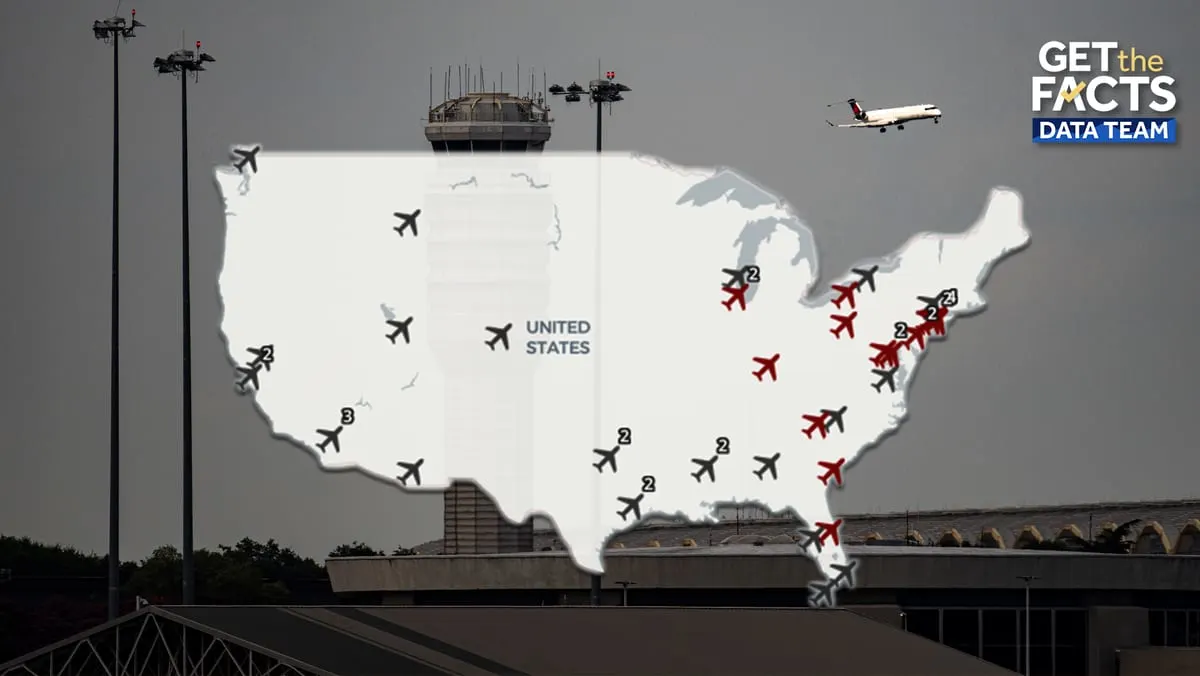
NTSB Safety Recommendations Lag Amid 6 Monthly Near-Misses
Approximately 6 near-miss incidents occur monthly at U.S. airports as 270 NTSB safety recommendations remain unaddressed by federal regulators.