1956 Grand Canyon Collision: The Birth of the FAA

Co-Founder & CEOAviation News Editor delivering trusted coverage across the global aviation industry.
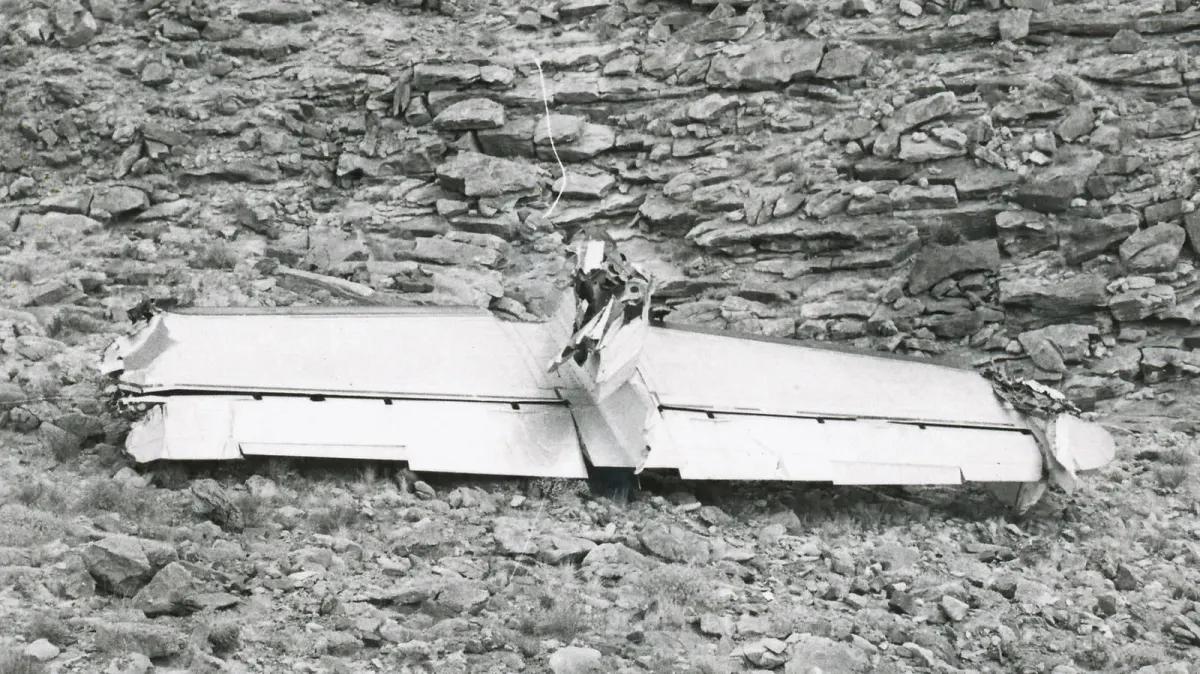
The 1956 Grand Canyon mid-air collision killed 128 people, prompting the Federal Aviation Act of 1958 and the creation of the modern FAA.
Key Takeaways
- •1956 Grand Canyon collision killed 128 people, forcing major safety reforms.
- •Federal Aviation Act of 1958 established the FAA to oversee national airspace.
- •Congress appropriated $250 million to modernize Air Traffic Control systems.
- •Industry shifted from visual 'see and avoid' to mandatory instrument flight rules.
On June 30, 1956, the aviation industry suffered its deadliest disaster to date when a 1956 Grand Canyon mid-air collision claimed 128 lives. The tragedy involved TWA (Trans World Airlines) Flight 2, a Lockheed L-1049 Super Constellation carrying 70 occupants, and United Airlines Flight 718, a Douglas DC-7 carrying 58 passengers and crew. The two aircraft collided at approximately 21,000 feet over the Grand Canyon, an event that fundamentally altered aviation safety history and led directly to the creation of the FAA (Federal Aviation Administration).
The Failure of Visual Separation
At the time of the collision, commercial aviation relied heavily on VFR (Visual Flight Rules), a protocol colloquially described as 'see and be seen.' The CAB (Civil Aeronautics Board), which conducted the official accident investigation, determined that this reliance was dangerously inadequate for the increasing speeds and altitudes of post-war commercial airliners. The crash exposed the inherent limitations of human vision in high-speed flight, where pilots had little time to identify and avoid other aircraft in uncontrolled airspace.
Regulatory Transformation and ATC Reform
The public outcry following the disaster forced the U.S. government to address the fragmented oversight of the nation's airways. In response, Congress passed the Federal Aviation Act of 1958, signed into law on August 23, 1958. This act consolidated airspace management into a single, independent regulatory body: the Federal Aviation Agency, which later became the Federal Aviation Administration. According to the FAA History Portal, this legislation was the cornerstone of modern Air Traffic Control reform, shifting the industry from autonomous visual navigation to mandatory ground-controlled separation.
Infrastructure and Technology Modernization
To support this new mandate, Congress appropriated $250 million to modernize the nation's underfunded ATC (Air Traffic Control) system. This investment triggered a massive expansion of national radar coverage, replacing manual plotting with electronic tracking. The industry also initiated decades of research into collision avoidance, eventually leading to the development of the Traffic Collision Avoidance System (TCAS) now standard on all commercial aircraft.
Historical Precedents
This shift in safety philosophy mirrors other critical turning points in aviation. In 1978, the mid-air collision of PSA Flight 182 over San Diego forced the implementation of Terminal Radar Service Areas. Similarly, the 1986 Aeroméxico Flight 498 collision necessitated mandatory TCAS II implementation. These events collectively reinforce the pattern established in 1956: regulatory overhauls in aviation are frequently reactive, driven by the need to resolve systemic failures in how aircraft are separated in increasingly congested skies.
Lockheed L-1049 vs. Douglas DC-7: Specifications
| Metric | Lockheed L-1049 Super Constellation | Douglas DC-7 |
|---|---|---|
| Wingspan | 123 ft (37 m) | 117 ft 6 in (35.8 m) |
| Length | 113 ft 7 in (34.6 m) | 108 ft 11 in (33.2 m) |
| Powerplant | 4x Wright R-3350 Duplex-Cyclone | 4x Wright R-3350 Duplex-Cyclone |
The Evolution of Positive Control
The 1956 disaster represents the moment commercial aviation transitioned from a decentralized, pilot-reliant system to a centralized, ground-controlled model. By mandating IFR (Instrument Flight Rules) for high-altitude commercial flights, the FAA eliminated the 'see and avoid' ambiguity that led to the Grand Canyon tragedy. This trajectory of increased automation and centralized oversight has since become the global standard for air traffic management, effectively reducing the risk of mid-air collisions in commercial operations to near-zero levels in regulated airspace.
Milestones in Airspace Management
Following the 1958 legislation, the newly formed agency began a multi-year rollout of radar-based traffic control. By the early 1960s, the agency had successfully implemented positive control across major trans-continental airways. This process, while gradual, established the framework for the current National Airspace System. Future advancements are expected to continue this trend toward automated, satellite-based separation, further reducing the reliance on ground-based radar infrastructure that was first funded in the wake of the 1956 disaster.
Why This Matters for Modern Airspace
The 1956 collision serves as a reminder of the high cost of regulatory inertia. For aviation professionals, the disaster underscores the necessity of proactive, technology-driven separation standards. The structural shift from the Civil Aeronautics Administration to the FAA created a robust, independent authority capable of enforcing safety standards that transcend individual airline operations, ensuring that the 'see and avoid' era remains a historical relic rather than a recurring operational risk.
Frequently Asked Questions
- What led to the creation of the FAA?
- The FAA was created in response to the 1956 Grand Canyon mid-air collision, which killed 128 people and exposed the dangers of relying on 'see and avoid' visual flight rules for high-speed commercial aircraft.
- How did the 1956 Grand Canyon collision change aviation safety?
- The crash prompted the Federal Aviation Act of 1958, which established the FAA, provided $250 million for air traffic control modernization, and mandated instrument flight rules for high-altitude commercial flights.
Get breaking commercial aviation news and expert airline analysis at omniflights.com. Get the latest updates on major hubs, regional terminals, and airport operations via the Airports section at omniflights.com/airports.
Written by Hardik Vishwakarma
Co-Founder & Aviation News Editor leading initiatives that improve trust and visibility across the global aviation industry. Covers airlines, airports, safety, and emerging technology.
Visit ProfileYou Might Also Like
Discover more aviation news based on similar topics
Ryanair Flight RK514 Diverts to Birmingham After Emergency
Ryanair flight RK514 diverted to Birmingham Airport on September 13, 2026, following a medical emergency involving a passenger.
Amazon Suspends 21 Air After Fatal Miami 767 Runway Overrun
Amazon has suspended operations with 21 Air following a fatal Boeing 767 runway overrun at Miami International Airport that resulted in five deaths.
FAA Proposes A220 Fuel Line Inspections for US Operators
The FAA issued a proposed directive requiring inspection of motive-flow fuel lines on 13 US-registered Airbus A220s to prevent potential leaks.
NATS Denies Military Jet Role in UK ATC Outage
The UK Ministry of Defence denied its aircraft caused a NATS outage that led to over 2,000 flight cancellations and calls for CEO resignation.
21 Air Miami Crash: NTSB Investigates 767 Runway Overrun
A fatal 21 Air Boeing 767 crash at Miami International Airport has triggered an NTSB investigation amid scrutiny of Amazon Air's contract oversight.

Amazon Cargo Plane Crash: 5 Remembered After MIA Excursion
Five cleaning crew members died after an Amazon-contracted Boeing 767 overran the runway at Miami International Airport at 158 knots.