South Africa Urges Citizens to Evacuate Middle East as Flights Resume

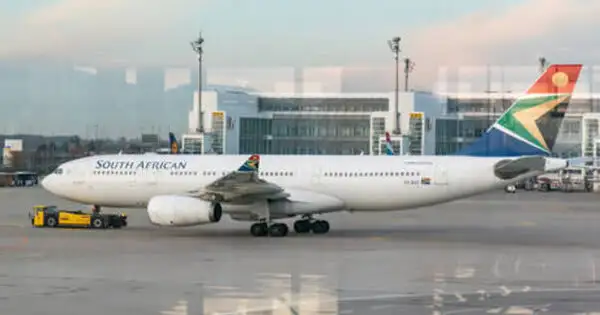
South Africa's DIRCO urges its citizens to evacuate the Middle East, taking advantage of limited commercial flights resuming amid ongoing regional conflict.
Key Takeaways
- •Urges citizens to evacuate the Middle East via limited commercial flights resuming after closures.
- •Highlights the restart of services by carriers like Emirates and SAA after regional airspace shutdowns.
- •Notes over 6,400 South Africans are registered in the region amid escalating geopolitical conflict.
- •Exposes significant financial risks for travelers as many insurance policies exclude "acts of war."
The South African government is advising its nationals to leave the Middle East, capitalizing on a narrow window of opportunity as major airlines resume limited services following widespread airspace closures. The Department of International Relations and Cooperation (DIRCO) issued the advisory, urging citizens to take "immediate advantage" of available commercial flights to return home amid escalating regional conflict.
The advisory follows a period of significant disruption for air travel in the Gulf region. Airspace was closed by multiple nations to protect civilian aircraft after a series of US-Israel strikes on Iran and subsequent retaliatory attacks. This geopolitical impact on aviation stranded thousands of passengers and forced a halt to most commercial operations. Now, the partial reopening of key air corridors, including in the United Arab Emirates (UAE), is allowing for a cautious resumption of flights, primarily focused on repatriation and clearing passenger backlogs.
Government Response and Repatriation
DIRCO has been actively managing the crisis, using its Travel Smart system to track and communicate with citizens in the affected areas. According to a statement from the department, more than 6,400 South African citizens in the Middle East have registered their presence through the system. The government's primary focus is facilitating the safe return of these individuals as the conflict is expected to continue.
Repatriation efforts are underway, with the source article indicating at least 150 South Africans, many of whom were on pilgrimage in Jerusalem, have already returned via African carriers like EgyptAir. Hundreds more who were stranded in Dubai have started to return following the partial reopening of UAE airspace. While DIRCO has not provided a precise figure for the number of citizens still awaiting evacuation, the logistical challenge remains significant given the high demand and limited flight capacity.
Airspace Closures and Airline Operations
The initial decision by civil aviation authorities across the Gulf to close their airspace was a direct safety measure. The European Union Aviation Safety Agency (EASA) also issued a Conflict Zone Information Bulletin (CZIB), advising operators to avoid the airspace of several Middle Eastern countries due to the high risks posed by military activities. These actions, while necessary, created a logistical crisis for airlines and airports.
Major carriers are now navigating a phased reopening. The UAE's General Civil Aviation Authority (GCAA) has permitted a controlled resumption of flights, enabling hubs like Dubai International Airport (DXB) to begin clearing a massive backlog of passengers. Emirates has resumed multiple daily flights to South Africa, providing a critical link for repatriation. South African Airways (SAA) is also reportedly resuming its operations in the region. However, airlines have warned travelers not to proceed to airports without a confirmed booking due to the high volume of displaced passengers and the potential for continued cancellations or schedule changes.
Passenger Impact and Financial Risks
The disruption has had a severe impact on travelers, both logistically and financially. Anecdotal reports from stranded passengers describe chaotic scenes at airports and immense difficulty in securing new flights. The situation is compounded by a significant financial burden that often falls directly on the traveler.
A key issue highlighted by the crisis is that many travel insurance policies do not cover disruptions caused by an "act of war." This exclusion means passengers are often liable for unexpected costs related to accommodation, food, and rebooking, even if airlines refund the value of the unused tickets. For those stranded in expensive cities like Dubai, these costs can accumulate rapidly, turning a travel disruption into a financial crisis, particularly for those on a stopover with limited funds.
Escalating Geopolitical Tensions
The aviation crisis is a direct consequence of escalating military actions. In a recent statement on Truth Social, U.S. President Donald Trump warned that Iran will be "hit very hard" and that the military campaign could be expanded to include targets previously not considered for "complete destruction." He also demanded an "unconditional surrender" from the Iranian government.
In response, Iranian President Masoud Pezeshkian rejected the demand, calling it a "dream" and affirming Iran's readiness to defend its sovereignty. The conflict has already resulted in significant casualties; news reports citing officials indicate that casualty figures in Iran are at least 1,230-1,270 people.
Why This Matters
This event underscores the acute vulnerability of the global aviation network to geopolitical instability. For airlines, it demonstrates the operational complexity of managing sudden airspace closures and the subsequent challenge of resuming services safely. For governments, it highlights the critical function of consular services in protecting citizens abroad during a crisis. For passengers, it serves as a stark reminder of the financial risks associated with international travel and the limitations of standard travel insurance policies in times of conflict.
Visit omniflights.com for the latest commercial aviation news and airline industry updates. Follow aviation sustainability efforts, emissions research, and green initiatives in the Environmental section at omniflights.com/environmental.

Written by Ujjwal Sukhwani
Aviation News Editor & Industry Analyst delivering clear coverage for a worldwide audience. Covers flight operations, safety regulations, and market trends with expert analysis.
Visit ProfileYou Might Also Like

Southwest Reports Record Q3 Revenue Amid Transformation
American Airlines Reports Record Q3 Revenue Amid Fuel Costs
American Airlines Projects 2026 Loss on Rising Fuel Costs

American Airlines to Nearly Triple Premium 787-9 Fleet

Airline Shares Rise Following United Revenue Guidance