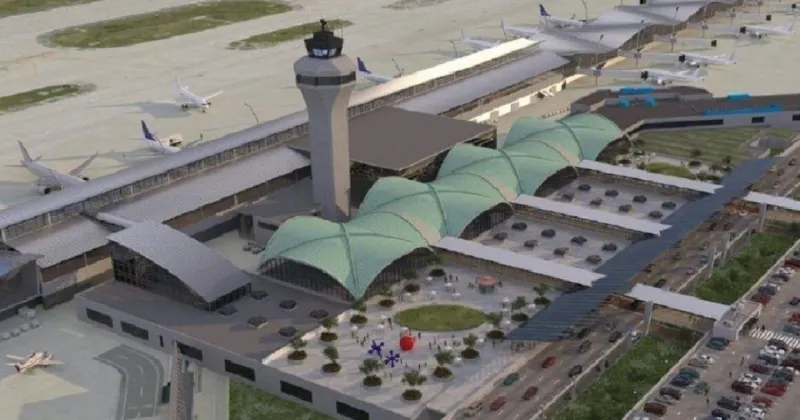
MIA and American Airlines Launch $1B Concourse D Expansion Project

Co-Founder & CEOCo-Founder & Aviation News Editor delivering trusted coverage across the global aviation industry.

Miami International Airport and American Airlines will invest $1 billion to expand Concourse D, replacing 17 regional gates with a modern facility by 2030.
Key Takeaways
- •Replaces 17 ground-level regional gates with 17 modern indoor contact gates.
- •Secures $1 billion in funding through a public-private partnership with American Airlines.
- •Targets a 2030 completion as part of MIA's broader $9 billion modernization plan.
- •Improves international arrivals with direct access to U.S. Customs and Border Protection.
Miami International Airport (MIA) and its largest carrier, American Airlines (AA), have announced a $1 billion investment to expand and modernize Concourse D. The project centers on replacing the existing Gate D60, which currently serves regional jets via ground-level boarding, with a new, multi-level facility featuring modern passenger amenities and direct jet bridge access.
The initiative, a key component of MIA's broader $9 billion capital improvement program, aims to significantly enhance the passenger experience and accommodate future growth. According to the Miami-Dade Aviation Department (MDAD), which operates the airport, the expansion will replace 17 ground-level regional gates with 17 new indoor contact gates. This transition eliminates the need for passengers to walk outdoors to board regional aircraft, a significant operational and comfort upgrade.
Funding for the project will be structured as a Public-Private Partnership (P3), financed through airport-issued bonds, airline lease payments from American Airlines, and a $34 million grant from the Florida Department of Transportation. This model underscores a growing trend in financing major airport infrastructure projects in the United States.
Project Scope and Passenger Impact
The Gate D60 project involves constructing a new three-level extension to Concourse D. This structure will not only house the new gates but also feature new dining and retail spaces. A significant feature for international travelers is the planned direct third-level access to the U.S. Customs and Border Protection (CBP) federal inspection services hall, designed to streamline the arrivals process for passengers on international flights.
The primary beneficiaries of this expansion will be passengers on American Airlines' regional flights. AA accounts for over 60% of passenger traffic at MIA, operating approximately 400 daily departures. Eliminating outdoor boarding addresses a long-standing point of friction for travelers, particularly during inclement weather, and improves overall passenger flow within the terminal.
In a statement, American Airlines CEO Robert Isom described the project as transformational for the customer experience, solidifying MIA’s position as the “preeminent U.S. gateway to Latin America.” Miami-Dade Mayor Daniella Levine Cava echoed this, framing the expansion as a monumental step in the airport's modernization plan to handle rapid post-pandemic growth. The new facility is also targeting Leadership in Energy and Environmental Design (LEED) Silver certification, aligning with modern sustainability standards for airport infrastructure.
Broader Industry Context
MIA's Concourse D expansion is part of a nationwide trend of major U.S. airports undertaking multi-billion dollar modernization programs to replace aging infrastructure and increase capacity. The project is analogous to a similar upgrade completed at Washington National Airport (DCA) in April 2021. The $1 billion new concourse at DCA replaced the notorious Gate 35X, which also relied on a cramped, ground-level busing operation for regional flights. The success of the DCA project provides a direct precedent for the operational improvements expected at MIA.
Other contemporary examples include Raleigh-Durham International Airport's (RDU) $2.5 billion Terminal 2 expansion and the $650 million concourse replacement project at Reno-Tahoe Airport. These initiatives reflect a broader industry move to enhance airport infrastructure to support larger, more efficient aircraft and growing passenger volumes.
What Comes Next
According to the timeline provided by the Miami-Dade Aviation Department, groundbreaking for the Concourse D expansion is confirmed for the summer of 2027. The project is expected to reach completion and become fully operational by the summer of 2030. This expansion is a critical phase within the airport's larger M.I.A. Plan, which includes the redevelopment of the Central Terminal, expected to be finished by the fall of 2033.
While the project promises long-term benefits, some travel industry analysts note that the construction phase could create operational disruptions and exacerbate existing congestion at the busy hub over the next several years. Furthermore, the reliance on a single carrier for the P3 funding model ties the airport's financial risk closely to the performance of American Airlines, a point highlighted by some financial analysts.
Why This Matters
This $1 billion investment represents a significant commitment by both Miami-Dade County and American Airlines to the future of MIA as a premier international hub. The modernization of Concourse D directly addresses operational inefficiencies and enhances the passenger journey, aligning the airport with modern standards. For the industry, it reinforces the viability of public-private partnerships as a crucial funding mechanism for large-scale infrastructure projects and highlights the ongoing competitive need for major airports to invest in facility upgrades.
Get breaking commercial aviation news and expert airline analysis at omniflights.com. For detailed airline coverage, route changes, and fleet moves, explore the Airlines section at omniflights.com/airlines.
Written by Hardik Vishwakarma
Co-Founder & Aviation News Editor leading initiatives that improve trust and visibility across the global aviation industry. Covers airlines, airports, safety, and emerging technology.
Visit Profile