Lufthansa Cargo Sees Rising Corporate Investment in SAF

Co-Founder & CEOAviation News Editor delivering trusted coverage across the global aviation industry.
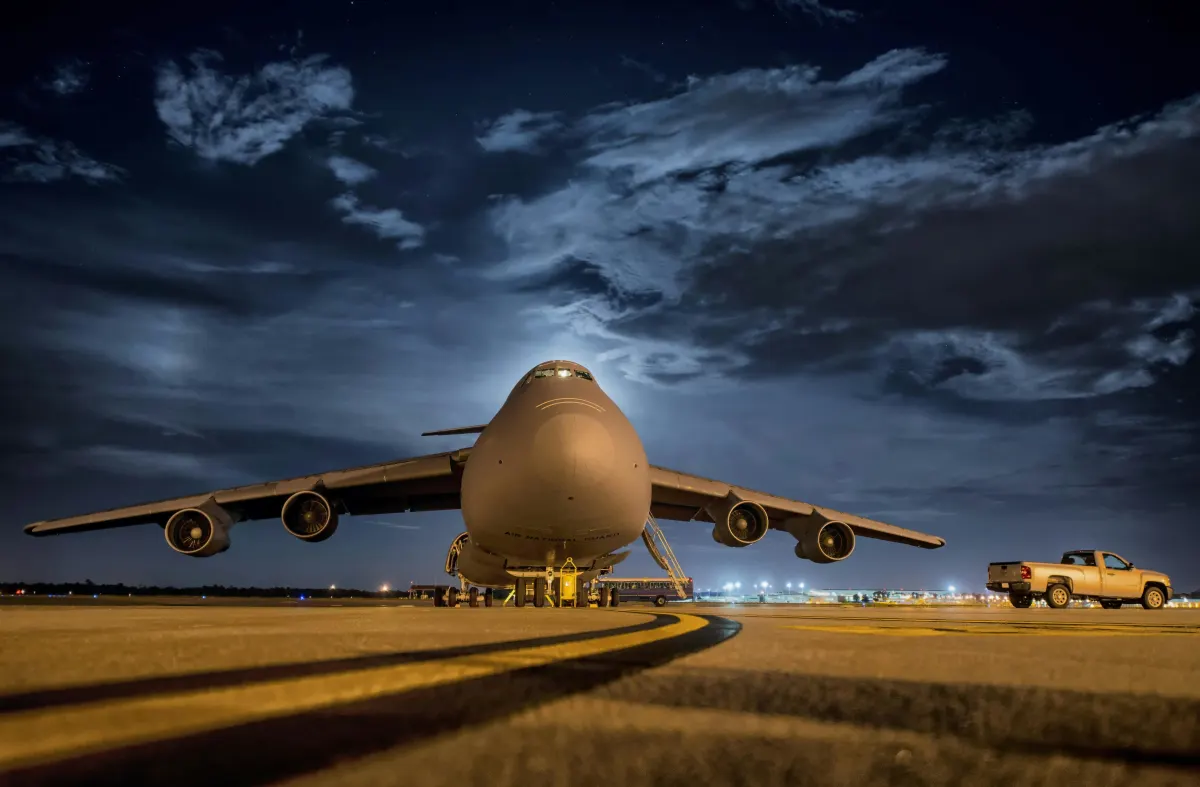
Lufthansa Cargo reports growing corporate investment in Sustainable Aviation Fuel (SAF) through its 'Sustainable Choice' add-on service for air freight.
Key Takeaways
- •Reports rising SAF investment from over 1,680 corporate clients in 2025.
- •Offers Scope 3 emissions certificates for investments over €2,000 via a book-and-claim model.
- •Utilizes SAF with an 80% lower lifecycle CO2 footprint than conventional kerosene.
- •Aligns with EU mandates requiring a 2% SAF blend at airports from 2025.
Lufthansa Cargo is experiencing a significant increase in demand for sustainable air freight services, driven by corporate clients investing in Sustainable Aviation Fuel (SAF) to reduce the carbon footprint of their supply chains. According to a Lufthansa Group press release, more than 1,680 companies worldwide invested in SAF with the group in 2025, signaling a clear market shift toward decarbonization in logistics.
The trend is facilitated by the airline's "Sustainable Choice" add-on service, which allows freight forwarders and shippers to directly contribute to the use of SAF. This mechanism addresses the growing corporate need to report and reduce Scope 3 emissions, which encompass indirect emissions from an organization's value chain, including transportation and logistics.
Program Mechanics and Incentives
Lufthansa Cargo’s program operates on a "book and claim" model, an industry-wide system that decouples the environmental attributes of SAF from its physical flow. This allows a customer to purchase a specific quantity of SAF and claim the associated emissions reduction, even if the fuel is not physically used on their specific cargo flight. This approach overcomes logistical hurdles of supplying SAF to every airport and enables a more efficient scaling of its use across the network.
Customers can add the Sustainable Choice option to each Air Waybill (AWB). For investments of €2,000 or more, companies receive a Scope 3 certificate for CO2 savings, issued in accordance with the Greenhouse Gas (GHG) Protocol Standard. This provides verifiable documentation for corporate sustainability reporting. For larger commitments, Lufthansa Cargo also offers SAF bulk deals for purchase quantities of 100 metric tons or more, catering to logistics giants and major retailers aiming to meet science-based net-zero targets.
The SAF utilized by the airline, produced through a Hydroprocessed Esters and Fatty Acids (HEFA) process using waste biomass, has an approximately 80% lower CO2 footprint than conventional fossil kerosene over its lifecycle, according to Lufthansa Cargo's specifications. Details of the service are outlined on the carrier's Sustainable Choice page.
Regulatory and Market Drivers
This corporate demand is reinforced by a stringent regulatory environment in Europe. The ReFuelEU Aviation (Regulation (EU) 2023/2405) mandate requires a minimum 2% SAF blend at European Union airports beginning in 2025, with the requirement progressively increasing to 70% by 2050. This regulation creates a guaranteed market for SAF producers and underpins the viability of book-and-claim models used by airlines to meet these obligations. The European Commission provides detailed information on its ReFuelEU Aviation policy.
Ashwin Bhat, CEO of Lufthansa Cargo, framed the initiative as part of the company's commitment to "implementing high-performance logistics solutions responsibly and with operational excellence," highlighting the need for concrete decarbonization measures in the international air freight business.
Technical Comparison: SAF vs. Conventional Jet Fuel
| Metric | Sustainable Aviation Fuel (HEFA) | Conventional Jet A-1 |
|---|---|---|
| Lifecycle CO2 Emissions | Up to 80% reduction | Baseline |
| Feedstock | Biogenic residues (e.g., used cooking oil) | Fossil crude oil |
| Blending Limit | Up to 50% drop-in | 100% unblended |
Industry Precedents and Broader Context
The model of customer-funded SAF investment is becoming an industry standard. In December 2020, Air France-KLM Martinair Cargo launched one of the first large-scale SAF programs for the airfreight sector, pioneering the corporate investment model. More recently, in February 2023, DHL Express introduced its GoGreen Plus service, a book-and-claim system for global express shipments. These precedents demonstrate an industry-wide consensus that collaborative funding is essential to bridge the price gap between SAF and conventional jet fuel.
However, the approach is not without criticism. Organizations like Carbon Market Watch have raised concerns that book-and-claim systems risk double-counting emissions reductions or being perceived as greenwashing if not governed by rigorous, transparent tracking and verification. Additionally, environmental groups such as Transport & Environment (T&E) argue that waste-based biofuels like HEFA face significant feedstock supply limitations, suggesting that aviation cannot decarbonize solely through this pathway without also reducing overall demand or accelerating the development of synthetic e-fuels.
What Comes Next
The trajectory for SAF adoption is clearly defined by European regulation for the coming decades. The immediate milestone is the implementation of the 2% SAF mandate under ReFuelEU Aviation, which took effect in January 2025. Looking ahead, the mandate is confirmed to increase to 6% by January 2030, putting further pressure on airlines and supply chains to scale SAF procurement and investment.
The broader industry, including Lufthansa Cargo and the International Air Transport Association (IATA), is targeting net-zero carbon emissions by 2050. Achieving this long-term goal is expected to rely on a combination of SAF, technological advancements in aircraft efficiency, and operational improvements.
Why This Matters
Lufthansa Cargo's success in attracting corporate SAF investment marks a crucial shift in aviation decarbonization, moving from a model primarily driven by airline initiatives to one co-funded by the customers who rely on air freight. This development demonstrates a maturing market where sustainability is becoming a key factor in logistics procurement. For the air cargo industry, it provides a viable, albeit challenging, pathway to meet looming regulatory mandates and address the pressing need to reduce its environmental impact.
Visit omniflights.com for the latest commercial aviation news and airline industry updates. Track policy changes, airspace rules, and global aviation governance in the Regulatory category at omniflights.com/regulatory.
Written by Hardik Vishwakarma
Co-Founder & Aviation News Editor leading initiatives that improve trust and visibility across the global aviation industry. Covers airlines, airports, safety, and emerging technology.
Visit ProfileYou Might Also Like
Discover more aviation news based on similar topics

American Airlines Flies First U.S. eSAF Passenger Flight
American Airlines completed the first U.S. commercial flight using Infinium eSAF, a synthetic fuel that reduces lifecycle emissions by over 90%.
Akasa Air Partners with BPCL to Advance SAF in India
Akasa Air signed an MoU with BPCL to establish a SAF supply framework ahead of India's expected 1% blending mandate by 2027.

Delta, Shell Aviation Ink 5-Year SAF Supply Agreement
Delta Air Lines and Shell Aviation have signed a five-year agreement to supply Sustainable Aviation Fuel across five major U.S. hubs through 2030.
Indonesia to Mandate 1% SAF Blend for Flights by 2027
Indonesia will require a 1% Sustainable Aviation Fuel blend on international flights departing from Jakarta and Bali starting in 2027.
Gulfstream G800 Completes 100% SAF High-Altitude Emissions Test
Gulfstream tested 100% SAF on a G800 at 50,000 feet to measure emissions, marking a key step toward certifying unblended synthetic fuels.
LATAM Airlines Operates First SAF-Linked Passenger Charters
LATAM Airlines Group and PONANT completed 13 charter flights using SAF, reducing 160 tonnes of CO2 emissions via a book-and-claim methodology.