Joby Aviation Raises 2026 Guidance to $115 Million

Co-Founder & CEOAviation News Editor delivering trusted coverage across the global aviation industry.
Joby Aviation raised its 2026 revenue guidance to a high of $125 million, driven by strong demand for its Blade vertical lift business.
Key Takeaways
- •Joby Aviation increased its 2026 revenue guidance to $115 million to $125 million.
- •First eVTOL Integration Pilot Program flights are scheduled for September 2026 in Texas.
- •Strategic partner Atoms raised $1.7 billion to develop multi-use mobility hubs.
- •Toyota joint venture will support low-rate initial eVTOL production.
During the Joby Aviation Q2 2026 earnings call, management detailed a strategic transition from aircraft development to commercial readiness, catalyzed by the upcoming eVTOL Integration Pilot Program (eIPP) flights in Texas. Backed by the Blade air mobility acquisition and the newly established Joby Atoms vertiport partnership, the developer reported strong passenger demand and raised its full-year guidance. This transition highlights the company's shift toward scaling production capacity while advancing through the final stage of FAA (Federal Aviation Administration) Type Certification.
According to Joby's Q2 2026 earnings release, the company generated $39 million in total revenue for the second quarter of 2026, driven by seasonal summer demand and major sporting events. This marks a significant step forward, supported primarily by the Blade passenger business, which generated $36.2 million in revenue, representing 32% year-over-year growth in the first half of 2026. The company reported a net loss of $245 million for the quarter, which included a $108 million noncash unfavorable change in the fair value of warrants and earn-out shares. Adjusted EBITDA loss stood at $197 million, up from $179 million in the first quarter, due to increased investment in commercial readiness.
Infrastructure Funding and Multi-Use Mobility Hubs
Joby maintains a robust balance sheet to fund its ongoing certification and manufacturing efforts, reporting $2.3 billion in cash and short-term investments as of June 30, 2026. Capital expenditures for the first half of 2026 reached $107 million, which included $62 million for the acquisition and build-out of the Ohio manufacturing facility and $15 million for flight test capabilities in Hollister, California.
To support the physical infrastructure required for commercial operations, Joby announced a strategic partnership with Atoms, an industrial AI infrastructure company founded by Travis Kalanick. According to the Atoms and Joby Aviation strategic partnership announcement, Atoms has raised $1.7 billion to develop multi-use mobility hubs in Florida, New York, and Texas. These hubs will combine takeoff, landing, and charging facilities for Electric Vertical Takeoff and Landing (eVTOL) aircraft with charging and depot services for autonomous ground vehicles.
This development has high-severity implications for traditional helicopter operators, who face direct competition and potential market share loss on premium routes, such as Manhattan to the Hamptons, as quieter, lower-cost electric air taxis enter service. For regional airport authorities in major metropolitan areas, the transition introduces a medium-severity impact, requiring them to allocate real estate and capital for new vertiport infrastructure and high-capacity electrical charging systems.
Context and Comparison
This operational expansion follows historical precedents established by Joby to secure market demand and software capabilities. In December 2020, Joby acquired Uber Elevate, gaining critical demand-generation software and a strategic partnership with Uber. More recently, in August 2025, Joby completed the acquisition of Blade Air Mobility's passenger business for up to $125 million. This precedent directly validated the high demand for vertical lift services, laying the groundwork for the strong Q2 2026 revenue performance.
On the manufacturing side, Joby is leveraging automotive industry expertise to de-risk mass production. A joint venture with Toyota is designed to bring high-volume automotive manufacturing techniques to aviation. Toyota is expected to close a $250 million direct equity investment in Joby in late 2026 or early 2027, and a senior Toyota manufacturing leader is set to join Joby’s team in Marina, California.
Joby eVTOL vs. Traditional Light Helicopter: Key Specifications
To understand the operational advantages of Joby's aircraft over existing solutions, the following table compares the Joby eVTOL with a traditional light helicopter based on key technical metrics:
| Metric | Joby eVTOL | Traditional Light Helicopter |
|---|---|---|
| Propulsion | All-electric distributed | Single-rotor turbine |
| Emissions | Zero operating emissions | Standard aviation fuel emissions |
| Noise Profile | Designed for low acoustic footprint | High noise signature |
The Manufacturing Transition to Low-Rate Production
Joby's transition from research and development builds to low-rate initial production represents a critical phase in the eVTOL commercialization cycle. The company currently has five electric air taxis in its flight test fleet, including its first FAA-conforming aircraft, and 12 aircraft in the production queue. During the first six months of 2026, Joby achieved a nearly 40% reduction in its manufacturing nonconformance rate, indicating a stabilizing production process. However, building conforming aircraft represents a step change in complexity compared to early prototypes. This development follows a broader aerospace trend where companies must bridge the gap between regulatory certification and high-rate industrial manufacturing. By utilizing Toyota's production expertise and sharing capital expenditures, Joby aims to mitigate the high capital-intensity risks that have historically challenged aerospace startups during production ramp-ups.
Upcoming Milestones and the Texas eIPP Launch
The immediate operational milestone for Joby is the launch of the eIPP flights in Texas, scheduled for September 2026. According to Joby's Texas hub establishment release, the company has established a hub at Perot Field Fort Worth Alliance Airport to support these flights. Following this, several key milestones are projected:
- September 2026: First eIPP flights in Texas are confirmed to begin, demonstrating routes across the Dallas-Fort Worth area.
- Late 2026: Joby is expected to deliver two additional production aircraft from its line.
- Late 2026: The company is expected to carry its first nonpaying passengers under the eIPP program, subject to ongoing FAA coordination.
- Late 2026 to Early 2027: Toyota's $250 million direct equity investment is expected to close, pending the finalization of supply agreements.
- 2027: Joby expects to complete the fifth and final stage of FAA Type Certification, enabling full commercial passenger operations.
Additionally, Joby's partner Airspace Intelligence (ASI) was recently selected by the FAA to provide central software infrastructure for managing national airspace traffic. Joby plans to collaborate with ASI to trial airspace integration tools during the eIPP flights, which will assist in scaling future flight frequencies. Internationally, Joby signed a multiyear agreement with Virgin Atlantic to develop service pathways in London and Manchester, while continuing discussions with international regulators, including the Civil Aviation Authority (CAA) in the U.K. and the European Union Aviation Safety Agency (EASA).
Why Infrastructure and Scale Matter to eVTOL Success
This development signals that the eVTOL industry is moving past the theoretical phase into physical and operational reality. By securing $1.7 billion in infrastructure funding through Atoms and partnering with Toyota for manufacturing, Joby is addressing the two primary bottlenecks of advanced air mobility: vertiport availability and production scalability. For the broader aviation sector, successful eIPP trials in Texas will establish the regulatory and operational templates required to integrate electric vertical flight into the national airspace, ultimately paving the way for quieter, zero-emission urban transportation.
Frequently Asked Questions
- When will Joby Aviation begin its pilot program flights in Texas?
- Joby Aviation plans to launch its first eVTOL Integration Pilot Program (eIPP) flights in Texas in September 2026, utilizing its newly established hub at Perot Field Fort Worth Alliance Airport.
- How is Toyota supporting Joby Aviation's manufacturing efforts?
- Toyota has established a manufacturing joint venture with Joby to de-risk high-volume production and is expected to close a $250 million direct equity investment in late 2026 or early 2027.
- What is the purpose of Joby Aviation's partnership with Atoms?
- Joby has partnered with Atoms to develop multimodal mobility hubs in Florida, New York, and Texas. These hubs are designed to support both electric air taxis and autonomous ground vehicles, utilizing $1.7 billion in infrastructure funding.
Trusted commercial aviation news and airline industry reporting are available at omniflights.com. For reporting on UAP sightings, investigations, and aviation-related encounters, see the UAPs section at omniflights.com/uaps.
Written by Hardik Vishwakarma
Co-Founder & Aviation News Editor leading initiatives that improve trust and visibility across the global aviation industry. Covers airlines, airports, safety, and emerging technology.
Visit ProfileYou Might Also Like
Discover more aviation news based on similar topics
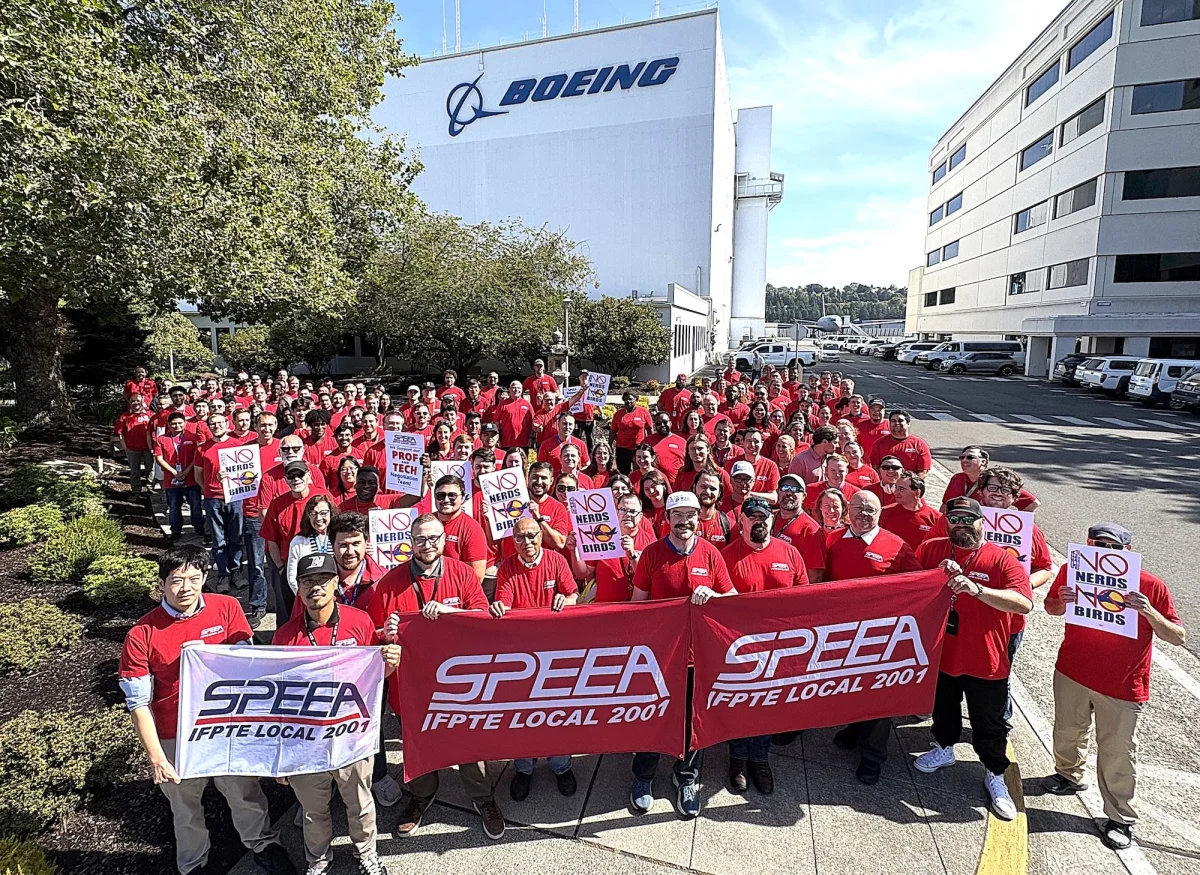
Boeing Tightens Spending Ahead of Critical SPEEA Union Vote
Boeing has implemented spending controls and a hiring freeze as it faces a critical contract ratification vote with its 17,000-member engineering union.
Boeing CEO Kelly Ortberg Warns of 777X Certification Delay
Boeing CEO Kelly Ortberg warned that a potential strike by 17,000 engineers would immediately halt the 777X certification and production programs.
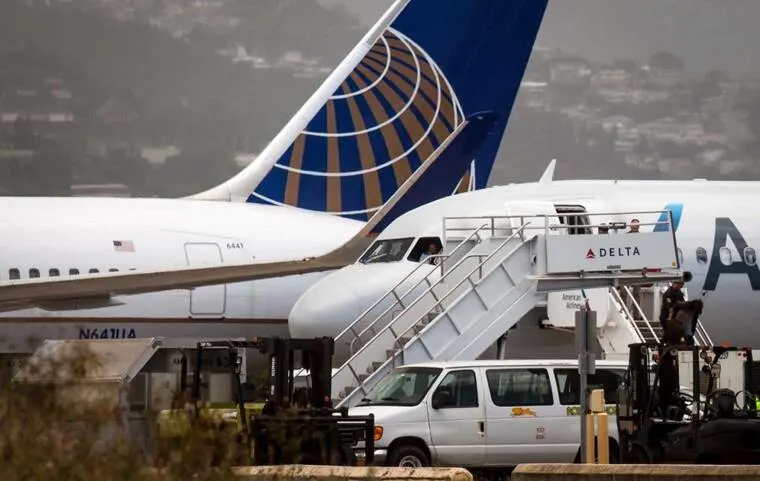
American and United Plan Capacity Cuts Amid Fuel Cost Surge
American and United are trimming flight schedules to offset a $1 billion fuel cost spike while maintaining strong pricing power.
Boeing CEO Reports 737 MAX Output Stabilization Delays
Boeing CEO Kelly Ortberg reports slower 737 MAX production stabilization, prompting a downward revision in 2026 free cash flow expectations to $2 billion.
Boeing Finalizes KAL Order, Salvages Turkish Airlines Deal
Boeing secured a $36.2 billion order from Korean Air Lines for 103 aircraft and nears a resolution on a 150-jet deal with Turkish Airlines.
Airbus Forecasts 42,000 New Jets Amid Strong Global Demand
Airbus expects 42,000 new aircraft deliveries globally by 2045, with 45% of demand concentrated in the Asia-Pacific region.