Indian Airlines Cautiously Resume Limited Flights to West Asia

Aviation News Editor & Industry AnalystAviation News Editor & Industry Analyst delivering clear coverage for a worldwide audience.

Air India and Air India Express are resuming limited flights to Jeddah and Muscat amid ongoing regional conflict and airspace safety reassessments.
Key Takeaways
- •Resume limited services to Jeddah and Muscat with 28 daily flights
- •Suspend several other West Asia routes due to airspace safety risks
- •Conduct ongoing risk assessments amid regional geopolitical instability
- •Balance commercial necessity with paramount passenger and crew safety
Indian carriers are gradually restoring limited air services to parts of West Asia, making cautious operational adjustments amid persistent geopolitical tensions and heightened airspace risks in the region. The move signals an attempt by airlines to balance commercial demand with stringent safety protocols. Specifically, Air India and its low-cost subsidiary, Air India Express, have resumed a select number of flights while keeping broader network suspensions in place.
This decision follows a period of significant disruption, forcing airlines to conduct comprehensive safety and airspace risk reassessments. The primary challenge for operators is navigating volatile air corridors where the security situation can change rapidly. The partial resumption of services indicates a calculated decision based on intelligence that specific routes can be operated with an acceptable level of safety, while others remain too hazardous.
A Phased Resumption of Services
According to operational updates, Air India and Air India Express are set to operate a combined 14 flights to and from Jeddah, Saudi Arabia, on a single day. Concurrently, Air India Express will manage another 14 flights on its route to and from Muscat, Oman. These 28 total flights represent a carefully selected portion of the carriers' typical schedule to the region, focusing on corridors assessed as currently secure.
However, many other routes, particularly those that would typically transit airspace near conflict zones, remain suspended indefinitely. Airlines have not provided a firm timeline for the full restoration of their West Asia schedules, indicating that operations will remain fluid and subject to continuous review. This cautious approach prioritizes the safety of passengers and crew over a rapid return to full capacity.
The Complexities of Conflict Zone Overflights
The current situation underscores the significant operational complexities international airlines face when geopolitical conflicts erupt. Flying over or near conflict zones presents multifaceted risks, including the potential for misidentification by military air defense systems, exposure to GPS jamming or spoofing, and the unpredictable closure of airspace by national authorities. Consequently, carriers must engage in a rigorous and ongoing risk analysis.
This process involves close coordination with national aviation authorities, such as India's Directorate General of Civil Aviation (DGCA), as well as international bodies like the International Air Transport Association (IATA) and the European Union Aviation Safety Agency (EASA), which often issue safety bulletins and conflict zone warnings. Airlines combine this external guidance with their own proprietary intelligence to make final decisions on routing. When direct routes are deemed unsafe, carriers must implement costly and time-consuming rerouting, leading to longer flight times, increased fuel consumption, and potential crew scheduling disruptions.
Impact on Passengers and Regional Connectivity
For passengers, the ongoing flight suspensions and limited operations translate to uncertainty and inconvenience. Travelers with bookings to destinations in the affected region face potential cancellations, delays, and the need to find alternative travel arrangements. The partial resumption to key hubs like Jeddah and Muscat provides some relief but does not resolve the broader connectivity issues.
The disruption also affects the vital air links between India and the large expatriate communities and business interests in West Asia. These routes are crucial for labor travel, tourism, and trade. The extended suspension of many services can have a tangible economic impact, disrupting supply chains and making business travel more challenging. Airlines must manage customer communications carefully, providing timely updates on flight status and rebooking options to mitigate passenger frustration.
What Comes Next
The immediate future of air travel between India and West Asia will be dictated by the evolving security landscape. Airlines will continue to monitor the geopolitical situation on a daily, and even hourly, basis. The decision to expand services beyond the current limited operations in Jeddah and Muscat will be contingent on a sustained de-escalation of regional tensions and a verifiable reduction in airspace risk.
Airlines are expected to maintain a conservative posture, favoring longer, rerouted flight paths over more direct routes that traverse sensitive areas. A full return to pre-conflict operational normalcy is unlikely in the short term. The industry will be watching for updated safety directives from regulators and international aviation organizations, which will guide the next phase of service restoration.
Why This Matters
This development serves as a critical case study in modern airline risk management. It highlights the profound vulnerability of global aviation networks to regional instability and demonstrates the complex calculus carriers must perform to maintain operations. The ability to dynamically assess risk and adapt networks in real-time is no longer a niche capability but a core requirement for international airlines navigating an increasingly uncertain world.
Visit omniflights.com for the latest commercial aviation news and airline industry updates. Stay informed on aviation incidents, investigations, and best practices in the Safety category at omniflights.com/safety.
Written by Ujjwal Sukhwani
Aviation News Editor & Industry Analyst delivering clear coverage for a worldwide audience. Covers flight operations, safety regulations, and market trends with expert analysis.
Visit ProfileYou Might Also Like
Discover more aviation news based on similar topics
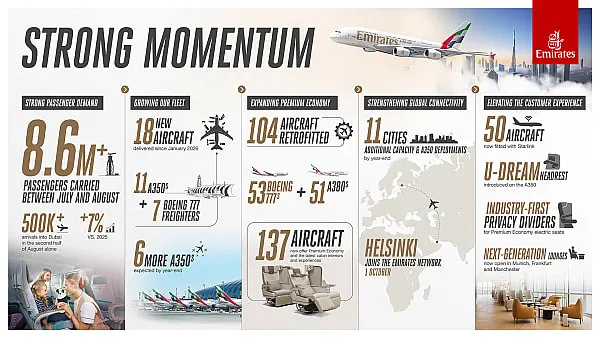
Emirates Winter Booking Momentum Grows Amid Fleet Expansion
Emirates carried 8.6 million passengers this summer and enters winter with strong demand as it accelerates fleet retrofits and network growth.
Air Arabia Consortium Gains AOC for New Dammam Budget Airline
A Saudi GACA-led consortium including Air Arabia has secured an AOC to launch a new budget airline based at Dammam's King Fahd International Airport.
Turkish Airlines Exits Luanda as Angola Hub Struggles
Turkish Airlines dropped its Luanda route as Angola's new airport struggles to attract traffic, handling only 756,028 passengers in 2025.

Red Sea Airlines Leases Two 737 MAX 8s for 2027 Expansion
Red Sea Airlines signed a lease for two Boeing 737 MAX 8 aircraft from SMBC Aviation Capital, arriving in 2027 to support its 14-aircraft fleet goal.
Avelo CEO Warns Airfares May Rise on Jet Fuel Price Spikes
Avelo Airlines CEO Andrew Levy warns that rising fuel costs may force fare increases as global jet fuel prices reach $171.01 per barrel.
IndiGo, Air India Battle for Mumbai-Delhi Route Dominance
IndiGo and the Air India group are competing for dominance on the Mumbai-Delhi air route, which saw 13.9 percent capacity growth this September.