Gulf Carriers Resume Limited Flights Amid Middle East Airspace Closures

Aviation News Editor & Industry Analyst delivering clear coverage for a worldwide audience.
Major Gulf carriers like Emirates and Etihad are resuming limited operations following widespread airspace closures caused by regional instability in West Asia.
Key Takeaways
- •Resuming limited flights using temporary 'relief corridors' for stranded passengers.
- •Cancelling numerous routes, with Oman Air halting services to nine cities through March 11.
- •Operating under significant airspace restrictions in Qatar, Bahrain, Iran, and Iraq.
- •Utilizing Muscat as a key transit hub for rerouted international services.
Major Gulf carriers, including Emirates and Etihad Airways, began resuming limited flight operations on Saturday, March 7, following widespread regional airspace closures. Airlines are gradually restoring services amid ongoing volatility linked to the West Asia crisis, with many operations restricted to temporary 'relief corridors' designed to assist stranded passengers.
The phased resumption highlights the operational complexity facing one of the world's most critical aviation hubs. While some services are restarting, extensive cancellations and restrictions remain in place, affecting global travel connectivity. The situation underscores the aviation industry's vulnerability to geopolitical instability in the region.
UAE Carriers Lead Cautious Resumption
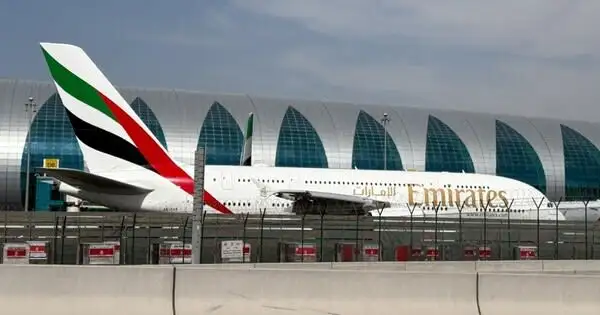
Dubai-based Emirates confirmed in a statement it has resumed operations. The airline advised passengers with confirmed bookings, including those transiting through Dubai International Airport (DXB), to proceed to the airport if their connecting flights are operating. The carrier has resumed a reduced schedule to between 82 and 83 destinations. In its statement, Emirates emphasized its commitment to safety: "The safety of our passengers and crew is our highest priority and will not be compromised."
Similarly, Abu Dhabi's Etihad Airways restarted a restricted schedule to destinations across Asia, Europe, and North America. Other UAE-based carriers, including flydubai and Air Arabia, have also resumed limited operations, though specific schedules remain fluid.
Qatar Airways Navigates Airspace Blockade
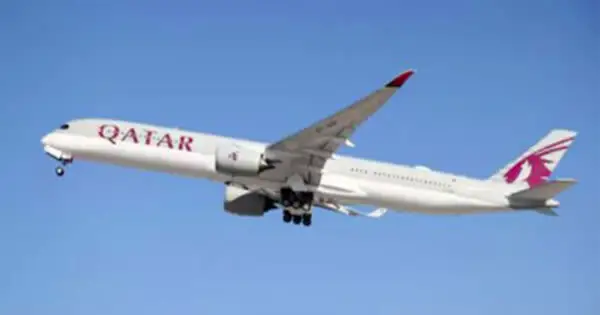
The situation for Qatar Airways is particularly challenging, as its scheduled flight operations remain temporarily suspended. This is a direct result of a full closure of its home airspace by the Qatar Civil Aviation Authority (QCAA). A full resumption of services is contingent on the QCAA announcing the safe reopening of this airspace.
However, the QCAA has provided temporary authorization for a safe operating corridor. This allows Qatar Airways to operate a limited number of relief flights on March 8. These flights are inbound to Hamad International Airport (DOH) and originate from London Heathrow Airport (LHR), Paris Charles de Gaulle Airport (CDG), Madrid (MAD), Rome (FCO), Frankfurt (FRA), and Bangkok (BKK). The airline stressed that these flights are only for passengers whose final destination is Doha and do not represent a return to normal commercial operations. An official update from the carrier is expected by 09:00 Doha time (06:00 UTC) on March 8.
Widespread Cancellations and Rerouting
Elsewhere in the region, disruptions are severe. According to an airline statement, Oman Air has cancelled all flights to and from nine major destinations for a three-day period. The cancellations, effective from Monday, March 9, through Wednesday, March 11, 2026, impact services to Amman (Queen Alia International Airport - AMM), Dubai (DXB), Bahrain (BAH), Doha (DOH), Dammam (DMM), Kuwait (KWI), Copenhagen (CPH), Baghdad (BGW), and Khasab (KHS).
Saudia has also extended cancellations to eight cities, including Dubai and Doha. The ongoing disruption is underpinned by active airspace restrictions over Qatar, Bahrain, Iran, and Iraq. This has elevated Muscat's role as a key transit point, with many carriers rerouting services through Oman to bypass closed sectors.
What Comes Next
The immediate future of flight operations in the Gulf hinges on geopolitical developments and subsequent regulatory actions. The upcoming announcement from Qatar Airways and the QCAA will be a critical indicator for the sub-region. Airlines are expected to continue adjusting their schedules dynamically, prioritizing passenger and crew safety while navigating the complex web of airspace restrictions. The phased resumption strategy, utilizing temporary air corridors, will likely remain the standard operating procedure until stability returns to the region and airspace is fully reopened by the relevant authorities.
Why This Matters
This widespread disruption serves as a stark reminder of the Gulf aviation model's dependence on regional stability. The airspace closures impact not only passenger travel but also critical global cargo and supply chain networks that transit through hubs like Dubai and Doha. The event tests the operational resilience of the world's largest long-haul carriers and may force a long-term strategic reassessment of route planning and contingency measures for geopolitical risks.
Stay ahead of the airline industry with commercial aviation news from omniflights.com. Discover how innovation is shaping aviation through aircraft systems, avionics, and digital tools at omniflights.com/technology.
Written by Ujjwal Sukhwani
Aviation News Editor & Industry Analyst delivering clear coverage for a worldwide audience. Covers flight operations, safety regulations, and market trends with expert analysis.
Visit Profile