DHS Shutdown Renews Debate on Airport Security Privatization

Co-Founder & CEOAviation News Editor delivering trusted coverage across the global aviation industry.
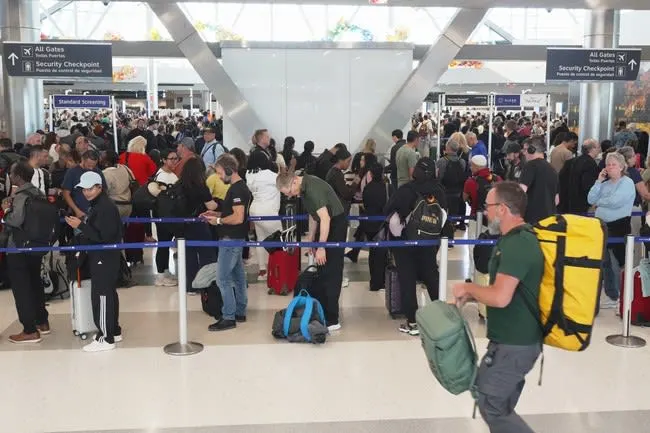
A DHS funding lapse leaving 260,000 employees unpaid has renewed calls to privatize the TSA, citing operational vulnerabilities and staffing crises.
Key Takeaways
- •Highlights vulnerability of federalized security during DHS funding lapse impacting 260,000 staff.
- •Reignites debate over privatizing TSA via the existing Screening Partnership Program (SPP).
- •Cites studies showing private screening performance is comparable or better than federal TSA.
- •Impacts passengers with 3-to-5 hour waits, prompting airports to reconsider security models.
A partial government shutdown affecting the Department of Homeland Security (DHS) has left over 260,000 federal employees working without pay, creating a staffing crisis within the Transportation Security Administration (TSA) and sparking renewed debate over the federalization of airport security. The funding lapse is causing significant operational disruptions at U.S. airports, including extended passenger wait times, just as the busy spring travel season begins.
The current disruptions highlight the vulnerability of a centrally funded security apparatus to political impasses. For passengers, the immediate impact includes wait times reportedly extending 3-to-5 hours at major hubs such as Atlanta (ATL) and Houston (HOU). For the thousands of TSA screeners and federal air marshals affected, the shutdown has resulted in financial hardship and declining morale, leading to increased sick-outs that exacerbate the staffing shortages.
Background of Federalization
Prior to 2001, airport passenger and baggage screening was handled by private security firms contracted directly by airlines. In the weeks following the September 11th attacks, the U.S. government moved to centralize security under a new federal agency. President George W. Bush signed the Aviation and Transportation Security Act (ATSA) into law on November 19, 2001, creating the TSA.
At a signing ceremony, President Bush stated, "For the first time, airport security will become a direct federal responsibility — overseen by a new undersecretary of transportation for security... A new team of federal security managers, supervisors, law enforcement officers, and screeners will ensure that all passengers and carry-on bags are inspected thoroughly and effectively." The move was intended to establish uniform, high standards across all U.S. commercial airports.
Performance and an Existing Alternative
Decades after its creation, the effectiveness of the federalized model remains a subject of debate. Proponents of privatization often cite a 2013 Cato Institute study, which found that the TSA's screening performance was no better, and potentially worse, than that of private screeners. Critics also point to the fact that there is no publicly documented instance of a TSA agent having foiled a terrorist plot during the agency's history.
An existing framework for privatization already operates under TSA oversight. The Screening Partnership Program (SPP) allows commercial airports to opt out of using federal screeners and instead use TSA-approved private security contractors. According to the TSA, over 20 U.S. airports currently participate in the SPP, including San Francisco International Airport (SFO), which became one of the first major airports to adopt the model in 2002.
Historical Precedents and Industry Perspectives
The current situation mirrors a previous government shutdown in 2018-2019, which lasted 35 days and caused similar disruptions as TSA agents worked without pay. That event also led to calls for examining the SPP as a way to insulate airport operations from federal funding disputes. The recurring nature of these disruptions has prompted airport authorities to reconsider the operational risks of the current model.
However, the concept of privatization faces opposition. The American Federation of Government Employees (AFGE), the union representing federal workers, argues that privatization risks a return to the pre-9/11 model, where contracts often went to the lowest bidder, potentially compromising security standards. The TSA maintains that a federalized workforce ensures consistent training and security protocols nationwide. The AFGE has also argued that the core issue is not federalization itself, but the political weaponization of government funding that harms essential workers.
What Comes Next
The resolution of the current DHS funding lapse is expected in spring 2026, contingent on a legislative agreement between the U.S. Congress and the White House. Following the operational chaos caused by the shutdown, a potential increase in applications from airport authorities to join the Screening Partnership Program is expected by late 2026 as they seek to mitigate the impact of future federal budget conflicts.
Why This Matters
The shutdown has exposed a fundamental tension between the post-9/11 goal of centralized, uniform security and the operational vulnerabilities created by tying airport screening directly to federal appropriations. For airlines, airports, and passengers, the ongoing crisis forces a critical re-evaluation of whether a hybrid model utilizing private contractors under federal oversight offers a more resilient path forward for U.S. aviation security.
omniflights.com provides comprehensive commercial aviation news covering airlines, aircraft, and airports. Follow aviation sustainability efforts, emissions research, and green initiatives in the Environmental section at omniflights.com/environmental.
Written by Hardik Vishwakarma
Co-Founder & Aviation News Editor leading initiatives that improve trust and visibility across the global aviation industry. Covers airlines, airports, safety, and emerging technology.
Visit ProfileYou Might Also Like
Discover more aviation news based on similar topics

FAA Faces $3.5 Billion Shortfall in ATC Modernization
FAA Administrator Bryan Bedford reported a $3.5 billion shortfall for the Brand New Air Traffic Control System, totaling $16 billion for Phase One.
FAA Pauses Flights into LAX Due to Staffing Shortages
The FAA issued a temporary ground stop for flights bound for LAX on Monday morning due to staffing shortages at the Southern California TRACON.

FAA Proposes Ending Overland Supersonic Flight Ban
The FAA has proposed a new performance-based noise standard to replace the 1973 ban on overland supersonic flight, enabling future commercial travel.

DOT Rule Exempts Airlines From Cyberattack Delay Costs
Starting October 19, 2026, the DOT will allow airlines to withhold meal and hotel vouchers for delays caused by cyberattacks and nine other events.

Wizz Air, Ryanair Demand NATS Reform After ATC Failure
Wizz Air and Ryanair are calling for urgent NATS reform after a September 8 system failure caused over 1,000 flight cancellations across the UK.
US Treasury Iran Sanctions Target 27 Airlines, Mahan Air
The U.S. Treasury sanctioned 36 entities, including 27 Iranian airlines, to disrupt illicit procurement networks used by the Iranian government.