Delta Suspends Congress Perks Amid TSA Funding Shutdown

Co-Founder & CEOAviation News Editor delivering trusted coverage across the global aviation industry.
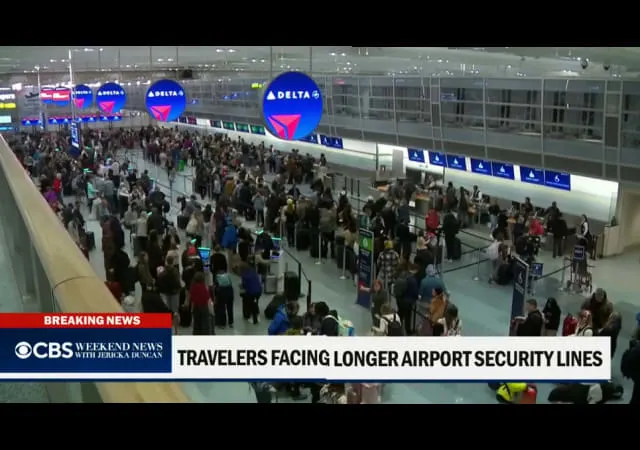
Delta Air Lines suspended special services for Congress due to severe airport delays caused by the ongoing TSA funding shutdown impacting unpaid agents.
Key Takeaways
- •Suspends VIP services and 'Red Coat' assistance for Congress amid the TSA funding crisis.
- •Cites operational strain from TSA absences reaching 20% at some airports.
- •Highlights over 400 TSA officer resignations and security waits exceeding four hours.
- •Aligns with a U.S. Senate bill passed to permanently end congressional airport perks.
In response to a protracted partial government shutdown affecting the Department of Homeland Security (DHS), Delta Air Lines has suspended its specialty airport services for members of the U.S. Congress. The move comes as the Transportation Security Administration (TSA), a division of DHS, grapples with a severe staffing crisis, with officers working without pay since mid-February 2026, leading to significant operational disruptions and passenger delays nationwide.
The airline's decision directly targets long-standing perks, such as VIP escorts and assistance from its elite "Red Coat" customer service agents, which have historically been provided to lawmakers. Delta stated that its priority is managing strained resources to serve the general public and its employees. The operational pressure has mounted as TSA absence rates have climbed to 20% in some airports, with wait times at major hubs like George Bush Intercontinental Airport exceeding three to four hours, according to Houston Airport System data.
Shutdown Impact on Airport Operations
The core of the issue stems from the funding lapse for the DHS, which has left thousands of essential TSA officers without pay for over a month. This has led to severe financial hardship and a sharp decline in morale. According to internal DHS data, over 400 TSA officers have resigned since the partial shutdown began. The resulting staff shortages have created security bottlenecks at airports across the country, forcing airlines like Delta to reallocate resources to manage exceptionally long queues and passenger frustration.
Delta CEO Ed Bastian issued a strong statement on the political situation, calling it "inexcusable" that frontline security personnel are being used as "political chips." A spokesperson for the airline reiterated the operational challenges, stating, “Next to safety, Delta’s No. 1 priority is taking care of our people and customers, which has become increasingly difficult in the current environment.” The impact is most acute for TSA officers facing financial distress, followed by the general traveling public enduring extensive delays.
Regulatory and Political Context
Delta's action coincides with a parallel legislative effort to curtail such privileges permanently. The U.S. Senate recently passed a unanimous bill, authored by Senator John Cornyn, to formally eliminate preferential TSA screening access for members of Congress. This legislative momentum suggests a broader political consensus that such perks are inappropriate, particularly when the security system is under duress. Delta's independent suspension of these services acts as a form of corporate pressure, highlighting the real-world consequences of the political stalemate in Washington.
In an effort to mitigate the staffing crisis, the Trump Administration has reportedly deployed agents from Immigration and Customs Enforcement (ICE) to assist with non-screening duties like crowd control at airports. However, this move has drawn criticism from TSA workers, who argue that ICE agents lack the specific training required for airport security environments and that their presence is an improper use of resources.
Historical Precedents
The current situation closely mirrors the 2018-2019 United States federal government shutdown, which lasted 35 days. During that standoff, unpaid TSA workers also staged call-outs due to financial hardship, leading to widespread airport delays and operational chaos. The disruption to the national aviation system was a key factor that ultimately pressured lawmakers to reach a funding agreement. The events of 2026 suggest a recurring pattern where the operational stability of U.S. airports becomes a critical leverage point in federal budget disputes.
What Comes Next
With Delta's policy in effect for the duration of the shutdown and the Senate's bill passed, the focus now shifts to the U.S. House of Representatives. A vote on the Senate bill to permanently eliminate congressional TSA perks is expected in 2026, though a specific date has not been confirmed. The resolution of the broader DHS funding shutdown remains the primary driver for restoring normal operations. Until a federal budget agreement is reached, airlines, passengers, and unpaid federal employees will continue to bear the impact of the staffing shortages.
Why This Matters
This development underscores the aviation industry's deep vulnerability to federal political gridlock. Delta's decision to leverage its customer service policy as a tool of political pressure is a significant move, demonstrating how private corporations can become active participants in federal disputes that directly impact their operations. For the broader industry, it sets a precedent for how airlines might respond to future government shutdowns and highlights the critical, yet often overlooked, dependence of air travel on a fully-funded and functioning federal security apparatus.
Stay ahead of the airline industry with commercial aviation news from omniflights.com. From aircraft production to supply chains, commercial aviation manufacturing news is covered at omniflights.com/manufacturing.
Written by Hardik Vishwakarma
Co-Founder & Aviation News Editor leading initiatives that improve trust and visibility across the global aviation industry. Covers airlines, airports, safety, and emerging technology.
Visit ProfileYou Might Also Like
Discover more aviation news based on similar topics

FAA Faces $3.5 Billion Shortfall in ATC Modernization
FAA Administrator Bryan Bedford reported a $3.5 billion shortfall for the Brand New Air Traffic Control System, totaling $16 billion for Phase One.
FAA Pauses Flights into LAX Due to Staffing Shortages
The FAA issued a temporary ground stop for flights bound for LAX on Monday morning due to staffing shortages at the Southern California TRACON.
FAA Proposes Ending Overland Supersonic Flight Ban
The FAA has proposed a new performance-based noise standard to replace the 1973 ban on overland supersonic flight, enabling future commercial travel.

DOT Rule Exempts Airlines From Cyberattack Delay Costs
Starting October 19, 2026, the DOT will allow airlines to withhold meal and hotel vouchers for delays caused by cyberattacks and nine other events.

Wizz Air, Ryanair Demand NATS Reform After ATC Failure
Wizz Air and Ryanair are calling for urgent NATS reform after a September 8 system failure caused over 1,000 flight cancellations across the UK.
US Treasury Iran Sanctions Target 27 Airlines, Mahan Air
The U.S. Treasury sanctioned 36 entities, including 27 Iranian airlines, to disrupt illicit procurement networks used by the Iranian government.