Buddha Air Retires ATR-72 Aircraft After 16 Years of Service in Nepal

Aviation News Editor & Industry AnalystAviation News Editor & Industry Analyst delivering clear coverage for a worldwide audience.

Buddha Air has retired its ATR-72 (9N-AJO) after 16 years, having reached its maximum operational limit of 72,000 flight cycles.
Key Takeaways
- •Retired ATR-72 aircraft (9N-AJO) after 16 years upon reaching its 72,000 flight cycle limit.
- •Transported nearly 2.5 million passengers throughout its operational life with Buddha Air.
- •Follows the 2024 retirement of an ATR-42, indicating a systematic fleet modernization strategy.
- •Adheres to mandatory structural life limits set by manufacturer ATR and enforced by CAAN.
Nepal's leading private carrier, Buddha Air, has retired one of its ATR-72 aircraft after it completed its maximum operational life. The aircraft, registered as 9N-AJO, was formally withdrawn from service after reaching its structural limit of 72,000 flight cycles, a mandatory retirement point set by the manufacturer to ensure aviation safety.
The retirement marks a key moment in the airline's ongoing fleet modernization strategy and underscores its adherence to stringent international and national safety regulations. The aircraft's final commercial flight took place on March 9, 2026, operating from Bhairahawa to Kathmandu. This event follows a similar retirement of an older ATR-42 by the airline in 2024, signaling a systematic replacement of its aging turboprop fleet.
Operational History and Key Metrics
The retired ATR-72 began commercial operations on July 2, 2010. Over its 16-year service tenure, the aircraft was a workhorse for the airline's domestic network. According to an official statement from Buddha Air, the aircraft transported a total of 2,482,772 passengers.
In aviation, a flight cycle consists of one takeoff and one landing. Aircraft are designed with a specific structural life limit measured in these cycles. The limit of 72,000 cycles for the ATR-72 is a hard ceiling mandated by the manufacturer, Avions de Transport Régional (ATR), and enforced by regulatory bodies like the Civil Aviation Authority of Nepal (CAAN) and the European Union Aviation Safety Agency (EASA). Reaching this limit necessitates the permanent retirement of the airframe to prevent structural fatigue.
Buddha Air Executive Chairman Birendra Bahadur Basnet commented on the aircraft's contribution, stating it had played an important role in expanding the airline’s market and strengthening its reputation. Echoing the focus on safety and maintenance, Stefano Marazzani, Senior Vice President of Customer Support and Services at ATR, noted that the aircraft "was able to serve safely until its final flight thanks to skilled personnel, a proper operating environment and strong technical systems."
A Pattern of Fleet Modernization
This retirement is not an isolated event but part of a deliberate strategy by Buddha Air. On September 10, 2024, the airline retired an ATR-42 aircraft (registration 9N-AIN) after it completed its operational life of 70,000 flight cycles. This consistent pattern of phasing out aircraft as they reach their design service goal demonstrates a disciplined approach to fleet management and a commitment to maintaining a modern, safe, and efficient fleet. This is a crucial trend for Nepal's domestic aviation sector as it continues to grow.
ATR-72 vs ATR-42: Key Specifications
| Metric | ATR-72 | ATR-42 |
|---|---|---|
| Maximum Flight Cycles | 72,000 | 70,000 |
| Typical Seating Capacity | 72 | 47 |
Technical Analysis
The retirement of 9N-AJO reflects a broader industry trend where regional airlines are systematically replacing older turboprop fleets. As first-generation modern turboprops like the ATR-42 and ATR-72 reach their structural life limits, operators face the choice of investing in newer, more fuel-efficient models. For Buddha Air, this move reinforces its position as a leading carrier in Nepal by prioritizing safety compliance and operational reliability. By proactively managing its fleet's age, the airline mitigates maintenance costs associated with older airframes and aligns with the highest safety standards, a critical factor for operating in Nepal's challenging terrain. This development indicates a maturation of the domestic aviation market, moving towards fleet compositions comparable to international standards.
Stakeholder and Regulatory Impact
The primary impact is on Buddha Air, which must now manage its network capacity following the aircraft's removal. The airline will need to either increase utilization of its remaining fleet or acquire new aircraft to maintain its flight frequencies on key domestic and international routes to India. For the CAAN, the retirement is a routine regulatory process. The authority's role involves overseeing the formal deregistration of 9N-AJO and ensuring that the operator complies fully with all end-of-life protocols for the airframe.
What Comes Next
With the retirement of the ATR-72, Buddha Air is expected to move forward with plans to induct a replacement aircraft. According to industry expectations and regulatory timelines overseen by CAAN, a new aircraft is expected to be added to the fleet between 2026 and 2027 to fill the capacity gap. The airline has not yet publicly disclosed the specific aircraft type that will replace 9N-AJO.
Why This Matters
This planned retirement is significant as it highlights a disciplined commitment to aviation safety and regulatory compliance within Nepal's airline industry. For passengers, it demonstrates an operator's proactive stance on safety by adhering strictly to manufacturer-mandated structural limits. For the industry, it signals the ongoing modernization of regional fleets, a crucial step for ensuring long-term operational viability and safety in a competitive market.
Access up-to-date commercial aviation news and airline industry developments via omniflights.com. Track policy changes, airspace rules, and global aviation governance in the Regulatory category at omniflights.com/regulatory.
Written by Ujjwal Sukhwani
Aviation News Editor & Industry Analyst delivering clear coverage for a worldwide audience. Covers flight operations, safety regulations, and market trends with expert analysis.
Visit ProfileYou Might Also Like
Discover more aviation news based on similar topics
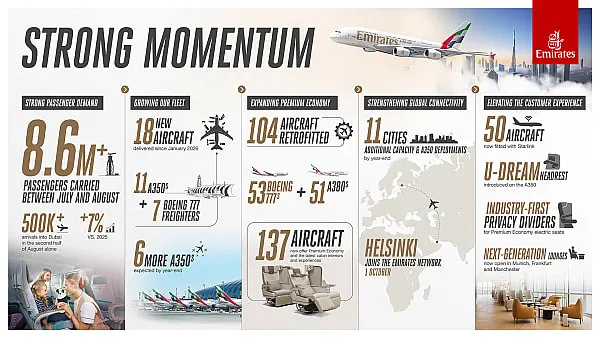
Emirates Winter Booking Momentum Grows Amid Fleet Expansion
Emirates carried 8.6 million passengers this summer and enters winter with strong demand as it accelerates fleet retrofits and network growth.

Air Arabia Consortium Gains AOC for New Dammam Budget Airline
A Saudi GACA-led consortium including Air Arabia has secured an AOC to launch a new budget airline based at Dammam's King Fahd International Airport.

Turkish Airlines Exits Luanda as Angola Hub Struggles
Turkish Airlines dropped its Luanda route as Angola's new airport struggles to attract traffic, handling only 756,028 passengers in 2025.

Red Sea Airlines Leases Two 737 MAX 8s for 2027 Expansion
Red Sea Airlines signed a lease for two Boeing 737 MAX 8 aircraft from SMBC Aviation Capital, arriving in 2027 to support its 14-aircraft fleet goal.

Avelo CEO Warns Airfares May Rise on Jet Fuel Price Spikes
Avelo Airlines CEO Andrew Levy warns that rising fuel costs may force fare increases as global jet fuel prices reach $171.01 per barrel.

IndiGo, Air India Battle for Mumbai-Delhi Route Dominance
IndiGo and the Air India group are competing for dominance on the Mumbai-Delhi air route, which saw 13.9 percent capacity growth this September.