Asian Airlines Reroute Europe Flights Amid Middle East Airspace Closures

Aviation News Editor & Industry AnalystAviation News Editor & Industry Analyst delivering clear coverage for a worldwide audience.

Airlines in Asia are rerouting flights to Europe to avoid Middle East airspace, causing longer flight times and surging ticket prices due to the conflict.
Key Takeaways
- •Rerouting flights around Middle East airspace, adding hours to travel times.
- •Facing a 22% weekly surge in Asia-Pacific jet fuel prices, per IATA.
- •Seeing ticket prices triple on some Asia-Europe routes, exceeding $2,000.
- •Grounding Gulf hub operations, with Etihad dropping to 15% of pre-war capacity.
Airlines across the Asia-Pacific region are implementing significant flight rerouting for services to Europe following widespread airspace closures over the Middle East. The disruption, triggered by escalating regional conflict, has effectively severed the primary air corridor connecting the two continents, leading to longer flight times, increased fuel consumption, and a sharp rise in ticket prices.
The operational shift follows a critical safety directive from the European Union Aviation Safety Agency (EASA). The agency issued Conflict Zone Information Bulletin (CZIB) 2026-03, which advises air operators to avoid the airspace over Iran, Iraq, Israel, and several Gulf states due to high risks from military activity. This has forced carriers to find alternative, longer paths via Central Asia or Africa, bypassing what is typically one of the world's busiest airspaces.
Industry Impact
The immediate financial and operational consequences for the aviation industry have been severe. According to the International Air Transport Association (IATA), aviation fuel prices in the Asia-Pacific region surged by 22% in a single week. This cost pressure is being passed directly to consumers. Data from Google Flights shows that ticket prices on some Asia-Europe routes have tripled, with fares that normally cost $300-$600 now exceeding $1,000 to $2,000.
Flight tracking data highlights the scale of the disruption, with over 5,000 flights cancelled across the Middle East. Gulf hub carriers, whose business models rely on connecting traffic through the region, have been paralyzed. According to Flightradar24, Emirates' flight activity dropped to approximately 60% of its pre-conflict capacity, while Etihad's operations fell to just 15%. In response to the crisis, authorities in the United Arab Emirates and Qatar have activated the Emergency Security Control of Air Traffic (ESCAT) protocol, heavily restricting airspace access and requiring foreign operators to obtain prior permission for any flights.
Industry leaders have voiced significant concern. Willie Walsh, Director General of IATA, urged states to ensure the safety of civil aviation. David Mumford of Ops Group noted the immense pressure on remaining air corridors, stating that the rerouting significantly increases fuel burn and operational complexity. Offering a more optimistic long-term view, John Plueger, CEO of Air Lease Corp, suggested that while disruptive, global travel ultimately adapts, stating it "doesn't stop, it may be put on hold."
Stakeholder Consequences
The crisis has created distinct winners and losers across the aviation ecosystem. Gulf hub carriers like Emirates, Qatar Airways, and Etihad are the most severely affected, facing operational paralysis with their primary airports located within the restricted airspace. The sudden loss of belly-cargo capacity through these hubs is also tightening the global airfreight market, driving up rates for cargo shipments between Asia and Europe.
Conversely, the situation presents a strategic opportunity for carriers operating direct non-stop flights between Asia and Europe. Airlines such as Cathay Pacific and Singapore Airlines are experiencing a surge in demand and have gained significant pricing power. According to analysis from Morningstar, these airlines are positioned to capture premium fares and market share from their grounded Gulf competitors, though they still face the challenge of higher fuel costs.
For leisure and business travelers, the impact is unavoidable. With ticket prices spiking as much as ten times their normal rate on some routes, the high cost is expected to cause significant demand destruction for international travel between the continents.
Historical Parallels
The current situation mirrors the disruption caused by the Russian airspace closure in February 2022. That event banned most Western and some Asian airlines from flying over Russia, forcing them to adopt longer polar or southern detour routes for Europe-Asia flights. The outcome was a permanent increase in flight times and operating costs, a pattern that appears to be repeating with the Middle East corridor closure. Both events underscore the vulnerability of global aviation networks to geopolitical shocks and the long-term cost implications of redrawing major air routes.
What Comes Next
The immediate future for Asia-Europe air travel remains uncertain. EASA's advisory, CZIB 2026-03, is subject to rolling reviews and extensions based on the security situation on the ground. Airlines and passengers must prepare for a prolonged period of disruption, higher fares, and longer journey times until the airspace is deemed safe to reopen.
Why This Matters
This large-scale airspace closure fundamentally redraws one of the world's most critical aviation arteries, demonstrating the profound impact of geopolitical conflict on global connectivity. The crisis challenges the viability of the Gulf hub model and accelerates the industry's reliance on ultra-long-haul aircraft capable of bypassing volatile regions. For airlines, passengers, and cargo shippers, the event signals a new era of higher costs and operational uncertainty for travel between Europe and Asia.
For global airline trends and commercial aviation news, turn to omniflights.com. Follow aviation sustainability efforts, emissions research, and green initiatives in the Environmental section at omniflights.com/environmental.
Written by Ujjwal Sukhwani
Aviation News Editor & Industry Analyst delivering clear coverage for a worldwide audience. Covers flight operations, safety regulations, and market trends with expert analysis.
Visit ProfileYou Might Also Like
Discover more aviation news based on similar topics
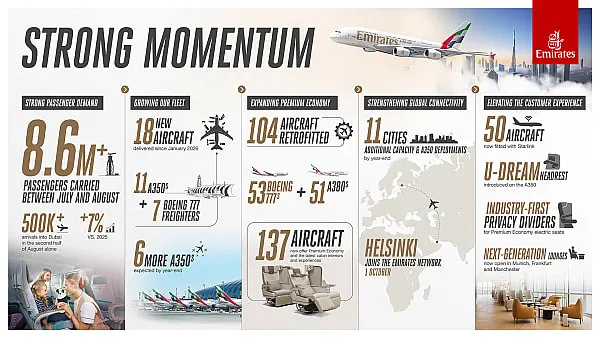
Emirates Winter Booking Momentum Grows Amid Fleet Expansion
Emirates carried 8.6 million passengers this summer and enters winter with strong demand as it accelerates fleet retrofits and network growth.
Air Arabia Consortium Gains AOC for New Dammam Budget Airline
A Saudi GACA-led consortium including Air Arabia has secured an AOC to launch a new budget airline based at Dammam's King Fahd International Airport.
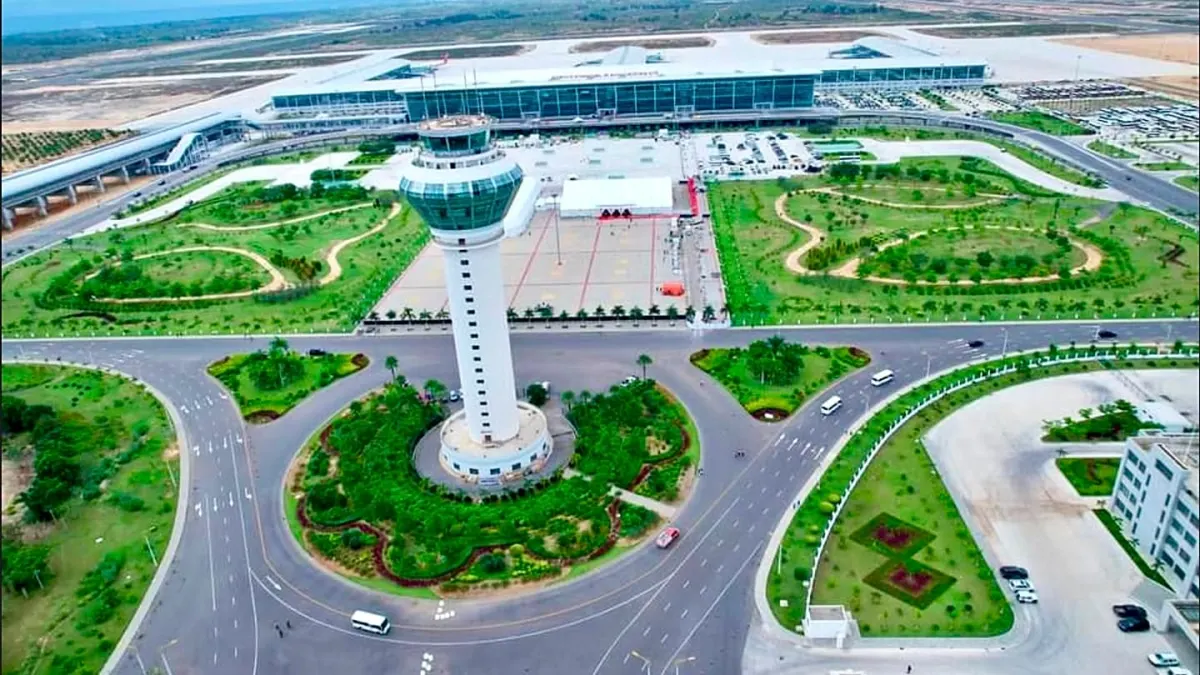
Turkish Airlines Exits Luanda as Angola Hub Struggles
Turkish Airlines dropped its Luanda route as Angola's new airport struggles to attract traffic, handling only 756,028 passengers in 2025.

Red Sea Airlines Leases Two 737 MAX 8s for 2027 Expansion
Red Sea Airlines signed a lease for two Boeing 737 MAX 8 aircraft from SMBC Aviation Capital, arriving in 2027 to support its 14-aircraft fleet goal.
Avelo CEO Warns Airfares May Rise on Jet Fuel Price Spikes
Avelo Airlines CEO Andrew Levy warns that rising fuel costs may force fare increases as global jet fuel prices reach $171.01 per barrel.
IndiGo, Air India Battle for Mumbai-Delhi Route Dominance
IndiGo and the Air India group are competing for dominance on the Mumbai-Delhi air route, which saw 13.9 percent capacity growth this September.