Airlines Raise Fares as Mideast Conflict Drives Jet Fuel Spike

Aviation News Editor & Industry AnalystAviation News Editor & Industry Analyst delivering clear coverage for a worldwide audience.
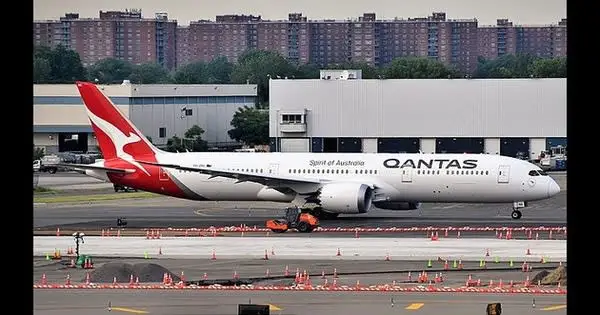
Airlines globally are raising ticket prices as a surge in jet fuel costs, driven by the Middle East conflict, severely impacts their operating margins.
Key Takeaways
- •Surging jet fuel prices from ~$90 to $150-$200 per barrel, pressuring airline margins.
- •Increasing fares and fuel surcharges globally, with carriers like Air New Zealand and Hong Kong Airlines implementing specific hikes.
- •Rerouting flights to avoid Middle East airspace, causing capacity constraints and >90% load factors on key Europe-Asia routes.
- •Threatening a wider tourism downturn, with Thailand projecting a potential loss of 596,000 tourists.
Airlines across the globe are implementing fare hikes and fuel surcharges as a conflict in the Middle East drives jet fuel costs to unsustainable levels, squeezing operating margins and disrupting international travel. According to Air New Zealand, jet fuel prices have more than doubled, surging from a pre-conflict range of US$85-$90 per barrel to between $150 and $200 in recent days. The sharp increase is forcing immediate financial and operational adjustments from carriers, particularly in the Asia-Pacific region.
The repercussions extend beyond ticket prices, creating significant operational challenges. Airlines are actively rerouting flights to avoid Middle Eastern airspace amid missile and drone threats, leading to longer flight times, increased fuel burn, and severe capacity constraints on alternative routes. This dual pressure of higher costs and complex logistics threatens to trigger a downturn in travel demand and has already begun to impact the broader tourism industry.
Global Airline Response
Carriers are responding with a variety of measures to mitigate the financial damage. Queensland and Northern Territory Aerial Services (Qantas) announced it is raising international fares and exploring the redeployment of capacity toward Europe. The airline noted that its flights to Europe are already over 90% full in March, a significant increase from the typical 75% load factor for this period, according to a commercial update from the carrier. The combination of airspace closures and reduced capacity has led to a surge in ticket prices on routes between Asia and Europe.
Air New Zealand has increased one-way economy fares by NZ$10 ($6) on domestic routes, NZ$20 on short-haul international flights, and NZ$90 on long-haul services. The carrier also suspended its 2026 financial outlook, citing the extreme uncertainty. In Hong Kong, Hong Kong Airlines will increase fuel surcharges by up to 35.2%, with the fee on some routes rising from HK$284 to HK$384 ($49). To meet heightened demand on safer corridors, Cathay Pacific will add extra flights to London and Zurich.
In Southeast Asia, Vietnam Airlines has formally requested that the government remove an environmental tax on jet fuel to help sustain its operations. The Vietnamese government stated that local airlines have seen operating costs increase by 60% to 70% due to the fuel price spike, while suppliers struggle to meet demand.
Market Volatility and Financial Impact
The U.S.-Israeli war with Iran sent global oil prices to a peak of $119 per barrel on March 9 before they retreated to around $90 a day later, according to LSEG market data. This volatility directly impacts airline profitability, as fuel is typically the second-largest expense after labor, accounting for 20-25% of total operating costs.
The crisis highlights divergent risk management strategies. Many Asian and European carriers actively hedge fuel costs to protect against price swings. In contrast, most U.S. airlines have largely abandoned the practice over the last two decades, leaving them more exposed to spot market volatility. Airline stocks, after falling sharply early in the week, showed signs of recovery after comments from U.S. President Donald Trump suggested the conflict could end soon. In Asian markets, Korean Air climbed nearly 9% and Cathay Pacific gained over 4%.
Broader Travel and Tourism Disruption
The conflict's impact is rippling through the entire travel ecosystem. Middle Eastern hub carriers, including Emirates, Qatar Airways, and Etihad, are particularly vulnerable. These airlines normally carry about one-third of all passengers traveling from Europe to Asia and more than half of those flying from Europe to Oceania, according to aviation data firm Cirium. Airspace disruptions threaten this critical traffic flow.
The tourism sector is already experiencing cancellations. South Korea's HanaTour Service has canceled all group tours to the Middle East for March and is waiving cancellation fees. Similarly, Thailand's Ministry of Tourism warned that if the conflict extends beyond eight weeks, the country stands to lose nearly 596,000 tourists and an estimated 40.9 billion baht ($1.29 billion) in revenue.
Historical Parallels
The current situation mirrors previous geopolitical crises that have shocked the aviation industry. In February 2022, the closure of Russian airspace following the invasion of Ukraine forced Western airlines into costly and lengthy detours for Europe-Asia routes, increasing fuel consumption and fares—a pattern now repeating with Middle East airspace avoidance.
The rapid doubling of fuel costs is reminiscent of the 1990 Gulf War, which pushed several highly leveraged carriers toward bankruptcy. Similarly, the 2008 oil price shock, when crude oil hit $147 per barrel, forced airlines to ground less efficient aircraft and implement sweeping capacity cuts and surcharges, actions that could be seen again if current prices remain elevated.
Technical Analysis
This event represents a classic twin-shock scenario for the airline industry: a simultaneous cost shock from fuel prices and an operational shock from airspace closures. The data suggests that airlines are immediately passing these costs to consumers, a strategy enabled by high post-pandemic travel demand. However, this strategy carries the risk of demand destruction if high fares persist. The crisis starkly illustrates the geopolitical fragility of global airline networks, particularly the reliance on hubs in the Middle East for connecting traffic between major continents. Historically, such events have accelerated the retirement of older, less fuel-efficient aircraft and favored carriers with strong balance sheets and effective fuel-hedging programs. The current situation is likely to intensify pressure on unhedged airlines and could reshape traffic flows between Europe and Asia for the foreseeable future.
What Comes Next
Several key decisions are pending as the industry navigates the ongoing volatility. Cathay Pacific is scheduled to conduct its next monthly fuel surcharge review in April 2026, which will be a key indicator of its pricing strategy. In Vietnam, a government decision on the requested removal of the environmental tax on jet fuel is expected in the second quarter of 2026. Looking further ahead, Air New Zealand is expected to update its suspended fiscal year 2026 financial outlook in mid-to-late 2026, contingent on market stabilization.
Why This Matters
This confluence of events is more than a temporary disruption; it serves as a critical stress test for the post-pandemic recovery of international travel. The crisis exposes the vulnerability of airline operating models to geopolitical shocks and volatile energy markets. For passengers, it signals a period of higher costs and potential travel disruptions, while for the industry, it underscores the urgent need for resilient networks and sophisticated risk management strategies to navigate an increasingly uncertain global landscape.
For in-depth airline coverage and commercial aviation news, omniflights.com delivers timely industry insights. Follow aviation sustainability efforts, emissions research, and green initiatives in the Environmental section at omniflights.com/environmental.
Written by Ujjwal Sukhwani
Aviation News Editor & Industry Analyst delivering clear coverage for a worldwide audience. Covers flight operations, safety regulations, and market trends with expert analysis.
Visit ProfileYou Might Also Like
Discover more aviation news based on similar topics

Red Sea Airlines Leases Two 737 MAX 8s for 2027 Expansion
Red Sea Airlines signed a lease for two Boeing 737 MAX 8 aircraft from SMBC Aviation Capital, arriving in 2027 to support its 14-aircraft fleet goal.
Avelo CEO Warns Airfares May Rise on Jet Fuel Price Spikes
Avelo Airlines CEO Andrew Levy warns that rising fuel costs may force fare increases as global jet fuel prices reach $171.01 per barrel.
IndiGo, Air India Battle for Mumbai-Delhi Route Dominance
IndiGo and the Air India group are competing for dominance on the Mumbai-Delhi air route, which saw 13.9 percent capacity growth this September.
Delta Air Lines Trims 5 Routes, Cuts Las Vegas Capacity
Delta Air Lines will end five domestic routes from New York and Las Vegas this winter as part of a seasonal network capacity adjustment.

FLY91 Orders 40 ATR 72-600s for Regional Fleet Expansion
Indian startup FLY91 has placed a firm order for 40 ATR 72-600 aircraft, valued at $1 billion, to scale its regional fleet to 60 planes by 2032.

SWISS Takes Delivery of Third Airbus A350-900 Named 'Zug'
Swiss International Air Lines has welcomed its third Airbus A350-900, which will feature the new 'SWISS Senses' cabin on select long-haul routes.